Everything premed students need to know about gaining clinical experience for medical school: what counts, what doesn’t, how many hours are competitive, when to start, how to find opportunities, and how to present experiences in a way that resonates with admissions committees.
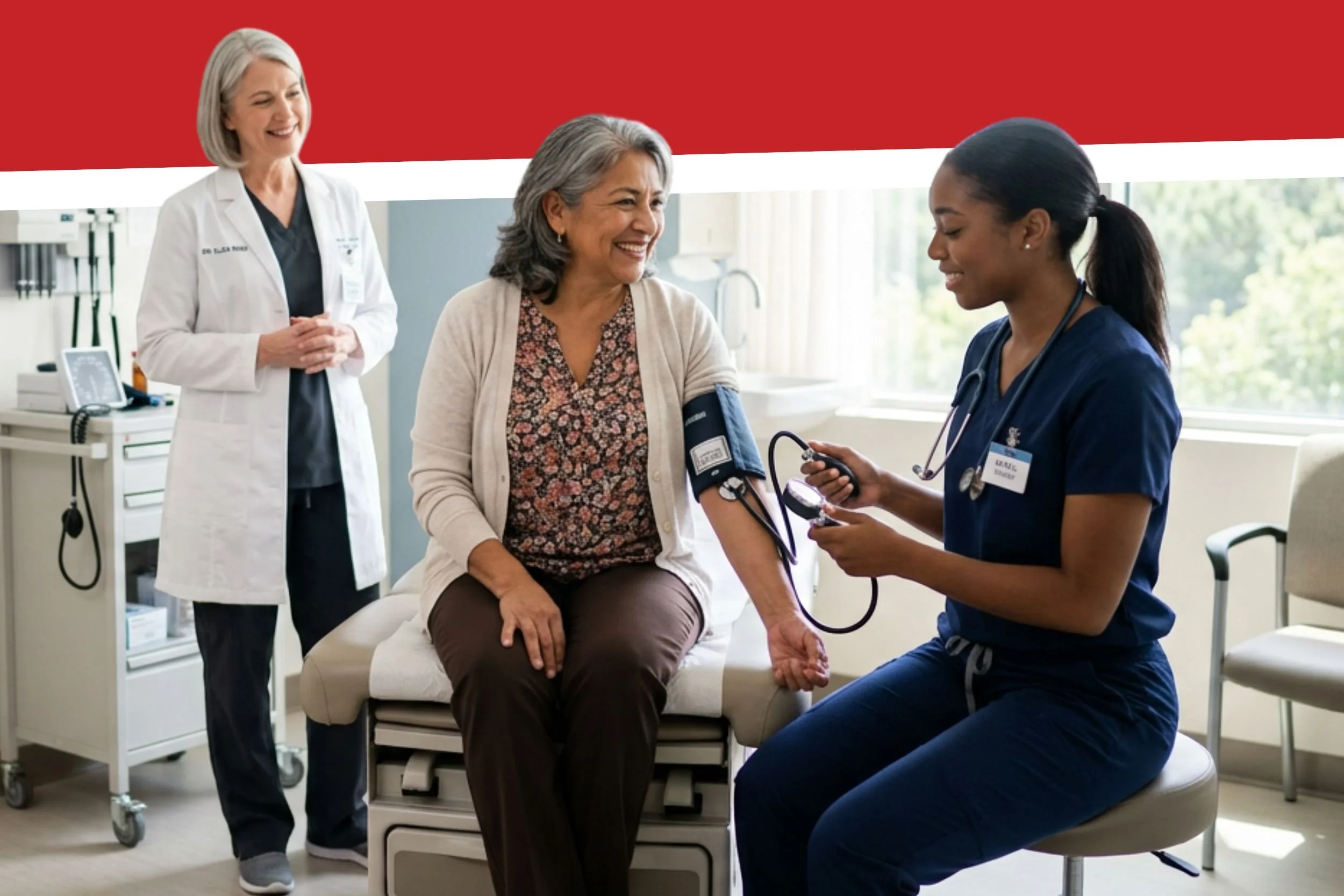
The right kind of clinical experience can make or break your application.
What counts as clinical experience
What does not count
How much clinical experience you need for medical school
When to start
How to get clinical experience as a pre-med
Making your experiences stand out
Common mistakes to avoid
Helpful resources
Frequently asked questions
Maybe you’ve got a high GPA and an intimidating MCAT score, but if you don’t have clinical experience, admissions committees aren’t going to take your application very seriously.
Clinical experience is your opportunity to demonstrate that you understand what medicine looks like from the inside, not through textbooks, lectures, your own expectations (or the latest episode of The Pitt), but through real, direct contact with patients and the healthcare system. Clinical experience makes up the hands-on experience adcoms use to answer one of the most fundamental questions they ask about every applicant: Does this person know what they’re really signing up for?
The answer to that question can make or break an application. In this guide, we’ll walk you through everything you need to know about gaining clinical experience for medical school, what counts, what doesn’t, how much you need, when to start, how to find opportunities, and how to present your experiences in a way that resonates with adcoms–no matter where you’re applying.
Learn everything you need to know to get into medical schools like UCSF.
Get our free 102-page guide to help you with every step: Get Into Medical School: 6 Practical Lessons to Stand Out and Earn Your White Coat
----
What counts as clinical experience
In the context of med school admissions, clinical experience refers to any role in which you are directly and regularly involved in patient care. The key phrase to remember here is direct patient contact. It’s not about observing from the sidelines; it’s about actively engaging with patients alongside healthcare professionals in a healthcare setting.
Types of clinical experience
These are among the most common and compelling forms of clinical experience. The common thread across all of these roles, whether paid, volunteer, or over the phone, is meaningful, recurring interaction with patients and the development of your clinical skills through real, human-to-human contact.
Medical assistant
As an MA, you’ll be working as part of a healthcare team, taking vitals, preparing patients for exams, assisting with procedures, and supporting clinical workflows alongside physicians and nurses. Check out our guide on becoming a medical assistant as a premed.
Medical scribe
As a scribe, you’ll be documenting patient encounters in real time alongside physicians and other health care providers in clinical or emergency settings. This role offers unparalleled insight into clinical decision-making. See our guide on how to become a medical scribe for more.
Emergency Medical Technician (EMT)
EMTs provide emergency medical care in the field. This is one of the most hands-on clinical roles available to premeds, and admissions committees widely respect the patient care experience it generates. Read more about this role in our guide on becoming an EMT as a premed.
Certified Nursing Assistant (CNA)
As a CNA, you’ll provide direct personal care to patients, including bathing, feeding, mobility assistance, and vital monitoring. This role offers some of the most consistent and sustained patient contact and medical experience available. Our guide on becoming a CNA has all the information you need to know about this role.
Phlebotomist
As a phlebotomist, you’ll be drawing blood in clinical or hospital settings, which means regular patient interaction.
Patient care technician or patient care associate
A patient care technician or associate supports nurses and physicians in hospital settings with direct patient care tasks.
Volunteer clinical roles
These roles are equally valid and often more accessible for students who can’t commit to a paid position. These include:
Volunteering in hospital emergency departments, patient wards, or oncology units
Serving at free clinics or federally qualified health centers (FQHCs)
Working in hospice or palliative care settings
Volunteering as a patient navigator or health coach
Telehealth roles
Telehealth roles have become increasingly recognized since the expansion of virtual care in 2020. If you’re regularly engaging with patients in a telehealth setting, such experience can count depending on the nature and depth of your involvement.
----
What does not count
Premeds often trip up on what actually counts as “clinical experience” in the eyes of adcoms. Often, training programs or work that is adjacent to direct patient experience confuse applicants about what counts and what does not. Let’s look at a few examples of opportunities that do not count as clinical experience.
Shadowing a physician
Shadowing is the most common example of an activity that is mistaken for true clinical experience on an application. While shadowing is a crucial and required component of a strong medical school application, it is not the same as clinical experience.
Shadowing is observational by nature, in that you’re watching medicine being practiced, not directly participating in it. Admissions committees treat these as separate categories, and therefore, so should you. In any case, you still need to shadow, and if you need help figuring out where to start, check out our in-depth guide.
Administrative or clerical hospital work
Any clinical administrative work–answering phones, scheduling appointments, managing medical records, or working at a front desk–does not count as direct clinical experience, even if it occurs in a hospital or clinic. Proximity to patients is not the same as patient contact in a medical sense.
Research in a lab or clinical setting
This kind of research is extremely valuable for your application, but it is tracked separately. Even clinical research that involves reviewing patient data or interacting with participants in a study does not typically count as direct patient care unless you are providing hands-on care.
Non-clinical volunteering
This kind of work includes working at food banks, tutoring programs, and community outreach events. These experiences reflect your service orientation and are important for your application, but they belong in a different category.
Health fairs or one-time events
If you aren’t forming ongoing patient relationships, these generally don’t count. Admissions committees want to see sustained involvement, not a single afternoon at a blood pressure screening or similar event.
----
How much clinical experience you need for medical school
There is no official minimum number of clinical hours required for medical school, but that doesn’t mean just any amount is sufficient. Here’s a practical framework for thinking about where your hours should fall.
| Applicant Level | Clinical Hours |
|---|---|
| Baseline/Minimum | 100-150 hours |
| Competitive | 150-300 hours |
| Highly Competitive | 300-500+ hours |
A few important notes on these ranges
Quality matters more than quantity.
150 hours of sustained, meaningful clinical work–where you developed real relationships with patients and grew in your understanding of medicine–will read better than 400 hours of checking patients in and handing out forms. What’s important is the experience you gained from working with patients, not the number of hours.
The schools you're applying to matter
Research-heavy MD programs may weigh clinical experience somewhat differently than primary care-focused or community health-oriented programs. DO programs, on the other hand–which tend to emphasize primary care and underserved populations–often place particular value on substantive clinical involvement. Review the mission statements and class profiles of schools on your list to calibrate accordingly.
Diversity of settings adds value
Seeing medicine in a hospital emergency department, a community health clinic, and a hospice setting over 100 hours will give you a far richer perspective than 300 hours in a single context, and such experience will show admissions committees that your exposure to medicine has been genuinely broad.
----
When to start
As is true with most components of your med school application: The earlier, the better. When it comes to clinical experience, starting early gives you time to develop relationships, take on more responsibility, and accumulate the kind of sustained involvement that makes for a compelling application narrative.
Most successful applicants begin building their clinical experience in the first or second year of undergrad. Starting by your sophomore year gives you two to three years to accumulate hours, grow within a role, and have genuinely meaningful stories to tell by application season.
If you’re a junior or senior with limited clinical experience, don’t panic–but you still need to act quickly. Prioritize finding one substantive role you can commit to consistently, rather than trying to collect hours across multiple brief experiences. At this stage, depth will serve you better than volume.
Because AMCAS and AACOMAS use rolling admissions, you’ll want to have a solid foundation of clinical hours in place before you submit your primary application. Ongoing roles that are still active at the time of application are perfectly fine to list; you just need to be transparent about hours to date and expected totals.
If you take a gap year
As long as you use it intentionally, a gap year can actually be one of the best things you do for your clinical experience. Many applicants who take gap years emerge with significantly stronger clinical profiles than they had as undergrads, simply because they had more time and flexibility to commit to meaningful roles.
See our guide on how to take a gap year for a broader look at how to make the most of time off between undergrad and application.
----
How to get clinical experience as a premed
Start with your university’s pre-health advising office
Your university’s pre-health advising office can provide you with all the help you need in this department. Advisors know local healthcare organizations and will be happy to help you find opportunities in your area.
Apply directly to hospitals and health systems
Call the hospitals in your area, or search the web for an online application. Don’t limit yourself to the largest or most prestigious institution nearby. Community hospitals and regional medical centers often offer richer patient contact and more meaningful involvement for volunteers.
Pursue paid clinical roles
If you have the time and bandwidth, a paid clinical role as a medical assistant, scribe, CNA, or EMT generates clinical hours for your application, and it allows you to demonstrate your professional-level competence in a healthcare setting. Many of these roles can be obtained with minimal prior experience and offer on-the-job training.
Leverage student organizations
College is all about networking. Contact your local global health organization or premed club for information on ways to rack up your clinical experience hours.
Seek out free clinics and federally qualified health centers
FQHCs and student-run free clinics serve underinsured and uninsured populations and frequently welcome premed volunteers.
If you have no prior experience
Start with a hospital volunteer program. These are specifically designed for people without healthcare backgrounds, and they provide the structure and supervision you need to get your footing. From there, you can pursue more advanced roles as your confidence and experience grow. What’s important is that you get started, and that you don’t allow the absence of prior experience to become an excuse to delay.
----
Making your experiences stand out
Accumulating clinical hours is the baseline. Now you need to take those experiences and translate them into a compelling narrative. See our personal statement guide, as well as our work and activities guide, for tips on how to write about your clinical experiences in a way that is unique, fresh, and engaging.
Depth beats breadth
Admissions committees consistently respond more favorably to applicants with sustained, deepening involvement in one or two clinical settings than to those who cycled through several short-term experiences, or racked up hours without being able to translate anything meaningful from those experiences into the rest of their application. Long-term commitment demonstrates reliability, relationship-building, and genuine engagement, qualities that translate directly into medicine.
Reflect as you go
You should keep a journal throughout your premed journey to catalog the most meaningful experiences you have while gaining those crucial hours. Especially write about meaningful patient interactions, moments that challenged your assumptions, and experiences that clarified your understanding of medicine. Once you’re ready to craft your personal statement and work and activities, such a journal will prove to be a gold mine of information.
Show growth and progression
Adcoms are especially impressed when an applicant’s clinical experience tells a story of increased responsibility. Starting as a hospital volunteer and eventually becoming a team lead, training new volunteers, or taking on a paid clinical role in the same setting is a narrative arc that demonstrates initiative, competence, and commitment.
Find deeper meaning in your experiences
In your personal statement and secondary essays, you need to go beyond simply cataloging the details of what you did (see our secondary guide for help with responding to those tricky secondary prompts). What did you observe that you couldn’t have learned in a classroom? What made you question previously held beliefs? What reinforced your decision to pursue medicine?
In interviews, come prepared to go deep
If it’s on your application, then it’s fair game in an interview. Be ready to discuss the clinical experiences you listed in detail, as well as what you learned from them. Vague or surface-level answers suggest limited engagement–or worse, half-truths on your application–regardless of how many hours you logged. See our guide on prepping for interviews for more information on this crucial step of the application process.
----
Common mistakes to avoid
Relying solely on shadowing
As we said above, shadowing experience is necessary but not sufficient. Many applicants discover too late that their entire clinical portfolio consists solely of observational cases. Adcoms want to see that you’ve experienced real patient contact.
Prioritizing prestige over substance
Volunteering at a renowned academic medical center sounds impressive, but if your role there was administrative or peripheral, it won’t serve you as well as you might think. A meaningful role at a community health clinic will always outperform an impressive-sounding title with no real patient involvement.
Starting too late
Clinical experience is very difficult to rush. You can’t compress two years of sustained involvement into a single summer. Applicants who wait until junior year to begin collecting hours often find themselves in a difficult position.
Spreading too thin
A long list of brief, unrelated clinical experiences is ultimately weaker than a focused, sustained record. Choose quality over quantity, especially once you’ve found a setting or role you genuinely connect with.
Failing to document as you go
It’s remarkably easy to forget the details of clinical experiences months or years after the fact. If you don’t write down your most important experiences, you’ll have less material for the rest of your application, including your interviews.
Treating clinical experience as a checkbox
Adcoms can tell the difference between an applicant who sought out clinical experience because they genuinely cared about helping people and one who was going through the motions to beef up their application. Sincere curiosity and engagement come through in the way you write and speak about your experiences. Choosing roles and settings that actually interest you will make everything else easier.
----
Helpful resources
Whether you’re just starting to explore clinical experience or trying to figure out how to present what you’ve already done, these resources can help:
Medical School Requirements: A comprehensive overview of everything you need to apply, including clinical experience in context with other components.
How to Get Into Medical School: Our full guide to building a competitive application.
How to Choose Extracurricular Activities for Medical School: Guidance on prioritizing your time and selecting activities that strengthen your overall application.
How to Ask to Shadow a Doctor: Since clinical experience and shadowing go hand in hand, you need to build the observational side of your profile, too.
Non-Traditional Medical Student Guide: If you’re coming to medicine from a different background, this guide addresses how to frame your clinical experience accordingly.
----
Frequently asked questions
What is early clinical exposure?
Early clinical exposure refers to patient contact that begins in the first year or two for undergraduate students, or even before college in some cases. It’s best to seek clinical experience as early as possible, both to build hours and to begin informing your understanding of medicine before committing fully to the premed track. Early exposure also gives you more time to develop depth and consistency in your clinical record, which is ultimately what adcoms value most.
Is 500 clinical hours enough for medical school?
For most applicants, 500 clinical hours is more than enough. But remember, hours on their own can never tell the whole story. 500 hours of sustained, meaningful clinical work in one or two settings will read very differently from 500 hours spread thinly across a dozen brief experiences that you had trouble connecting with, and therefore writing about in your application or discussing during your interview.
Focus on building depth and a clear narrative around your hours, not just accumulating a number. If your hours are concentrated in a single compelling role where you grew significantly over time, 300 to 400 hours with a strong story can outperform 500 hours with a weak one.
What is the difference between clinical and non-clinical experience?
Clinical experience involves direct, hands-on contact with patients in a healthcare setting, such as being a medical assistant, EMT, CNA, hospital volunteer, or scribe, where you are actively engaged in patient care on a regular basis.
Non-clinical experience, by contrast, includes service and community involvement that takes place outside the direct patient care environment. Such roles might include shadowing, tutoring, volunteering at a food bank, community health outreach, and similar activities.
Both clinical and non-clinical experience are valuable, and both belong on a strong medical school application, but they serve different purposes and are evaluated separately. Clinical experience demonstrates your readiness for medicine specifically; non-clinical experience speaks to your broader commitment to service and community.
Can you start before college?
In some cases, yes. Volunteering in a clinical setting as a high school student is possible at many hospitals, and EMT certification can be pursued as early as 17 in most states. Meaningful clinical experience that begins in high school and continues into undergrad can absolutely be included on your medical school application.
Final thoughts
Clinical experience is one of the most consequential parts of your medical school application, but that’s not just because of the hours. What’s far more important than the number of hours gained is what each of those hours represents. Your clinical experience is the evidence on your application that you’ve actually spent time in the medical world, you understand what it really entails, and that you’re prepared to continue pursuing this career path.
Start early, choose roles you genuinely care about, commit for the long term, and document as you go. Do those things, and your clinical experience will be one of the strongest parts of your application.
About the Author
Dr. Shirag Shemmassian is the Founder of Shemmassian Academic Consulting and one of the world's foremost experts on medical school admissions. For over 20 years, he and his team have helped thousands of students get into medical school using his exclusive approach.



THERE'S NO REASON TO STRUGGLE THROUGH THE MED SCHOOL ADMISSIONS PROCESS ALONE, ESPECIALLY WITH SO MUCH ON THE LINE. SCHEDULE YOUR COMPLIMENTARY CONSULTATION TO ENSURE YOU LEAVE NOTHING TO CHANCE.