How Hard is the USMLE? The Honest Truth
Are the USMLE Steps really that hard? Learn why the USMLE exams can be challenging and strategies top scorers use to ace the USMLE

How hard is the USMLE?
----
Part 1: Introduction to the USMLE
Anyone considering a career as a physician in the United States will inevitably face the USMLE—and it’s normal to wonder just how tough this series of exams really is. The honest truth is that the USMLE is challenging, and for good reason. It’s designed to ensure that only those with a comprehensive grasp of medical knowledge and the ability to apply it in real-world scenarios can move forward to practice medicine in the U.S.
The USMLE Step 1 tests your understanding of foundational sciences, demanding not only memorization but also the ability to integrate concepts across disciplines. With the shift to pass/fail scoring back in 2022, the pressure has changed, but the content remains dense and detail-oriented.
Step 2 of the USMLE (also known as CK) dives into clinical knowledge, requiring you to apply what you’ve learned in patient scenarios—often under tight time constraints. The questions are nuanced and reflect the complexity of real-life medical decision-making.
The USMLE Step 3 really ups the ante by assessing whether you can independently manage patient care, making it a true test of readiness for unsupervised practice.
What makes the USMLE especially difficult is the sheer breadth of material, the depth of understanding required, and the stamina needed to perform well during long exam days. Success depends on consistent, strategic preparation and a true commitment to mastering both science and patient care. While it’s undeniably tough, thousands conquer the USMLE each year—proving that with the right approach, you can too. In this guide, we’ll take a look at how hard the USMLE is, what makes it challenging, and some strategies to ace it. We’ll also review some common misconceptions as we debunk them to help you prepare to ace the USMLE!
Ready to build your ERAS application?
Enter your name and email for our free workbook—the exercises we use to help applicants turn years of experiences into one cohesive application.
----
Part 2: How hard is the USMLE?
We’ve been talking about the difficulty level of the USMLE, but what is it about these exams that makes them so challenging? In this section, we’ll break down why the USMLE can pose a challenge for most people and how to address those challenges.
Challenge #1: The USMLE is long.
Many exams you’ve taken up to this point (e.g., the SAT, ACT, GRE, GMAT, MCAT, etc.) were exams you took in one sitting for one day. While some were much longer than others, you still completed them in one sitting and were able to essentially forget about them after that.
The USMLE, on the other hand, takes several days and several years to complete. Just when you finish taking Step 1, it’s time to start planning your months-long journey toward planning and preparing for Step 2. And when you finish that, it’ll be time to prepare for Step 3. Additionally, the USMLE will take you throughout your entire medical school journey (and into residency) to complete. As with the MCAT, sitting for the USMLE is a marathon, not a sprint. It’s a journey, not a one-off exam you’ll take and soon forget about. Since the exams are marathons, maintaining focus and mental stamina for such prolonged periods is a significant challenge.
Challenge #2: The USMLE requires a vast amount of knowledge of various content areas.
The USMLE exams—particularly Step 1—require students to cover (and recall) detailed facts from the entire spectrum of basic medical sciences. Additionally, the questions are designed to test memorization AND to test a student’s ability to apply foundational knowledge to complex (often ambiguous) clinical scenarios—which is a different skill set from traditional med school exams.
As if this weren’t enough of a challenge, a number of experimental questions are included in the exams that do not count toward the score but are indistinguishable from the real questions, which can add to the examinee’s confusion and anxiety.
Challenge #3: The USMLE features a unique question style.
The questions often feature long stems (the patient scenario description) and can be tricky, requiring strong reading comprehension and the ability to discern important information from irrelevant details under time pressure.
Ultimately, while the exams are designed to identify the minimum level of safe medical practice in the U.S. and are highly passable with appropriate preparation, their design and importance make them a singularly challenging experience in a medical student's journey.
----
Part 3: How to ace the USMLE
How to ace the USMLE Challenge #1: The USMLE is long.
Solution: Take practice USMLE exams under a simulated test-taking environment.
Don’t get us wrong—there’s a time and place for untimed practice exams that you take casually at your leisure. This is probably one of the best ways to master the exam content.
But, since the actual exams are taken under timed conditions and in a testing center (for the most part), it would be beneficial for you to recreate this environment to the best of your ability. Doing so is the best way for you to truly build up your stamina.
How to ace the USMLE Challenge #2: The USMLE requires a vast amount of knowledge of various content areas.
Solution: Determine your best (and most challenging) content areas and develop a study strategy relative to each.
Chances are high that there will be certain topic areas that challenge you, despite the fact that you could ace other areas blindfolded. It’s not at all unusual for you to have content areas you do well with while others prove to be challenging. That said, you’ll need to develop different study strategies for each area.
For example, maybe you are preparing for the USMLE Step 1 and feel you have human development down pat, but you struggle with cardiovascular system content. Naturally, you’ll need to spend more time focused on the cardiovascular system, but you may also need to tweak how you study that content as well.
Given that the cardiovascular system is part of the body, it might help to draw diagrams, images, or other visuals. You might even find pre-made visuals available on sites like Pinterest, and perhaps you can find pre-made quizzes on Quizlet. You may need to spend an extraordinary amount of time focused on the cardiovascular system, whereas human development may require much less of your focused time, since it comes to you much more easily.
How to ace the USMLE Challenge #3: The USMLE features a unique question style.
Solution: Familiarize yourself with the various question styles and practice mastering those under time constraints.
One of the biggest challenges to acing the USMLE involves mastering your reading comprehension test-taking skills. This means you’ll need to become acquainted with reading long passages with detailed information and deciphering which tidbits of information are relevant and which pieces of information you don’t need (to answer the question).
Not surprisingly, this isn’t all that different from many high-stakes exams, such as the MCAT (CARS) or even the LSAT (Reading Comprehension). The best way to prepare for such exams is to practice under circumstances similar to those of the exam.
Specifically, you should first read the last sentence (the question) to identify the goal, scanning options to gauge the topic, and identifying patient demographics (age, sex) to narrow the differential. From there, you’ll want to read the passage itself. Read the final sentence (the actual question) and the answer choices first to understand what information is required before reading the long paragraph. Next, you’ll want to identify key data points, which means you should scan for age, sex, and key symptoms to narrow your differential. Finally, try to formulate an answer in your mind before looking at the choices to avoid being misled by distractors.
----
Part 4: Common misconceptions about the USMLE
USMLE difficulty myth #1: The USMLE is a test of rote memorization.
FACT: The USMLE tests the ability to apply, integrate, and analyze information, not just recall facts.
USMLE difficulty myth #2: You need to use as many resources as possible.
FACT: Overloading with too many resources leads to superficial learning rather than mastery of core concepts, which is far more effective.
USMLE difficulty myth #3: A lower score or one failure is the end of your career.
FACT: While high scores help, a failed attempt does not automatically disqualify you from matching; strong performance on later steps can overcome a lower initial score.
USMLE difficulty myth #4: The exam difficulty varies based on when you take it.
FACT: This is probably one of the biggest misconceptions perpetuated online. In reality, the difficulty is standardized, and the exam does not become easier or harder based on the month it is taken.
USMLE difficulty myth #5: Only high scorers get matched.
FACT: Many programs look at the whole application—including clinical experience, research, and letters of recommendation—rather than just the USMLE score. That said, this holistic approach with which they review your application can work to your advantage, as it allows you to have more than one “deciding factor” at play.
Final thoughts
The USMLE is undeniably one of the most challenging milestones on the path to becoming a licensed physician, and its difficulty lies in the sheer breadth of material, the depth of understanding required, and the stamina needed to perform well during long exam days. However, its rigor serves an important purpose: ensuring that future physicians are equipped with the knowledge and skills necessary to provide safe and effective patient care. Success on the USMLE isn’t about memorizing endless facts—it’s about mastering concepts, applying critical thinking, and demonstrating a commitment to excellence in medicine
.While the journey may feel overwhelming at times, it’s important to remember that thousands of students conquer the USMLE each year. With consistent preparation, strategic study methods, and a focus on understanding rather than rote memorization, success is absolutely attainable!
About the Author
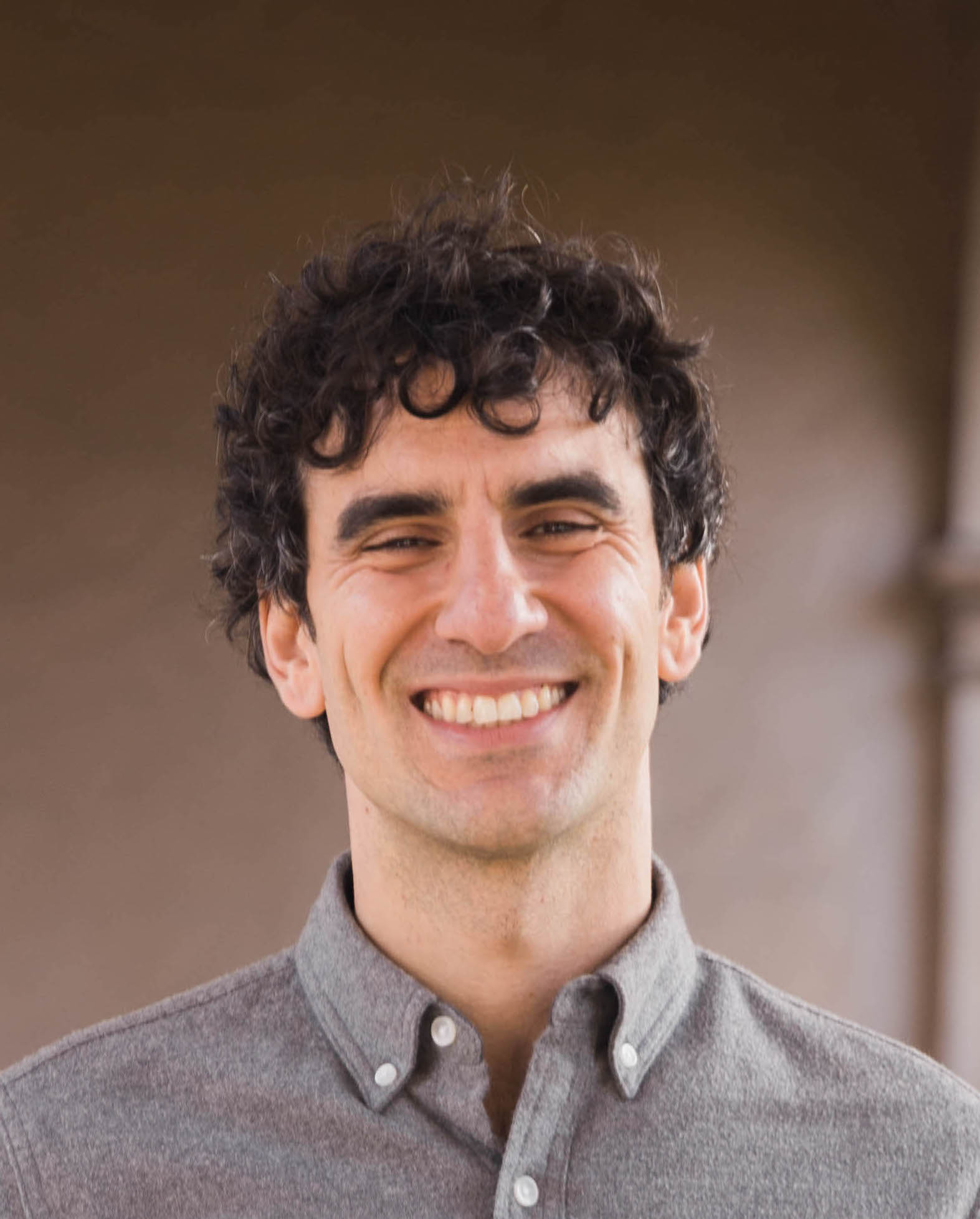
Dr. Shirag Shemmassianis the Founder of Shemmassian Academic Consulting and one of the world's foremost experts on medical residency admissions. For over 20 years, he and his team have helped thousands of students match to top residency programs using his exclusive approach.