Most medical schools now accept online prerequisites, but policies vary by school and course type. See which schools allow it and how to protect your chances.


What You'll Learn
Acceptance of Online Prerequisites
How medical school admissions committees evaluate online coursework compared to traditional, in-person science classes.
Lab Requirements & In-Person Constraints
Which science prerequisites generally require hands-on, in-person laboratory experience versus those where online virtual labs are permitted.
Institutional & Accreditation Standards
How course origin—such as community colleges, four-year universities, or extension programs—impacts whether online credits satisfy prerequisites.
Impact of the COVID-19 Pandemic
How temporary policy changes regarding online and pass/fail credits have evolved and what standards apply to current applicants.
Demonstrating Academic Rigor
Strategies for proving academic capability when taking online prerequisite courses alongside upper-level science coursework.
Application Screening Risks
How taking major prerequisite courses online could potentially impact your application review at highly competitive or research-intensive medical programs.
School-Specific Policy Research
How to verify prerequisite guidelines and contact admissions offices directly to confirm whether your specific online courses qualify.
Does taking prerequisites online look bad to medical schools?
Why are medical schools cautious about online prerequisites?
Which medical schools accept online prerequisites?
Can I take non-science prerequisites online?
Can medical schools tell if a course was taken online?
Will taking prerequisites online hurt my chances?
Frequently asked questions
----
Does taking prerequisites online look bad to medical schools?
Online classes and online degrees are becoming more popular in the typical college curriculum—but how do medical schools evaluate online coursework?
Let’s say you’re a competitive medical school applicant with excellentMCAT scores, a high GPA, impressive extracurricular activities, and glowing letters of recommendation. As part of completing yourmedical school requirements, you might be considering taking an online course or two. You might even have read dire warnings against the strategy.
Before the COVID-19 pandemic, taking online courses—especially prerequisites—was largely frowned upon. However, when most colleges and universities went fully remote or partially remote, medical schools essentially had no choice but to accept online courses, even with prerequisite courses. Whether that trend will hold or for how many future application cycles is unknown as of 2022. Signs are pointing to yes, as the NRMP Director’s Survey, released in September of 2022 revealed that 67 percent of programs anticipate continuing either part or all of their interview process in a virtual environment in the future, even as COVID fears begin to dissipate.
We’ll continue to monitor these trends. In this guide, we’ll discuss the circumstances under which taking online courses have historically been a good idea, and how it could affect your chances of getting into medical school.
Learn everything you need to know to get into medical school.
Get our free 102-page guide to help you with every step: Get Into Medical School: 6 Practical Lessons to Stand Out and Earn Your White Coat
----
Why are medical schools cautious about online prerequisites?
Prerequisite courses like organic chemistry are where students are put through the gauntlet of tough material in the sciences, which will form the basis of your clinical years in medical school. Admissions committees want to be sure you’re prepared for the intensity of that period. The reason they’re skeptical of online coursework is the same reason many don’t allow applicants to substitute AP classes for prerequisites: rigor.
Online courses introduce a bevy of questions. For instance, did you do your own work, or did you have someone else do it for you? Without a classroom environment, it’s hard for admissions officers to know. Admissions teams trust the stringent accountability of a classroom setting monitored by a professor, TAs, and peers.
In addition, much prerequisite coursework for med school involves a laboratory section. Your success in lab work shows your aptitude for practical application and helps confirm to med schools that you are a successful team player who works and communicates well with others. Both of these traits are integral to your success as a doctor, especially as high emotional intelligence is increasingly seen as a hot commodity personality trait for MD candidates among the most prestigious programs.
You might also lose out on the chance to request letters of recommendation by taking coursework online. A letter from a professor in a science class can go a long way in your admissions process.
(Suggested reading: The Best Premed Majors to Get Into Medical School)
----
Which medical schools accept online prerequisites?
Every medical school sets its own policy on how it evaluates coursework you've completed at community colleges, in lab settings, abroad, or online, so there's no single rule that applies across the board. Because these policies vary so much from school to school, the smartest move is to check your target schools' current requirements directly before you sign up for any online prerequisite.
To give you a sense of how differently schools can approach this, here's a look at a range of policies:
Schools that don't accept online coursework for prerequisites:
Charles E. Schmidt College of Medicine at Florida Atlantic University
Rush Medical College
California Northstate University College of Medicine
University of Minnesota Medical School
Duke University School of Medicine
Georgetown University School of Medicine (confirmed with Admissions July 2026)
Schools that evaluate online coursework case by case:
Harvard Medical School - Laboratory sciences can't be taken online, but other online courses are reviewed individually by the Admissions Office (in-person strongly preferred)
Boston University School of Medicine - courses taught online during COVID-19 are accepted.
Rutgers New Jersey Medical School - Accepts Chemistry, Math, and Physics courses taken during COVID; does not accept Physical Chemistry, Psychology, Sociology, or Creative Writing courses in any situation.
University of Alabama - Generally accepts online coursework, but have noted that science labs should be completed in person
Schools that permit rigorous online coursework from accredited universities:
Albert Einstein College of Medicine
University of California–Irvine
University of Vermont Larner College of Medicine
Some schools have also shifted their stance over time—for example, Johns Hopkins Medical School and University of Michigan Medical School each moved from not accepting online courses to accepting them. A school's current position may look nothing like its position a few years ago, so always confirm directly with the school rather than relying on what was accepted (or rejected) in the past.
----
Can I take non-science prerequisites online?
Med schools tend to offer less explicit guidance on online coursework outside the premed prerequisites. Some distinguish between science and non-science prerequisites. For example, at .
Our advice is to only seek online classes that you know will be rigorous and which you could defend in an interview. It might be totally fine to enroll in a Massive Open Online Course (MOOC) to learn computer programming, since much of the best coding instruction can be found on the Internet.
----
Can medical schools tell if a course was taken online?
If you were considering taking prerequisite courses online, you might wonder if anyone (read: adcoms) would even know you took it online.
Sometimes, your official transcript will indicate whether the course was taken online or in person. In such cases, it would be evident that the course was taken online.
Additionally, the AMCAS application requires that you list your courses and select where they were taken.
In summary, if you were considering enrolling in an online class while hoping it would go unnoticed, you’re out of luck.
That said, sometimes, adcoms understand when the only option for a given term is to take it online. But since this isn’t a guarantee, it’s best to take your prerequisites the old-fashioned way: in person.
----
Will taking prerequisites online hurt my chances?
Short answer: Yes. Long answer: Maybe.
You might have educational circumstances that qualify you as an exception, especially if you are a non-traditional medical school applicant, or if you attended an under-resourced school. If you’re worried about conveying those circumstances, consider including a narrative of your educational background in one or several of your essays.
----
Frequently asked questions
Do all medical schools accept online prerequisites?
Not all, and not equally. Most schools have become more flexible about online lecture courses, but plenty still draw a hard line at lab sections, and a handful of top-tier programs remain cautious about online coursework in general. The safest approach is to check your target schools' individual admissions pages rather than assume a blanket policy applies.
Can medical schools tell if I took a course online?
Yes. Your transcript will often note if a course was taken online, and AMCAS requires you to indicate where each course was completed. Plan your course selection with that visibility in mind.
Does AMCAS flag courses as online on my application?
AMCAS includes online coursework in your GPA calculations the same way it does in-person courses, but it doesn't call out a course as "online" in a way that penalizes you automatically.
Which medical schools don't accept online prerequisites?
Rush Medical College and California Northstate University College of Medicine, as well as some particularly highly competitive programs, still don't accept online coursework for prerequisites at all, or only under narrow exceptions. Because these policies shift from cycle to cycle, we recommend treating any published list as a starting point, then confirming directly with each school before you register for a course.
Can I take lab courses for medical school online?
This is where schools are least flexible. Even programs that have loosened their stance on online lecture courses often still require labs to be completed in person, since admissions committees want firsthand evidence of your hands-on scientific skills. If you have a choice, prioritize taking lab-based prerequisites in a classroom.
Will taking prerequisites online hurt my chances of getting into medical school?
It can, but it depends heavily on which courses, which schools, and why. Taking one online course under unusual circumstances is very different from building your entire science foundation online. If you do take prerequisites online, be ready to explain that choice clearly if it comes up in your application or interview.
Final thoughts
If you want to be competitive for a top-tier med school, it’s best to plan to take all of your prerequisite coursework in a classroom rather than online whenever possible. Less than 40 percent of med school applicants matriculate into med school every year, and, under normal circumstances, the vast majority of those successful applicants are learning in a classroom environment. That said, if you are going the online route, be prepared to articulate why that was a part of your educational journey.
About the Author
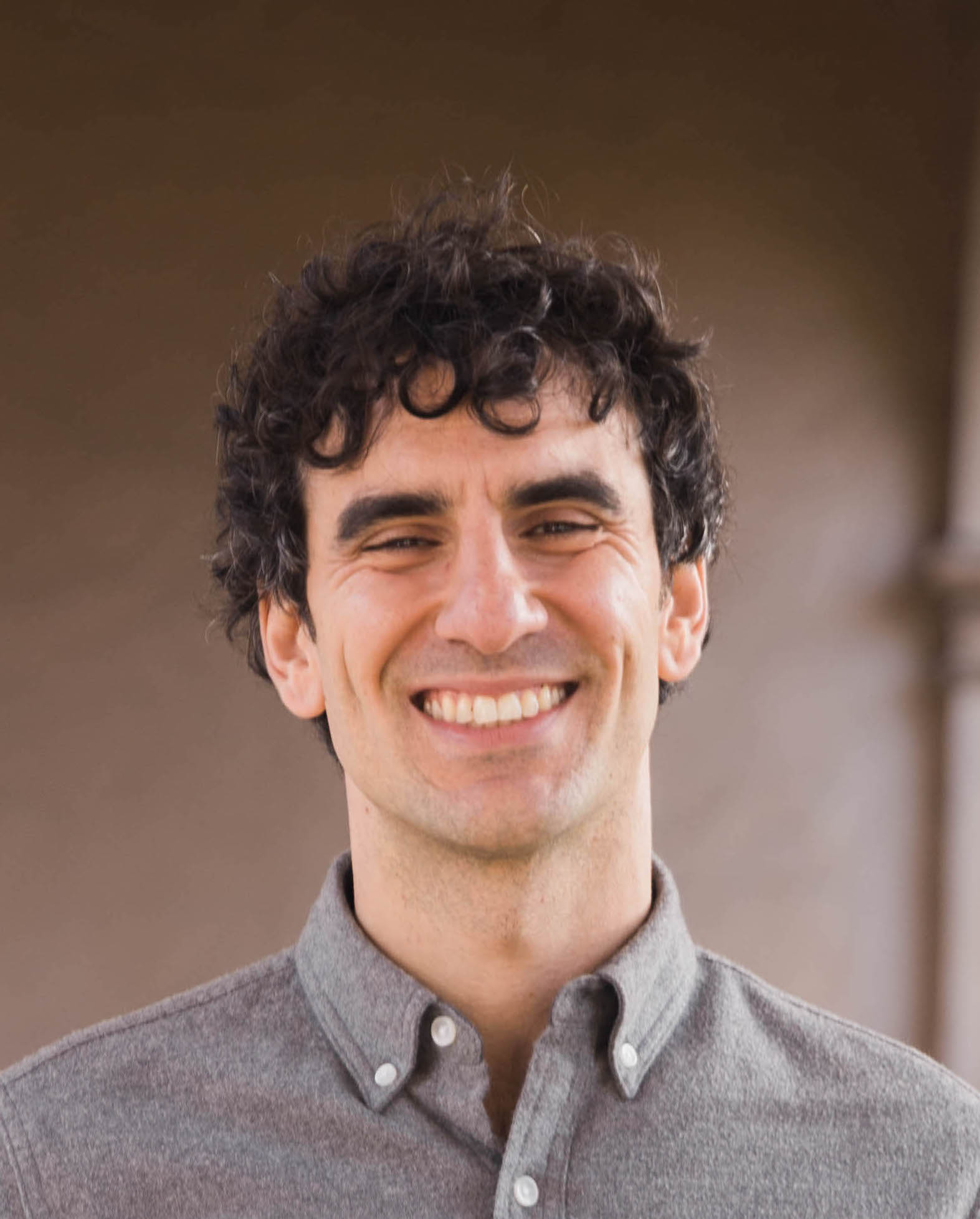
Dr. Shirag Shemmassian is the Founder of Shemmassian Academic Consulting and one of the world's foremost experts on medical school admissions. For over 20 years, he and his team have helped thousands of students get into medical school using his exclusive approach.
Over 90% of our students get into med school—the first time.
Get our free 102-page guide to help you with every step: Get Into Medical School: 6 Practical Lessons to Stand Out and Earn Your White Coat