How to Become a Medical Scientist
Everything you need to know about the life of a medical scientist, including how to become a medical scientist, a day in the life of a medical scientist, and job outlook and salary for medical scientists.

Part 1: What is a medical scientist?
Part 2: The path to becoming a medical scientist
Part 3: Is the Medical Scientist path right for you?
Part 4: Common mistakes to avoid
Part 5: Job outlook and salary
Part 6: Frequently asked questions
If you’re passionate about human health, you relish the challenge of solving medical mysteries, and you’re seeking a career that combines structure and stability with variety and novelty in a fast-paced, ever-changing landscape of scientific discovery, the life of a Medical Laboratory Scientist might be in your future. In this article, we’ll break down everything you need to know about what a medical scientist does, how to gain the necessary experience and qualifications, and what sort of schedule, work environment, and salary to expect if you choose to pursue this career path.
---
What is a medical scientist?
Whereas a physician works directly with patients to diagnose and treat their individual needs, the life of a medical scientist revolves around research—in the lab, at the laptop, and beyond. Much of their day-to-day work involves conducting experiments, leading research teams, writing research papers, submitting research grant proposals, pioneering new treatments, developing and investigating the efficacy of new medications, and collaborating with colleagues on a local and global scale.
If you’re fascinated by human disease, biotechnology, microbiology, pharmacology, and even medical devices; and you envision yourself working in the world of clinical trials, public health, cancer research, pharmaceuticals, epidemiology, or immunology; then the life of a medical scientist might be for you.
---
The path to becoming a medical scientist (step-by-step)
Becoming a medical scientist will require a serious amount of commitment, dedication, and hard work. As with most careers in the medical field, it’s ideal to start mapping out your path as early as possible. Still, there are plenty of medical scientists who started out pursuing a related field and pivoted to this profession along the way.
High school preparation
As a high schooler, you don’t need to lock in your career plans as soon as possible. In fact, it’s better if you don’t limit yourself to one narrow path so early on. Instead, this is the perfect time to take advantage of your freedom to explore various careers and areas of specialization.
Still, if you already know that you’re interested in the medical field, and you want to avoid limiting your future educational and professional options, it’s important to prioritize the following:
Keep your grades up—but challenge yourself. This may seem like an oxymoron, but it’s actually a delicate balance. On one hand, a strong GPA is essential to getting into toppremed programs and medical schools. On the other hand, your high school GPA will not have nearly as muchof an impact on your future career as your undergraduate GPA.
Because of this, we strongly recommend that you challenge yourself with a course or two per semester that pushes you outside of your comfort zone and helps you discover whether you are truly committed to the rigors of a career in medicine. You don’t need a perfect GPA to get into a good premed program at a great university, but you do need to demonstrate that you’re willing to push your boundaries, try new things, learn from your mistakes, and commit to constant improvement.Gain hands-on experience through volunteer opportunities. Your goal through these experiences should be to figure out what you’re interested in, strengthen your core competencies for medical school, build networks to connect you to future opportunities, secure future letters of recommendation, and cultivate your future patient-care and teamwork skills.
If you’re able to volunteer in a clinical setting, such as a hospital or doctor’s office, all the better. There are several hospital volunteer opportunities available for high school students around the country, but they don’t always have online applications, so you may need to go in-person or reach out via email.
Start shadowing as soon as possible. Like clinical volunteer opportunities, you’ll probably have to reach out directly to the medical professionals you’re interested in shadowing. This can be intimidating at first, but remember that professionals used to be students, too—and most of them are more than willing to share their passion for their field! When looking for Medical Scientists to reach out to about shadowing opportunities, a few job titles you might start your search with are:
Clinical pharmacologist
Medical pathologist
Toxicologist
Epidemiologist
Clinical researcher
Once you’ve compiled a list of contacts, you can use the same basic email format to reach out to them as the one we recommend in our How to Ask to Shadow a Doctor guide. The more emails you send, the less scary it will get!
Undergraduate degree (pre-med track)
Once you get to college, you should ideally continue building on the extracurricular foundations you laid as a high schooler. Keeping your grades up, gaining more hands-on volunteer experience, and shadowing as a college student are also crucial for getting into medical school. Thankfully, there are clearer structures and official programs in place for college students to rack up hours in all of these areas, so be sure to take full advantage of them.
And when it comes to your academics, you’ll still have a variety of options. Although most premed students enroll in STEM degree programs, majoring in biology, chemistry, or biochemistry, quite a few pursue degrees in other areas while fulfilling medical school prerequisites through electives. Some even opt for dual degrees, complementing their core medical school requirements with a degree in the humanities or social sciences, which can provide them with a deeper understanding of socioeconomic issues they hope to address through their future career. Just be aware that college admissions committees often frown upon college transcripts that clearly show a student chose only the easiest electives in efforts to inflate their GPA, so be sure to enroll in at least one or two more challenging courses within your area of interest per semester.
Whichever degree path you choose, you’ll also need to keep a close eye on your GPA and MCAT score. Stats aren’t everything when it comes to future medical school applications, but they’re extremely important. The mean GPA and MCAT scores for students who were accepted into MD-PhD programs in the most recent admissions cycle were 3.85 and 516.3., even higher than the average for accepted MD students.
Gain research experience
Throughout both high school and college, in addition to volunteering and shadowing experience, it’s also essential that you begin developing your research skills.
Research experience in high school can vary—you might design your own self-directed research project, apply to an official high school research program, or reach out directly to researchers and professors to ask them to mentor you.
As a college student, you’ll likely have access to several fully funded grants, so be sure to take advantage of these starting with your freshman year.. You’ll want to start narrowing down some of your interests and figuring out which area of research might best suit you, but you still don’t need to know exactly what areas of specialization you want to pursue in your future career.
Whichever area of research you choose, as a future medical scientist, try to pursue opportunities where you can conduct laboratory tests, learn to use and care for medical technology, and contribute to publications (if possible). The more research experience you get, the more connections you’ll make, potentially opening doors for future research and even career opportunities as you progress on your journey.
Apply to MD/PhD programs
An MD-PhD is a combined medical degree and doctorate degree, typically pursued by students who are interested in pursuing a career that involves both direct patient care and rigorous scientific and clinical research. Graduates of MD-PhD programs are often referred to as “physician scientists,” reflecting this unique duality of their training and day-to-day work.
The top MD-Ph.D. programs in the country for future medical scientists boast extremely low acceptance rates, with about 33.7% of all MD-PhD applicants ultimately matriculating in the 2025-26 application cycle, compared to 43.7% of MD applicants. These numbers are far lower, of course, at top schools, falling to the single digits across the board.
Wherever you decide to apply, you’ll need to start planning ahead far in advance, focusing especially on your extracurricular profile and ensuring that you’re gaining extensive research experience from freshman year onward.
Admissions committees typically seek out MD-PhD applicants who can walk the fine line between people skills and technical skills, due to the duality of the careers that most MD-PhD degree holders end up pursuing. The essay and interview responses in your application should clearly demonstrate that not only can you collect and analyze data, but you can also empathetically and level-headedly interact with a patient undergoing a nerve-wracking clinical trial, mediate disputes within a healthcare team, or translate complicated information about medical technology into everyday language that the average person can clearly understand.
Complete postdoctoral training
After attaining your MD-PhD, you’ll need to keep up the momentum throughout your period of postdoctoral training. This can take on a variety of forms, but typically, MD-PhD holders will spend this time in an official training program or research fellowship program gaining essential skills and building up their research portfolio to ensure they’re prepared for the rigors and responsibilities of a professional career in the field.
This period can also vary in length, but, for example, postdoctoral fellowships at the National Institutes of Health are a maximum of 5 years long.
Start your career
After completing postdoctoral training, a medical scientist can pursue jobs in a variety of settings, including:
Academia, where you conduct research, publish research, and teach medical or premed students.
Research hospitals, where you might work directly with patients to conduct research trials and discover breakthroughs on life-saving new treatment methods.
Pharmaceutical research laboratories, where you may help discover new drugs and test them for safety before they’re approved for the market.
Biomedical engineering laboratories, where you test new medical devices like heart monitors, breathing support systems, prosthetic limbs, and more.
Public and government offices, where you aid government officials in implementing research-backed public health initiatives.
Epidemiology labs, where you track specific diseases within specific populations and help limit their spread.
Industrial laboratories, where you conduct toxicology testing on industrial products and byproducts for environmental and public health safety.
---
Is the Medical Scientist path right for you?
Even if the length of time it takes to attain all the required qualifications of a medical scientist haven’t scared you away, you might still be wondering whether this is the right path for you.
Perhaps you envision yourself working in a lab, but you’re concerned that it could get monotonous.
The good news is that the life of a medical scientist involves a lot of variety. Whereas you might spend part of your week tucked behind a microscope and filling out data tables, for the remainder of the week you might log several hours of your day analyzing those data tables, writing research reports, and collaborating with your teammates to piece together new findings.
Or perhaps you’re eager to interact regularly with patients, but you’d rather dive into a research rabbit hole than write prescriptions day-in and day-out. In this case, you might consider pursuing a career as a clinical researcher, a common route for medical scientists who enjoy the balance between direct patient interaction and lab work.
If you’re still not sure whether the life of a medical scientist is for you, it might be a good idea to schedule an informational interview with someone in the field to gain more detailed insights into the pros and cons.
And remember—pursuing an MD-PhD (rather than solely an MD or Ph.D.) gives you the flexibility to go in either direction with your career choices, rather than boxing you into job roles exclusively designated for either physicians or researchers.
---
Common mistakes to avoid
Although the qualifications for this career path are rigorous and extensive, it’s important to ensure that you don’t develop any blind spots in your journey to becoming a medical scientist.
One of the mistakes that high school, college, and medical students tend to make on this career path is underestimating the time commitment required. Getting your undergraduate degree, MD-PhD, and residency can take up to 19 years total, allowing more than enough time for burnout and exhaustion.
To minimize this, it’s important to map out your academic and professional plans several years in advance, schedule vacations to break up the grind, and celebrate the milestones. It’s also important to stay flexible and allow yourself to pivot if you find that things aren’t going exactly as planned. Rest assured, your commitment will be rewarded if you stay the course, but there’s no single path to a successful career in the field.
Another very common mistake is focusing so much on keeping a perfect GPA that you neglect to take on meaningful research opportunities and clinical experiences early on.
A competitive GPA is an important component of a successful MD-PhD application.
But the aspiring medical scientist who is most likely to attain a spot in this demanding career field knows how to strike the delicate balance between academic rigor and practical experience.
The earlier you start seeking out research opportunities, the better—preferably in high school, but certainly by the first two years of your undergraduate studies. Not only does this prepare you to better understand the intricacies of a scientific research environment, but it also allows you ample time to develop your individual, specialized research interests ahead of graduate school applications.
And the importance of networking should never be underestimated. For example, a research mentor from your senior year of high school could connect you a few short years later with a professor seeking an undergraduate intern in her summer research lab. Or a medical scientist attending an undergraduate research symposium where you presented your summer research findings might invite you to continue your research at their clinical laboratory. The sooner you start building a network of professionals in the field, the sooner you’ll be able to count yourself as one of their colleagues.
---
Job outlook and salary
According to the U.S. Bureau of Labor Statistics, the median annual salary for medical scientists in 2024 (the most recently available data) was $100,590 per year—although this can be significantly lower for medical laboratory scientists and significantly higher for medical scientists who also receive additional compensation in the form of research funding, benefits, and stipends.
The BLS also reports about 9,600 job openings in the field each year, with job growth currently sitting at a 9% rate, far higher than the national average. This is an extremely promising figure for anyone seeking to pursue a career as a medical scientist, suggesting stability and longevity for upcoming professionals.
---
Frequently asked questions
What skills are essential for a successful career as a medical scientist?
A medical scientist's work requires skills in impressive critical thinking, decision-making, problem-solving, data analysis, and hypothesis-forming. They are often required to think outside of the box while also meeting various deadlines and maintaining rigorous standards of excellence and accuracy.
Another critical aspect of the job description is communication and teamwork. According to O*Net, a national database providing detailed occupational information, a full-time medical scientist can expect to spend a significant portion of their day sending emails, working with or contributing to a team, and holding face-to-face discussions with individuals and teams. Suffice to say, strong communication skills and the ability to collaborate seamlessly with other healthcare professionals within your workplace environment—doctors, nurses, residents, laboratory technicians, and more—is essential.
Is 30 too late to become a medical scientist?
30 is certainly not too late to become a medical scientist. Although the amount of time required to complete the educational requirements for this career might be daunting, many medical scientists pivot to this career after pursuing bachelor’s or master’s degrees in relatively unrelated fields.
Regardless of age or prior education, the most important factor in deciding to become a medical scientist is that you’re prepared to commit to the finish line and take all of the necessary steps outlined in this guide to make your dream career a reality.
What do epidemiologists do?
Epidemiologists are one of the most well-known types of medical scientist. Working in the public health sector, they work to track down the root causes of specific diseases within particular populations. They also study how these diseases are spread and provide insights to public and government officials on how to prevent and mitigate epidemics and pandemics.
What does a toxicologist do?
Toxicologists also frequently work within the public health sector but may also work in a pharmaceutical, forensic, or environmental science context. They study how drugs, toxins, and other chemicals impact humans and the environment, and they seek to find new ways to minimize those negative impacts.
Final thoughts
Becoming a medical scientist requires a significant amount of planning, self-discipline, and long-term dedication, but it offers an exciting and rapidly growing career field for professionals interested in combining their scientific curiosity with their desire to make a positive impact on individuals and society at large.
If you’re interested in pursuing a career as a medical scientist, the sooner you start mapping your path to your dreams, the better—and we’d be honored to partner with you in making that dream a reality.
About the Author
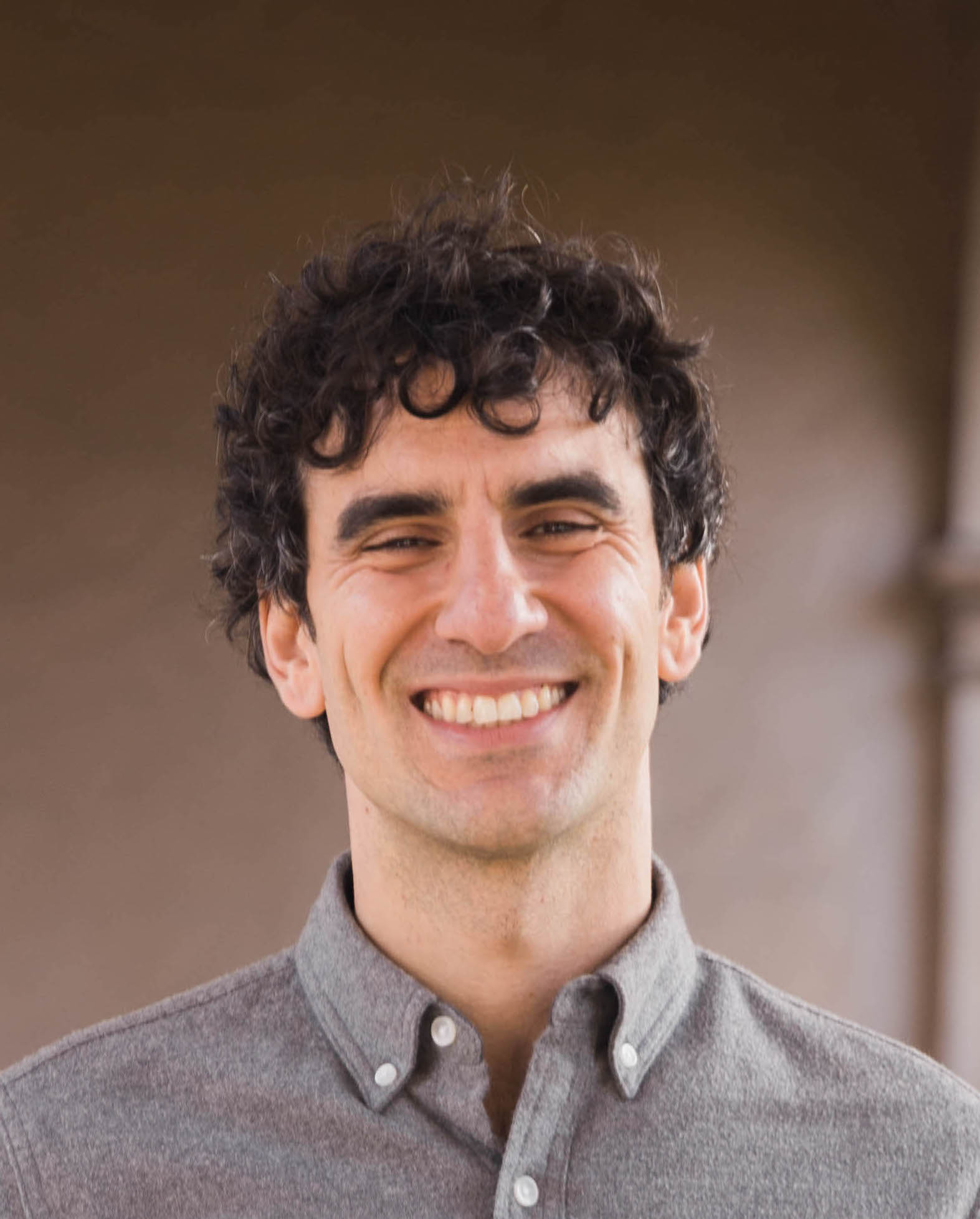
Dr. Shirag Shemmassian is the Founder of Shemmassian Academic Consulting and one of the world's foremost experts on college admissions. For over 20 years, he and his team have helped thousands of students get into top programs like Harvard, Stanford, and MIT using his exclusive approach.