
How to Get Into Cornell University (2026–2027): Requirements, Acceptance Rate, and Essay Strategies
Cornell’s acceptance rate is 9.2%. See 2026–27 admission requirements, Early Decision vs. RD odds, SAT/ACT ranges, and supplemental essays.

Everything you need to know to get into Cornell University

What You'll Learn
How Hard It Is to Get In
Cornell's latest overall and Early Decision acceptance rates, plus the GPA and SAT/ACT scores typical of admitted students.
Admissions Requirements
What you need to apply, including test scores, recommendation letters, high school coursework, and college-specific portfolios, resumes, or interviews.
Early Decision vs. Early Action
How Cornell's binding Early Decision works, this cycle's deadlines, and how to decide whether applying early is right for your child.
Supplemental Essays
The college-specific prompts for each of Cornell's undergraduate colleges and schools, plus a sample essay that worked.
How to Stand Out
Why choosing the right Cornell college, showing depth in your intended field, and naming specific Cornell resources set strong applicants apart.
Tuition, Aid, and Transfers
How costs differ between endowed and state contract colleges, and the pathways for transferring into Cornell, including the Guaranteed Transfer Option.
Cornell admissions at a glance (2026–2027)
Cornell quick facts
How hard is it to get into Cornell?
Cornell University admissions requirements
Does Cornell have Early Action? Cornell Early Decision vs. Regular Decision
Cornell supplemental essays 2026–2027
How to stand out in the Cornell admissions process
Cornell tuition and financial aid
Alternative pathways into Cornell: transferring
Cornell admissions FAQs
----
Cornell admissions at a glance (2026–2027)
If your child is a competitive applicant for Ivy League and other Ivy+ schools (e.g., Johns Hopkins, Duke), you might be encouraging them to apply to the youngest and largest Ivy: Cornell. Cornell’s alumni are among the most notable in a variety of fields, from hotel management and engineering to psychology and veterinary sciences, so your child will have ample career opportunities after Cornell.
Cornell’s beautiful campus, surrounded by hills, gorges, lakes, and breathtaking vistas, will provide your child with the chance to escape into the great outdoors. The town of Ithaca, with more restaurants per capita than New York City, offers students plenty of options for entertainment just a short walk from campus.
From years of advising students, we’ve assembled some crucial information for you and your child about how to get into Cornell.
Cornell University comprises nine colleges that offer over 4,000 courses. No wonder that the Cornell motto is “I would found an institution where any person can find instruction in any study.”
Getting into Cornell would allow your child to study literature with revered writers, research in the labs of world-class biologists, study history in Cornell’s expansive collection of archives, or pursue an interest in music in the country’s oldest musicology department.
Your child can spend their summers taking advantage of the enormous network and funding opportunities available at Cornell. Perhaps they’ll conduct research at Cornell’s medical school in New York City or travel to rural Ecuador to study an indigenous language. They might intern at the White House or at a tech company in the Bay Area. No matter what they pursue, the Cornell name will catch the attention of recruiters and hiring managers.
Graduates lead startup companies, work on Wall Street, write poetry, and travel the world with Fulbright Fellowships, to name a few opportunities. They are Nobel and Pulitzer winners, TV stars, and Supreme Court Justices. With one of the largest networks in the Ivy League, Cornell and its alumni will help your child succeed throughout their career.
----
Cornell University quick facts
| Cornell University Quick Facts | |
|---|---|
| Applicants | |
| Acceptances | |
| Matriculants | |
| Acceptance Rate | |
| Early Decision Acceptance Rate | |
| Early Decision Deadline | |
| Regular Decision Deadline | |
| Accepts Common App? | |
| Test Policy | |
| SAT/ACT 50th Percentile | |
| Application Fee | |
| Tuition and Fees (Endowed Colleges) | |
| First-Year Cost of Attendance (Endowed Colleges) | |
| Tuition and Fees (State Contract Colleges) | $74,970 (non-NY residents) |
| First-Year Cost of Attendance (State Contract Colleges) | $99,734 (non-NY residents) |
Cornell University rankings
Here’s where Cornell ranks:
Forbes: 14
Niche: 21
U.S. News & World Report: 14 (tie)
Wall Street Journal/Times Higher Education: 13 (US) 21 (world)
To see where Cornell stands among Ivy League universities, see our guide on Ivy League rankings.
(Suggested reading: Ivy League Rankings)
Where is Cornell?
Cornell is located in Ithaca, NY, a small town just over four hours away from New York City with a population of 33,632 in 2025.
Cornell University setting
Rural. Picturesque and cozy, Ithaca is home to splendid cafés, restaurants, bookstores, concert venues, and more. The rural campus is known for its access to nature, especially its lakes, gorges, waterfalls, hills, and canyons.
Cornell student population
Undergraduate population: 16,138
Grad and professional school population: 10,423
----
How hard is it to get into Cornell?
Getting into Cornell is very hard. Cornell admitted 9.2% of applicants for the class of 2030, making it one of the most selective universities in the country. Most admitted students rank in the top 10% of their high school class and score 1490–1550 on the SAT or 34–36 on the ACT. Odds also vary by which of Cornell’s undergraduate colleges you apply to and whether you apply Early Decision, where acceptance rates are typically higher than in Regular Decision (nearly 12 percentage points higher for the class of 2030).
Cornell acceptance rate (class of 2030)
Here are the admissions statistics for Cornell’s most recent class:
Acceptance rate: 9.2%
Matriculation rate: 5.6%
Conversion rate (matriculants/acceptances): 60.9%
Applications: 65,514
Acceptances: 6,040
Matriculants: 3,681
(Suggested reading: Ivy League Acceptance Rates)
Cornell Early Decision acceptance rate
Early Decision acceptance rate: 20.9%
Early Decision applications: 7,919
Early Decision acceptances: 1,653
Early Decision matriculants: 1,608
Cornell undergraduate enrollment by college
Here is the undergraduate enrollment for Cornell’s nine colleges (the Dyson and Nolan Colleges of Business are combined in this list):
Who gets into Cornell? (GPA, SAT/ACT, and demographics)
To help you assess your child’s odds of getting into Cornell, we’ve compiled the demographic and academic statistics for 2026:
84% of students who reported their high school class rank were in the top 10% of their graduating class.
Average GPA: Cornell doesn’t publish its average admitted student GPA, but it is likely at or near 3.9.
Cornell 50th percentile ACT score: 34
25th percentile: 33
75th percentile: 35
Cornell 50th percentile SAT score: 1530
25th percentile: 1490
75th percentile: 1550
International students: 10.2%
Black, Hispanic, and/or Indigenous U.S. students make up 14% of the first-year students expected to enroll in Fall 2026.
Most students pursue degrees in the College of Arts & Sciences and the College of Engineering, followed by the College of Agricultural & Life Sciences.
Over 90% of our students get into one or more of their top 3 schools
Get our free 110-page guide for strategies to become the kind of applicant that selective colleges love to admit: How to Get into America's Elite Colleges: The Ultimate Guide
----
Cornell University admissions requirements
Cornell application requirements
Cornell accepts the Common Application, which means your child will need the following to apply:
2 teacher letters of recommendation
1 counselor recommendation (from the school college or guidance counselor)
School report, midyear report, and official transcripts sent from your child’s school
Need inspiration for your Common App personal statement? Click below for instant access to 25 full-length example essays including advanced breakdowns of why they resonate with admissions committees.
Gain instant access to 25 exclusive full-length examples covering all seven prompts, plus comprehensive analyses for each to help you craft stellar essays.
Does Cornell require the SAT or ACT?
Yes, first-year applicants are required to submit SAT or ACT scores when applying to Cornell. Applicants may self-report test scores on the testing section of the Common Application or through their Cornell Applicant Portal after applying. Applicants are strongly encouraged to double check the accuracy of all self-reported scores.
Enrolling students are required to provide official scores from the testing agency for self-reported SAT and/or ACT scores. Failure to verify self-reported scores with official scores may result in the revocation of a student's offer of admission.
Cornell letters of recommendation requirements
Applicants are required to submit two teacher recommendation letters, which should highlight your child’s academic strengths and contributions to the classroom.
Applicants are also required to submit a counselor recommendation, which highlights your child’s accomplishments within the context of their high school. The letter should come from your child’s school counselor, college counselor, principal, or headmaster. Your child won't be disadvantaged if their high school structure and counselor’s caseload didn't allow them the opportunity to build a personal relationship with their counselor.
High school course requirements by Cornell college
Like most of its counterparts in the Ivy League and Ivy Plus cohort, Cornell is seeking a sense of purpose from its students.
Cornell students show passion through success in extracurricular activities, especially by committing to a small number of clubs, teams, projects, and leadership roles. Admissions officers are looking for students who have developed a strong sense of what they might study and why Cornell is the best place to pursue that major.
Admissions officers will look to see if your child took advantage of all the opportunities they were presented in high school. This means that if your child’s school only offered AP Calculus AB and AP US History, they should take both of those classes and as many honors classes as possible. Cornell will be especially happy to see that your child took a summer course in chemistry at the local community college or participated in a summer program at Brown.
Here are the specific requirements for each of Cornell’s nine colleges:
College of Agriculture and Life Science: 4 units of English, 4 of mathematics (pre-calculus is required), and 3 of science (biology and chemistry are required; physics is recommended) are recommended.
College of Architecture, Art, and Planning: 4 units of English, 3 of mathematics, and 3 of science are required; 3 units of foreign language are recommended.
College of Arts & Sciences: 4 units of English, 3 of mathematics (including pre-calculus; an additional unit of advanced math is recommended), 3 of science (an additional unit of advanced science is recommended), and 3 of one foreign language are required.
College of Engineering: 1 unit of chemistry, 1 of physics, and 4 of mathematics (including 1 of calculus) are required; 1 unit of computer science and 1 of biology are recommended.
College of Human Ecology: 4 units of English, 4 of mathematics (calculus is strongly recommended), and 4 of science (including 1 of biology, 1 of chemistry and/or physics, and advanced coursework, such as AP or IB, if available in biology, chemistry or physics) are required.
The Cornell Jeb E. Brooks School of Public Policy: 4 units of English, 4 of mathematics (calculus and/or statistics is recommended), and 3 of science are required.
Cornell Peter and Stephanie Nolan School of Hotel Administration: 4 units of English, 4 of mathematics (pre-calculus is required; calculus is strongly recommended unless pre-calculus is completed in grade 12, and calculus is preferred to AP statistics), and 2 of science (1 of chemistry is required; an additional unit of science is recommended), and 3 of a foreign language are required.
Charles H. Dyson School of Applied Economics and Management: 4 units of English, 4 of mathematics (calculus is required if offered at your child’s school; advanced mathematics in grade 12 is preferred to AP Statistics), and 3 of science (1 of chemistry and 1 of biology are required; an additional unit of science is recommended) are required.
The School of Industrial and Labor Relations: 4 units of English and 4 of mathematics are required.
Does Cornell admit by major or by college?
Cornell admits students by its nine individual undergraduate colleges and schools, not by a specific major. Your child must submit an application to one college to which they wish to apply per application cycle.
Portfolios, resumes, and other college-specific requirements
Here are the special application requirements for each college:
College of Agriculture and Life Science: Landscape Architecture applicants are required to submit a portfolio.
College of Architecture, Art, and Planning: Architecture and Fine Arts applicants are required to submit a portfolio. Video interviews are required for applicants to the Architecture program.
College of Arts & Sciences: No special application requirements.
College of Engineering: One of the letters of recommendation (two are required for all applicants) must be from a math, science, or computer science teacher.
College of Human Ecology: Design + Environmental Analysis, Fashion Design, and Fashion Design Management applicants are required to submit a design supplement via SlideRoom.
The Cornell Jeb E. Brooks School of Public Policy: No special application requirements.
Cornell Peter and Stephanie Nolan School of Hotel Administration: Applicants must submit a resume as part of their application.
Charles H. Dyson School of Applied Economics and Management: Applicants must submit a resume as part of their application.
The School of Industrial and Labor Relations: No special application requirements.
----
Does Cornell have Early Action? Cornell Early Decision vs. Regular Decision
No, Cornell does not have Early Action but instead provides the option of applying Early Decision.
Your child can apply Early Decision to Cornell by November 1 and receive a decision of either accepted, deferred, or denied, by mid-December.
Cornell follows the Early Decision (as opposed to Early Action) model, which is binding. This means that your child must commit to attending Cornell if accepted. If accepted, they must withdraw all of their other applications.
Defer means your child will be re-entered into the pool and will hear back by early April, and may be accepted, wait-listed, or rejected then. If they are accepted after being deferred, they are free to attend another university if admitted with the Regular Decision pool.
Your child can also apply Regular Decision, by January 2.
Cornell application deadlines 2026–2027
| Cornell Application Deadlines (2026–2027) | Materials Due |
|---|---|
| November 1, 2026 | Early Decision application; $85 application fee or fee waiver; portfolio or design supplement if required by program of interest |
| November 13, 2026 | All other Early Decision required materials |
| January 2, 2027 | Regular Decision application; $85 application fee or fee waiver; portfolio or design supplement if required by program of interest |
| January 19, 2027 | All other Regular Decision required materials |
Should your child apply Early Decision to Cornell?
Early decision might be the right choice for your child:
If Cornell is their top choice
If there’s no other school they’d like to apply to via Early Decision or restrictive Early Action
If they are ready to commit to attending Cornell
If they have a strong sense of what school and program they will pursue at Cornell
If their test scores and grades are strong by the end of junior year
In recent years, Cornell has accepted nearly half of its class in the Early Decision pool. That’s probably because students who apply Early Decision to Cornell are well prepared academically, have a strong sense of what they will study at Cornell, and are enthused to commit to Cornell if accepted.
Applying Early Decision offers a slight edge to applicants, as it shows that they are committed to attending the university.
Want to know exactly what it takes to get into America's most selective colleges?
Get our free 110-page guide we use to help our students routinely get admitted to schools like Columbia and Princeton: How to Get into America's Elite Colleges: The Ultimate Guide
----
Cornell supplemental essays 2026–2027
(Note: While this section covers Cornell’s admissions essays specifically, we encourage you to view additional successful college essay examples.)
Cornell no longer requires a single university-wide supplemental essay for all applicants as it did in previous cycles. Instead, applicants must complete responses to writing prompts that are specific to the individual undergraduate college or school they apply to.
Acing the supplemental essays is a crucial part of your child’s strategy to get into Cornell. In addition to the Common App personal statement, Cornell’s supplemental essays help admissions officers develop a sense of why your child wants to study at Cornell, what they wish to study there, and how they might be a strong fit. Cornell is looking for a strong sense of purpose, so students need to apply to the college which best fits their interest, passions, and career goals.
Here’s what Cornell writes about its supplemental essays, which they also call “college interest essays”:
The primary focus of your college interest essay should be what you intend to study at Cornell. In the online Common Application Writing Supplement, please respond to the essay question below that corresponds to the undergraduate college or school to which you are applying.
College of Agriculture and Life Sciences essays
Question 1: What interests you about the major you selected? Tell us about experiences (both in and outside of the classroom), questions, and goals that influenced your choice. (350-word limit)
Question 2: What draws you to Cornell’s College of Agriculture and Life Sciences (CALS)? Reflect on the learning, community, or impact opportunities that matter most to you, and share how they align with Cornell CALS (as you understand it currently). (350-word limit)
College of Architecture, Art, and Planning essays
B.Arch Applicants: Describe how your interests connect to architecture. Include an example of a creative project, design experience, or personal passion that sparked your interest in pursuing a 5-year professional degree in architecture. Reflect on how this experience shaped your understanding of the field and your motivation to study architecture. (650-word limit)
BFA Applicants: Submit an artist statement describing your creative interests and practice. Address how your work reflects your artistic voice, influences, and process, and how studying art at Cornell AAP would support and expand your practice. (You will also be prompted to upload a copy to your Slideroom portal.) (650-word limit)
URS Applicants: Describe your interest in urban and regional studies. Discuss experiences, ideas, or issues that have shaped your interest in cities, communities, and regional systems, and explain how URS at Cornell aligns with your academic and career goals. (650-word limit)
College of Arts and Sciences essay
At the College of Arts and Sciences, your education is yours to shape. Describe an intellectual passion, question, or idea that has captured your attention—whether it emerges from your studies or extends beyond your coursework. What specific aspects of our liberal arts curriculum would you draw on to explore and connect your varied interests? (650-word limit)
Brooks School of Public Policy essays
All Applicants: Discuss your interest in pursuing a major in policy at the Cornell Jeb E. Brooks School of Public Policy and what draws you to this field of study. You are encouraged to consider including details related to your personal experiences, values, academic influences, or extracurricular activities that have shaped your perspective and future goals. (650-word limit)
DC Start Applicants only: Please describe why you are interested in being considered for the Brooks School DC Start program. (350-word limit)
SC Johnson College of Business essay (Dyson and Nolan)
What kind of a business student are you? Using your personal, academic, or volunteer/work experiences, describe the topics or issues that you care about and why they are important to you. Your response should convey how your interests align with the school to which you are applying within the Cornell SC Johnson College of Business (Charles H. Dyson School of Applied Economics and Management or the Cornell Peter and Stephanie Nolan School of Hotel Administration). (650-word limit)
Example:
“Cam’s winning!” My mom announced with a grin.
My sister Chau widened her eyes in disbelief. “That can’t be right! Did you count this one?” She struggled to flip over the bag of rice in my cart, searching for a price label.
“Thirty percent off on Saturdays,” I proudly informed her.
This is a longstanding weekly family activity for us: competing to see who can put together the ingredients for a nutritious meal that will feed the whole family without going over our budget.
Most kids don’t get that worked up about rice, but my sister and I were never quite like most other kids. As second-generation immigrants, we live on the boundary line between Vietnamese and American, fluent in English and up on all the TikTok trends, but never forgetting the sacrifices our parents went through to make our home here, send us to a good high school, and pay the phone bills that feed our TikTok habit.
Back in eighth grade, I went through a phase where I was painfully aware of my classmates' stylish new back-to-school wardrobes, compared to the hand-me-downs I got from Chau every few months. When my parents shot down my idea of a weekly allowance, I started knocking on neighbors’ doors to offer to shovel driveways, mow lawns, rake leaves, or paint fences. I saved up one hundred dollars by the end of the summer–and then I blew it all on a new backpack and sneakers, hoping to wow everyone with my fresh look. New year, new me.
Except, as I walked into the gym on the first day of freshman year, nobody even noticed my new threads. Maybe mom and dad were onto something after all.
After that, I started putting my deeply-rooted budgeting skills to good use. I started a small lawn care business, and this time, I budgeted only a fraction of my income toward things like fast food or video games. I started placing fifteen percent per month into a savings account, and I invested the rest in stocks and mutual funds. With the help of my dad and some financial planning blogs, I learned to closely analyze market trends, and within two years, I saw a ten percent ROI. It felt nice to make money, but the most thrilling thing was seeing my hours of market research come to fruition.
In the fall of Junior year, I felt ready to pass along what I’d learned, so I founded a Financial Literacy Club at my school. Now I provide weekly lessons for our thirty-two members, and this summer, I developed a new module for the club curriculum about investing in ethical companies with a demonstrated commitment to sustainability and social good.
As my career goals in Financial Advising come into clearer focus, I’m more grateful than ever for the way my parents raised me. Their money management lessons have shaped me into a patient, thorough, discerning investor, and as I build both my portfolio and my financial expertise, I’ll carry those core traits with me to the Dyson School of Applied Economics and Management.
At Dyson, I’m excited to work alongside Professor Vicki Bogan to bolster the efforts of the Financial Literacy Coordinating Committee by providing Cornell students from every discipline with a solid foundation in financial responsibility. I’ve gained such a strong sense of independence and agency through my financial endeavors, and I think every college student deserves to feel in control of their finances. I also want to draw on what I’ll be learning from courses like the Social Entrepreneurship Practicum and Toward a Sustainable Global Food System as I join the Impact Investing Club. There, along with fellow stock market enthusiasts, I want to support sustainable development ventures through the club’s Private Equity Impact Fund partners around the globe, so we can be confident that our investments are sparking positive change.
College of Engineering essays
Long Essays (200-word limit each)
Question 1: Fundamentally, engineering is the application of math, science, and technology to solve complex problems. Why do you want to study engineering?
Question 2: Why do you think you would love to study at Duffield Engineering?
Short Answer Responses (100-word limit each)
Question 1: What brings you joy?
Question 2: What do you believe you will contribute to the Duffield Engineering community beyond what you've already detailed in your application? What unique voice will you bring?
Question 3: What is one activity, club, team, organization, work/volunteer experience or family responsibility that is especially meaningful to you? Please briefly tell us about its significance for you.
Question 4: What is one award you have received, or achievement you have attained, that has meant the most to you? Please briefly describe its importance to you.
College of Human Ecology essay
The College of Human Ecology prepares students to respond to human needs through an education organized around the interconnected issues that profoundly affect individuals, communities, and the institutions that shape our lives.
Think about an extracurricular/community engagement/work experience that most closely connects you to the CHE mission and your intended choice of major. Tell us what that experience taught you about your broader community and its needs, and the impact you can make. How will your intended CHE major help you make that impact? (Refer to these essay application tips as you write your essay.) (550-word limit)
School of Industrial and Labor Relations essay
Using your personal, academic, or volunteer/work experiences, describe the topics or issues that you care about and why they are important to you. Your response should show us that your interests align with the ILR School. (650-words)

Gain instant access to essay examples for every supplemental essay prompt from the top universities and BS/MD programs in the United States. Subscribe today to lock in the current investments, which will be increasing in the future for new subscribers.
----
How to stand out in the Cornell admissions process
Cornell admits applicants who show a clear sense of purpose: they know what they want to study, why, and why Cornell’s specific college is the right place to do it. Almost every applicant has strong grades and test scores, so admissions officers rely on three things to tell them apart: how well your child matches the college they apply to, how deeply they have explored their field, and how specifically they can connect their goals to Cornell’s resources.
Pick your Cornell college strategically
As we mentioned earlier, applicants don’t apply to Cornell as a whole. They apply to one of its undergraduate colleges, and that college evaluates the application. This makes the choice of college one of the most important decisions in the process. It determines which supplemental essay your child writes, which courses they’re expected to have taken, and who reads the application.
Choose the college that fits your child’s genuine interests and record, not the one that seems least competitive. Admissions officers can tell when an applicant’s activities and coursework point toward engineering but the application goes to a different college. An applicant whose transcript, activities, and essay all point toward the same field is far more convincing than one who appears to be using a college as a side door. Internal transfers between colleges after enrolling is possible but not guaranteed and requires meeting the new college’s requirements.
Families should also understand the difference between Cornell’s state contract colleges and its endowed colleges. New York residents pay lower tuition at the contract colleges (see the next section on tuition for more info). If your child’s interests genuinely align with a contract college’s programs, that can be a meaningful financial advantage. It isn’t a shortcut in admissions, though.
Show depth in your intended field of study
Cornell wants to see that your child has already pursued their academic interest beyond the classroom. Depth matters more than breadth. A few sustained commitments related to the intended field carry more weight than a long list of unrelated activities.
Depth can take many forms: advanced coursework in the subject, independent research, summer programs, a long-term project, a job, or a leadership role tied to the field. Strong applicants also take the most rigorous courses available at their school, especially in subjects their intended college emphasizes. For example, that means calculus, physics, and chemistry for engineering applicants, or advanced biology and chemistry for many CALS majors.
The goal is a coherent story. When an admissions officer finishes the application, they should be able to describe in one sentence what your child cares about and what they have done to work towards it.
Prove fit with specific Cornell resources
Cornell’s college-specific essays ask applicants to explain why they want to study their chosen field at Cornell in particular. The strongest answers name specific programs, courses, faculty research, labs, or campus organizations, and explain how your child would use them. Generic praise for Cornell’s prestige, Ivy League status, or beautiful campus won’t help.
Compare these two sentences:
Weak: “Cornell’s world-class research opportunities will help me pursue my passion for biology.”
Strong: “After two summers banding birds with my local Audubon chapter, I want to join citizen-science projects at the Cornell Lab of Ornithology while majoring in Biological Sciences through CALS.”
The second sentence connects past experience to a concrete Cornell resource and a specific major. That is exactly the link admissions officers are looking for. Encourage your child to research their intended college’s majors, course offerings, and student organizations before drafting. Then they should make sure every resource they mention is tied to something they have already done or clearly want to do.
----
Cornell tuition and financial aid
The cost of attending Cornell depends on which of the university’s nine colleges your child chooses to attend. That’s due to the fact that certain Cornell colleges are “state contract colleges,” meaning they receive funding from the state of New York, while others are “endowed colleges” and are privately funded. As such, the tuition at Cornell’s state contract colleges differs for in-state and out-of-state residents, whereas all students at the endowed colleges pay the same rate.
Cornell state contract colleges are comprised of:
The Cornell SC Johnson College of Business – Charles H. Dyson School of Applied Economics and Management
The Cornell Jeb E. Brooks School of Public Policy (Bachelor of Science candidates only)
Cornell’s endowed colleges are as follows:
The Cornell SC Johnson College of Business – School of Hotel Administration
The Cornell Jeb E. Brooks School of Public Policy (non-B.S. candidates)
In 2026–2027, the cost of attendance (i.e., tuition, room, board, and fees) at Cornell’s endowed colleges runs $99,734. At the state contract colleges, out-of-state students also pay $99,734, whereas in-state students pay $75,604.
Students whose families earn under $75,000 per year generally receive financial aid packages without any loans or expected parental contribution. For students who do take out loans, the average debt upon graduation is $25,655.
----
Alternative pathways into Cornell: transferring
Typically, students apply to and enter Cornell directly from high school, but there are cases where getting into this dream school is not so straightforward. Thankfully, Cornell is quite open to receiving applications from students who may have started their college education somewhere else.
Whether your child began at another institution for financial reasons, grades, or just realized after the first year that it doesn’t seem like the right fit, it’s possible to transfer into Cornell. However, this process is a bit different from applying as a first-year student.
Cornell transfer application process
The primary application components for transfers to Cornell are largely the same as for first-year students. Your child will need to complete the Common Application, obtain both college and high school transcripts, submit a College Report saying they are in good academic standing at their current institution, a mid-term report if their mid-term grades are available, and letters of recommendation from instructors who taught them at their current school.
There are also some additional application items, such as portfolios and design supplements, if your child is applying to a major that requires one, like the Schools of Architecture, Art, Design and Environmental Analysis, or Fashion Design and Management. They’ll also need to complete the Cornell transfer-specific writing supplement, which has different essay prompts depending on which school your child is applying to.
College-specific transfer considerations at Cornell
Each of Cornell's nine colleges has distinct transfer requirements and cultures that your child should understand. Some colleges may just require a portfolio, but others have recommended and required coursework that should be completed before entry into Cornell.
For instance, the College of Engineering requires transfers to have completed the equivalents of four of their courses within their Core Curriculum covering calculus, physics, and chemistry with an engineering focus. Without this foundational knowledge, your child is ineligible to transfer to Cornell.
The College of Agriculture and Life Sciences tends to be a bit more accessible, but your child may have additional requirements depending on their choice of major. For example, if they’re choosing to major in Landscape Architecture, they will need to submit a portfolio of work with their application. It’s important to check each school’s transfer requirements to be sure your child is ticking all the right boxes to have the best chance of success.
Cornell’s guaranteed Transfer Option
Some first-year applicants who aren’t admitted to Cornell receive a guaranteed Transfer Option instead. Students can’t apply for a Transfer Option. Cornell’s colleges offer it to selected applicants they believe would succeed at Cornell after more preparation. A student who accepts the offer spends a set period, usually one year, at another college or university. If they complete the required courses and meet their Cornell college’s GPA requirements during that time, they’re guaranteed a place at Cornell.
The Transfer Option is offered by some Cornell colleges but not all, including CALS, and each college sets its own terms. If your child receives this offer, review the specific requirements carefully before choosing where to enroll for the transfer period.
Transfer application strategy at Cornell
Successful transfer applications to Cornell display an understanding of how the different colleges evaluate candidates. Your child will not only have to demonstrate academic excellence, but they’ll need to frame that excellence, their interests, and their talents in a way that appeals to the admissions committee at their chosen school.
Have your child research specific faculty members, opportunities, or programs at their intended college that align with their academic interests and make the case for why Cornell is the ideal institution for them to achieve their dreams in their supplemental essays. Remember, specificity is key. As an Ivy League institution, Cornell is well-aware of its offerings and prestige, so generic statements praising Cornell or mentioning its Ivy League status won’t help your child stand out. Admissions committees are looking for a genuine fit within their respective schools’ communities. What does the school offer that your child can’t get anywhere else, and what will your child add to Cornell if admitted?
----
Cornell admissions FAQs
Does Cornell use the Common App?
Yes, Cornell accepts the Common Application, and applicants complete Cornell’s supplemental essays through the Common App’s Cornell writing supplement. Applicants also submit the Common App personal statement, recommendation letters, and school documents through the same platform. Cornell does not accept the Coalition Application.
Can you apply to more than one Cornell college?
No, applicants can apply to only one of Cornell’s undergraduate colleges or schools in a given admissions cycle. That college reviews the application, so choose the one that best matches your child’s academic interests and preparation.
Does Cornell interview applicants?
Cornell does not offer general admissions interviews for most applicants. Video interviews are required for applicants to the Architecture program located in the College of Architecture, Art, and Planning. Otherwise, personal interviews are not required or available for admission to any of Cornell’s other undergraduate level programs.
Does Cornell consider demonstrated interest?
No, Cornell’s Common Data Set lists an applicant’s level of interest as “not considered” in admissions decisions, so campus visits or opening admissions emails won’t affect your child’s chances. Your child should instead show genuine interest through specific, well-researched college essays that explain why Cornell’s programs fit their goals.
Final thoughts
Cornell is among the most competitive schools in the country. Because all students in the matriculating class have excellent grades and high test scores, Cornell is also looking for applicants who have a sense of what they might do once they arrive at the university. By cultivating this sense of purpose through intellectual curiosity and extracurricular passions, your child can become an excellent applicant to Cornell.
About the Author
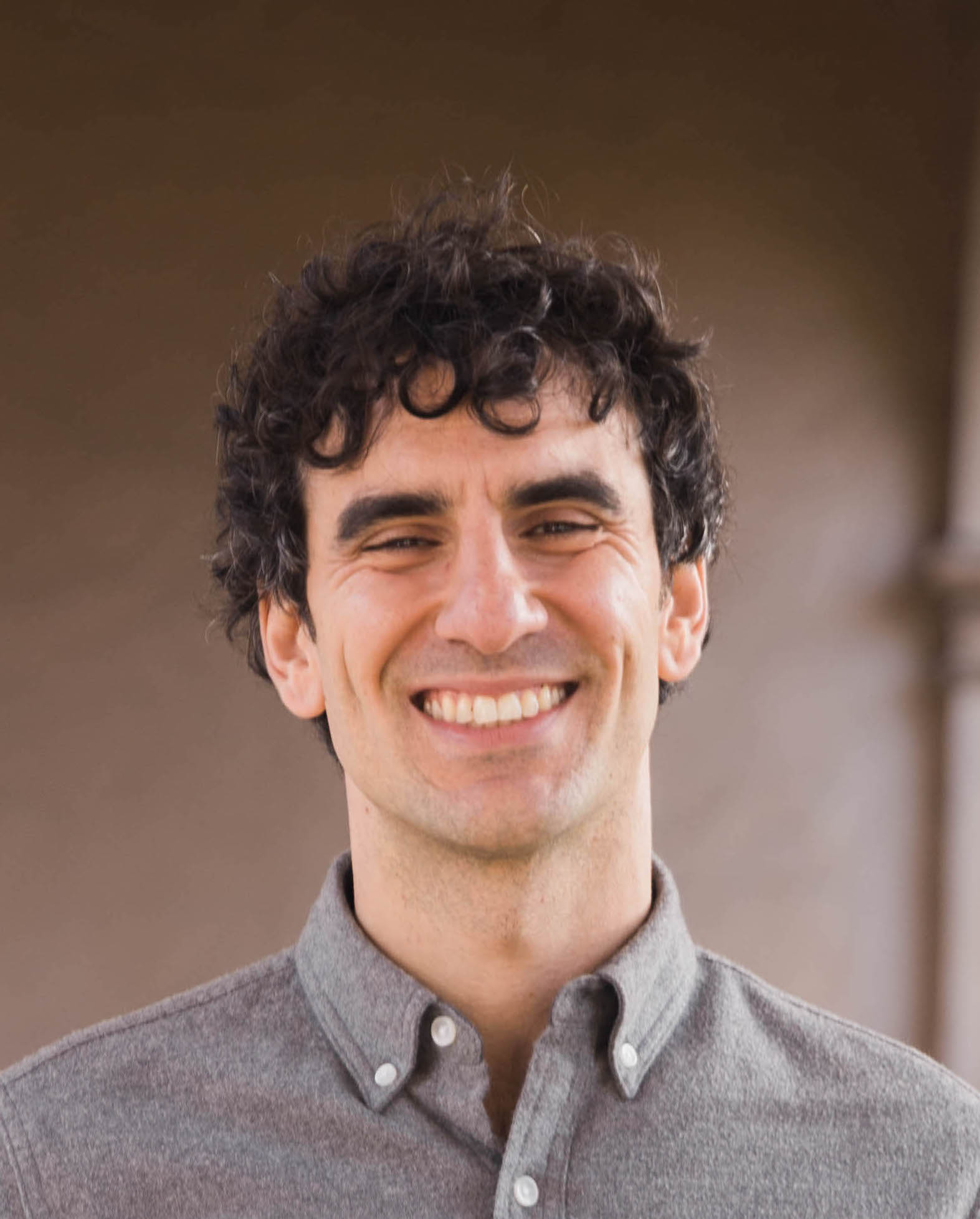
Dr. Shirag Shemmassian is the Founder of Shemmassian Academic Consulting and one of the world's foremost experts on college admissions. For over 20 years, he and his team have helped thousands of students get into top programs like Harvard, Stanford, and MIT using his exclusive approach.
THERE'S NO REASON TO STRUGGLE THROUGH THE COLLEGE ADMISSIONS PROCESS ALONE, ESPECIALLY WITH SO MUCH ON THE LINE. SCHEDULE YOUR COMPLIMENTARY CONSULTATION TO ENSURE YOU LEAVE NOTHING TO CHANCE.