
Clinical Rotations: How to Succeed & What to Expect
Learn what to expect leading up to and during clinical rotations, and how to set yourself up for success.
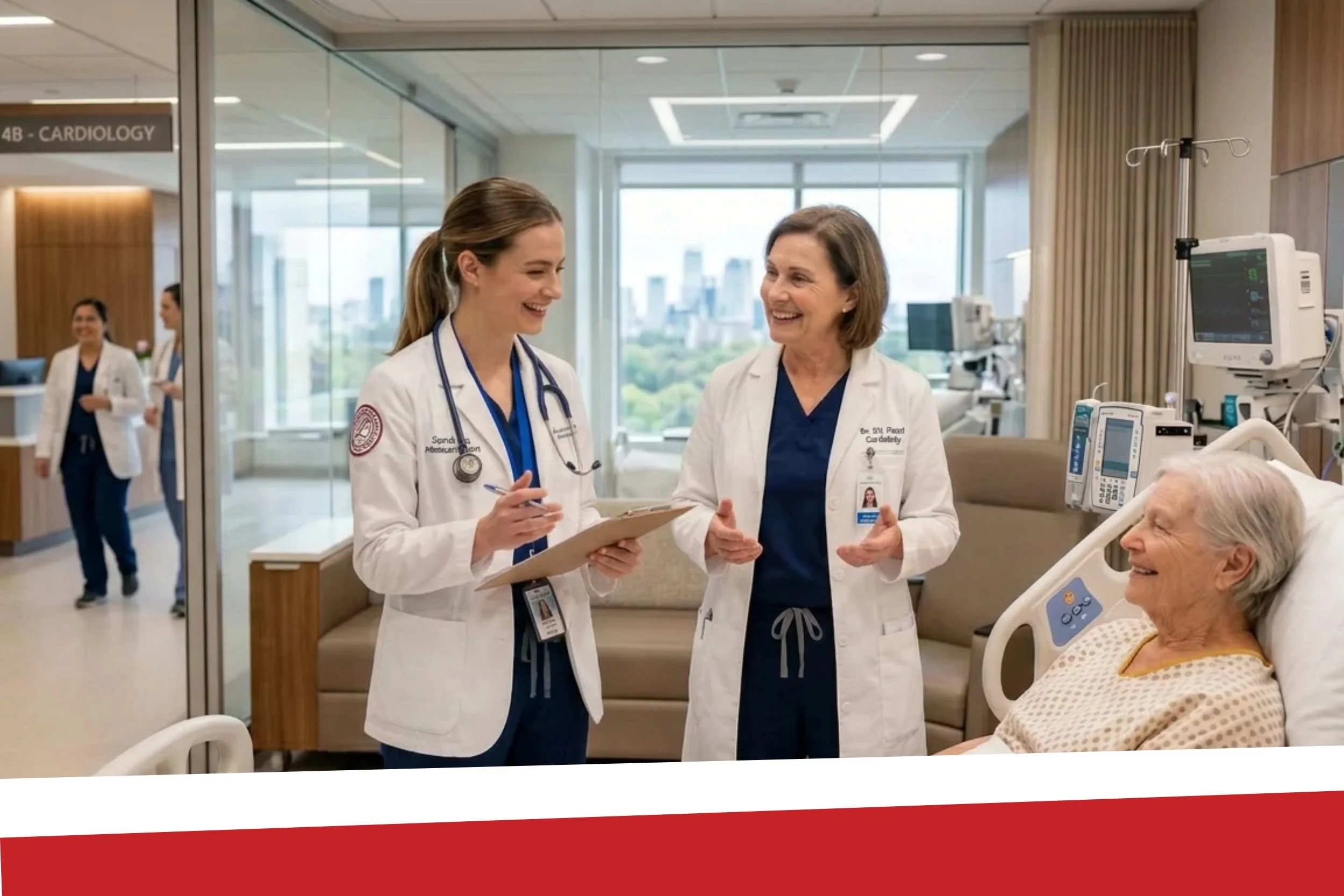
The latter half of medical school is when you spend a lot more time in a clinical setting—AKA rotations

What You'll Learn
Core vs. Elective Rotations
How required M3 clerkships differ from M4 electives, and why timing your electives matters for ERAS letters.
When Away Rotations Pay Off
Which competitive specialties weigh away rotations most heavily, and what they typically cost.
How You're Evaluated
The three categories attendings and residents use to assess your performance on rotations.
Mastering Shelf Exams
How to study efficiently for NBME and COMAT exams without falling behind on rotation duties.
Why Soft Skills Matter More Than You Think
How professionalism and reliability can outweigh board scores in determining rotation success.
Five Habits of Successful Students
Expert tips on initiative, teamwork, feedback-seeking, and sustainable effort during rotations.
Rotations vs. Residency
Key differences between unpaid clinical training as a student and paid, specialized residency work.
What are clinical rotations like in medical school?
Core vs elective rotations
What do medical students do in rotations?
How students are evaluated
Expert advice for clinical rotation success
Frequently asked questions
Clinical rotations are generally in your third and fourth year of medical school, where you transition from primarily classroom and preclinical learning to hands-on experience in a clinical setting.
Students work alongside physicians and other healthcare professionals, applying what they’ve learned in a classroom or lab to real-life patient care. Rotations are key in your journey towards medical residency.
You need to pass USMLE Step 1 during M2 in order to enter your clinical rotation years. Now you’re headed towards taking USMLE Step 2 CK/COMLEX Level 2-CE around the beginning of M4.
Below, we’ll cover what to expect leading up to and during clinical rotations, core vs. elective rotations, how you’re evaluated, and how to set yourself up for success on your way to residency. Dr. Olivia Sutton, a physician at Harvard, will provide unique insights throughout the article.
THERE'S NO REASON TO STRUGGLE THROUGH THE HIGH-STAKES MEDICAL RESIDENCY APPLICATION PROCESS ALONE. CLICK HERE TO SCHEDULE YOUR COMPLIMENTARY CONSULTATION TO ENSURE YOU LEAVE NOTHING TO CHANCE.
----
What happens during clinical rotations in medical school?
Clinical rotations are when medical students move out of the classroom setting and into hospitals and clinics to practice what they’re learning in a real-life environment, under the supervision of fully licensed physicians as well as medical residents who have already completed their medical degree.
Daily responsibilities range from going over a patient’s medical history to administering a physical exam (more below on day-to-day tasks). You also have to master time management so you can study for shelf exams and the USMLE Step 2 for MDs/COMLEX Level 2 for DOs.
During your clinical years (third and fourth year of medical school), you may spend almost no time on campus at your med school. Many institutions require no lecture time during M3 and M4. You may have to go to the med school building to take a shelf exam.
Med students may complete rotations at affiliated teaching hospitals, academic medical centers, community clinics, and specialized regional healthcare facilities. With most medical schools, you get to choose from a limited network of health institutions to take your core clerkships, but you have a lot more flexibility in choosing where you do your elective rotations—as long as your med school formally approves.
----
Core vs elective rotations
Core rotations (AKA core clerkships) are the 6-8 required clinical rotations that you must take in your third year of medical school. Usually, your med school gives you a short list of affiliated hospitals, clinics, and academic medical centers to choose from for core clerkships. These required rotations last 6-12 weeks and cover larger medical specialties: internal medicine, family medicine, general surgery, maybe pediatrics or OB/GYN.
Elective rotations are what you take in your fourth year of medical school—about 4-6 of them, depending on your school. You have more flexibility to choose where you do elective rotations, although your med school does need to formally approve. These elective clinical rotations go for 2-8 weeks and cover a range of medical specialties, not just the most common ones. Because of residency application season, front-load elective rotations within your preferred specialty in the summer before M4 and fall of M4, so that you can get recommendation letters for ERAS.
Here are some of the most common medical specialties in which you can do elective rotations in:
Internal medicine (numerous sub-specialties)
Cardiology
Anesthesiology
Dermatology
Diagnostic radiology
Emergency medicine
Neurology
Obstetrics and gynecology (OB/GYN)
Psychiatry
According to a 2024 study, the following specialties consider whether you did an away rotation when inviting candidates to interview for residency positions (plus what percentage of program directors indicated away rotations were a significant factor):
Radiation oncology: 100%
Neurological surgery: 93%
Emergency medicine: 88%
Orthopedic surgery: 76%
Otolaryngology (ENT): 75%
Vascular surgery: 70%
Ready to build your ERAS application?
Enter your name and email for our free workbook—the exercises we use to help applicants turn years of experiences into one cohesive application.
Home vs away rotations
When you’re more in control of your schedule during M4 (medical school year 4), you have the choice between home rotations and away rotations.
Home rotations are at your school’s medical center or affiliated hospital. Benefits include system familiarity, more predictable grading, and stronger rec letters since the faculty will have repeated, holistic exposure to your work. The vast majority of elective rotations that med students do are home rotations.
Away rotations are also called audition rotations or visiting rotations because a primary benefit of an away elective rotation is to work at a program to increase your chances of matching there for residency. Also, visiting rotations may be a necessity for competitive specialties, or you could be signaling your commitment to a certain region where you don’t otherwise have ties.
In a 2024 study, 20.8% of med school graduates had done one away rotation, while 30.7% of graduates reported doing more than one away rotation—meaning a slight majority of graduates participated in at least one away rotation.
But remember, that’s out of 4-6 elective rotations. Therefore, it’s safe to say that home rotations in M4 are still the majority of individual rotations a student does.
Also, it’s important to know that out-of-pocket costs for away rotations can cost a pretty penny. That 2024 study from earlier reported the following for out-of-pocket away rotations costs among students:
Less than $500: 22.5% of med students who did at least one away rotation
$500-$1,500: 30.7%
$1,501-$2,500: 25.6%
$2,501-$5,000: 17.4%
More than $5,000: 3.8%
----
What do medical students do in rotations?
Medical students have basic responsibilities during clinical rotations, as they continue their patient care training in a real-life healthcare environment.
Your day-to-day tasks and responsibilities will likely include the following:
Arrive early to review patient charts, lab results, and vitals.
Attend daily rounds where the full medical team discusses patient updates and treatment plans.
Ask your attending physicians and senior residents questions so you can learn how best to contribute to patient care.
Draft daily progress notes that attendings or residents typically sign off on.
Perform basic physical examinations.
Review diagnostic tests.
Practice patient communication skills and bedside manner.
Prepare for shelf board exams at the end of each rotation.
During your first clinical year (M3), focus on required core clinical clerkships that cover more generalized medical specialties.
During your second clinical year (M4), focus on elective rotations that may align with your specialty interests, leading into residency application season.
“I think of a student like ‘David,’ who was not the strongest clinically at the start of his anesthesia rotation. But every morning before the first case, he had already reviewed each patient’s airway history, relevant comorbidities, and anticipated anesthetic plan so that when the attending asked him to walk through the induction he was ready to contribute meaningfully rather than just observe. They offered to draw up medications, label syringes, and handle other busywork, which was very helpful to me as a resident at the time. That preparation paired with the initiative to help with meaningful but less ‘glamorous’ tasks directly translated to him being trusted to perform more procedures independently than any student I had supervised before, and it led to a stellar rec letter.”
–Olivia Sutton, MD, physician at Harvard
----
How students are evaluated
You will be assessed on your clinical rotation performance through shelf exams and professional observational evaluations. Let’s talk about these professional evaluations first.
When you’re a medical student on clinical rotation, you are being evaluated by multiple people, possibly including:
Attending physicians
Preceptors
Fellows
Residents
Nurse practitioners
Academic faculty
Some combination of these individuals will grade your daily work, your initiative, your performance during rounds or patient interactions, and more. What you’re being assessed on basically falls into three categories: medical knowledge, clinical reasoning, and professionalism.
“The students who consistently earn strong evaluations are the ones who are reliable, proactive, and pleasant to be around under pressure, because attendings are fundamentally asking themselves whether they would want this person on their team in residency. Do not wait to be told what to do; anticipate needs, volunteer for tasks, and demonstrate that you are thinking one step ahead.”
–Olivia Sutton, MD, physician at Harvard
What are shelf exams and how to study
You will be evaluated on your performance during the clinical rotations through shelf exams, also referred to as National Board of Medical Examiners (NBME) Subject Exams for MD students, or Comprehensive Osteopathic Medical Achievement Tests (COMATs) for DO students.
These shelf exams assess medical knowledge and clinical skills that you should be learning on your rotations: applying pathology, administering treatments, and effectively managing treatment plans over multiple days or weeks.
Study for shelf exams using high-quality question banks like UWorld or AMBOSS, and take an NBME practice exam every other week to identify weak areas for further study. Start the study process on the first day of your rotation so that you don’t have to cram later.
Find the time to study on breaks during your rotations, on the way to and from meals, during meals, and outside of your time at the rotation site—though you still want to prioritize getting good sleep and maintaining a social life for your mental and physical health.
Shelf exams are literally made up of licensure exam questions from previous years that have been shelved. There are plenty of resources out there to help you prepare for these end-of-rotation assessments; it’s more about balancing your rotation duties with study time.
----
Expert advice for clinical rotation success
Our expert advice for your clinical rotations should prepare you for shelf exam success, better letters of recommendation, and increased residency matching odds. Below are our five top tips for successful rotations.
Know your patients
Before rounds each day, review patient charts, labs, medications, overnight events, and current treatment plans. Be prepared to answer questions about your patients.
Bonus points if you come up with a treatment proposal; it’s okay if it’s not the best route because the attending physician is ultimately responsible for the patient care, and they’ll determine whether yours is a good option. If your suggestion isn’t followed, it’s fine since you’re a med student. If it is followed, you have made a good impression. Either way, you learn.
“Know your patients cold every morning… Know the patient’s history, their labs, their overnight events, plus your assessment and plan before rounds, every single day without exception.”
–Olivia Sutton, MD, physician at Harvard
Take initiative
Don’t always wait to be told what to do. Anticipate team needs and volunteer for appropriate tasks. Of course, follow through on anything you say you’ll do.
“The biggest surprise for most students is how little of success in rotations comes from knowledge and how much comes from professionalism, initiative, and self-awareness. Students who struggled academically in preclinical years often thrive in rotations because they are dependable, curious, and easy to work with, while students with strong board scores sometimes struggle because they underestimate how much interpersonal skills matter.”
–Olivia Sutton, MD, physician at Harvard
Be a team player
Show up prepared and engaged. Don’t try to get home as soon as possible, disconnecting from your patients and your team. Be pleasant, dependable, and easy to work with.
Remember that clinical care is a team effort. Everyone has a home to go to at the end of the workday. Everyone is in a similar boat to you. Make everyone’s life easier on your team, and ideally, they’ll try to do the same for you.
“Anticipate what the team needs before they ask. Understand that being a good team member is the skill you are actually being evaluated on first.”
–Olivia Sutton, MD, physician at Harvard
Ask thoughtful questions and seek feedback
Ask thoughtful questions at appropriate times. Demonstrate self-awareness and willingness to improve. Request feedback early enough to act on it. Attendings, fellows, and residents notice these sorts of things.
These physicians have experience that you don’t yet have—that you need for future success. They remember needing advice and receiving it from their mentors. They are typically more than happy to give advice and support the next crop of up-and-coming doctors.
“Beyond clinical preparation, show curiosity by asking questions at appropriate moments and following up on things you said you would look into… Asking for mid-rotation feedback early enough to act on it is one of the highest-yield things a student can do—because it shows maturity and gives you a chance to adapt before the final evaluation is written.”
–Olivia Sutton, MD, physician at Harvard
Be willing to put in the work
Clinical rotations can involve long, demanding days. Mentally prepare to put in the work for your medical education and to support patient care. Demonstrate that you’re engaged and willing to contribute to the clinical setting and patient well-being.
Do not equate giving up your mental and physical health with being a good student. Keep getting a healthy amount of sleep, and find ways to maintain a life outside your rotations. Instead of pushing yourself too hard, focus on commitment, professionalism, and willingness to help.
“Attendings and residents remember students who made their lives easier and who showed up early and fully engaged, and those impressions drive grades, evaluations, and letters of recommendation far more than shelf exam scores alone… It’s a hard period with a lot more work and hours than you’re probably used to, but try not to be ‘itching to get sent home,’ either. The more willing you are to put in the time, the more compelled people are to give you a good review.”
–Olivia Sutton, MD, physician at Harvard
----
Frequently asked questions
What is the difference between a clinical rotation and residency?
Clinical rotations are when you work as a medical student in a clinical setting, during your third and fourth years of a traditional med school curriculum. Third-year rotations are generally required core clerkships in large specialties like internal medicine and pediatrics. Fourth-year rotations are generally elective rotations that prepare you more for the particular residency specialty you’re interested in.
Medical residency is post-graduate training for MD and DO graduates, where you continue your training under supervision, but with more responsibilities and more specialized training in the field you’re going into. To apply for residency, you must choose which one or two medical specialties to apply to. Performance in rotations leads to success in residency admissions.
Ready to build your ERAS application?
Enter your name and email for our free workbook—the exercises we use to help applicants turn years of experiences into one cohesive application.
Do medical students get paid for clinical rotations?
No, medical students are not paid for clinical rotations. Rotations are still a part of their educational journey, for which they’re paying tuition.
After graduating med school, medical residency is a job that you are paid for—even interns in their first year as a resident.
How do you choose a medical specialty during clinical rotations?
You want to choose a medical specialty that suits your unique interests, skills, and competitiveness as a residency candidate.
Determine your preferred salary potential and work-life balance. That gives you a really good vision of your future in different specialties. Usually, but not always, high-salary specialties provide less predictable or consistent work-life balance.
Do you like interacting with lots of patients, or would you prefer a diagnostic specialty? Does a high-pressure surgery position excite you or worry you? In what way are you most interested in helping patients?
If your recommendation letters and Step 2/Level 2 scores aren’t stellar, are you okay with going into a less competitive specialty, like internal medicine, pediatrics, or family medicine?
Answer these questions, and you’ll be a lot closer to choosing the best medical specialty for your preferred career path.
Final thoughts
Now you’re prepared for clinical rotations in your third and fourth year of medical school. You should be better equipped to succeed on shelf exams, flourish during rotations, boost your odds of getting a good letter of recommendation, and increase your chances for residency matching.
Still need personal advice on clinical rotations and the residency application process? Our advisors are ready to help you with your unique circumstances and increase your likelihood of matching into your top-ranked residency.
About the Author
Dr. Shirag Shemmassian is the Founder of Shemmassian Academic Consulting and one of the world's foremost experts on medical school admissions. For over 20 years, he and his team have helped thousands of students get into medical school using his exclusive approach.
THERE'S NO REASON TO STRUGGLE THROUGH THE HIGH-STAKES MEDICAL RESIDENCY APPLICATION PROCESS ALONE. CLICK BELOW TO SCHEDULE YOUR COMPLIMENTARY CONSULTATION TO ENSURE YOU LEAVE NOTHING TO CHANCE.