Why Holistic Admissions Feels Rigged Against High-Achieving Immigrant Families
4.0 GPAs and 1500 SATs are no longer enough at elite universities. Here is why the US admissions system feels so opaque to Asian and immigrant families, plus the exact specialist playbook required to beat the odds.

The holistic admissions system can feel rigged against high-achieving immigrant families.

What You'll Learn
The Fall of "Perfect" Metrics
Why a 4.0 GPA, maximum AP classes, and near-perfect SAT scores no longer guarantee admission at top US universities.
The "Well-Rounded" Trap
Why trying to join every club and build a generic resume keeps students trapped in outdated admissions playbooks.
Admissions Evolution
How selective colleges shifted from traditional broad participation to today's "Community-Focused Specialist" evaluation.
Building a Distinct "Spike"
How focusing 80% of extracurricular energy on a single domain creates a magnetic, unmistakable applicant profile.
Tangible Community Impact
Why modern admissions committees prioritize specialists who apply their expertise to solve real-world community problems.
Leveraging "Prestige ROI"
Why high-earning families should pursue early merit-based private scholarships to gain essential third-party validation.
Reframing Cultural Identity
How to turn your authentic immigrant background, heritage, and unique perspective into an undeniable institutional asset.
----
Introduction to holistic admissions for immigrant families
Every admissions season, I sit across from desperate, bewildered parents. They hand me a printout of their child’s credentials: a 4.0 unweighted GPA, a 1550 SAT, fifteen AP courses with 4s and 5s, varsity tennis, classical piano, and hundreds of volunteer hours.
Then comes the gut-punch: deferred from early decision, waitlisted across the top twenty, or outright rejected.
The sentiment that follows is always the same: "We did our part. We followed every rule. We made every sacrifice. Why wasn't it enough?"
If you are an immigrant parent—and particularly if you are part of the high-achieving Asian demographic that makes up a sizable percentage of the families we advise—you are not imagining things. The feeling that the US college admissions process is confusing, opaque, and subtly stacked against your child is grounded in reality. You brought a traditional meritocratic playbook to an American game whose rules are written in invisible ink.
Complaining about the system won’t get your child an acceptance letter, nor will Supreme Court rulings. But understanding the unwritten mechanics of "holistic admissions" and deploying a precise, counter-intuitive strategy will give your child the leverage they need to win.
The “did our part” paradox
In many Asian, Middle Eastern, and European countries, higher education admissions are transparent, brutal, and simple. Whether it is the Gaokao in China, the JEE in India, or national exams in Lebanon and Europe, the system is strictly score-based. You study sixteen hours a day, you score above a certain mark, and you earn your seat at the premier university. Merit is quantified. The objective rule is clear: input equals output.
When immigrant families arrive in the United States, they apply that exact same work ethic to the American system. They invest heavily in test prep, drive their children to late-night music lessons, encourage maximum course loads, and sacrifice family vacations to build what looks like a flawless record. They hold their children to the absolute highest academic standards, which are often far higher than those applied to their peers from other demographic groups.
Then, they hit the wall of holistic admissions.
In the US, holistic admissions means that elite universities do not simply rank applicants by test scores and GPAs. Instead, admissions committees evaluate subjective qualities: "character," "personal narrative," "institutional fit," and "perceived intellectual curiosity."
For Asian families in particular, this system often feels fundamentally rigged. I’ve observed how exceptional grades and test scores have stopped being a differentiator. They simply become the entry fee just to have your file opened. Beyond that entry fee, applicants are evaluated on intangible metrics where implicit biases, subtle cultural misalignments, and vague "personality ratings" can quietly derail a world-class candidate.
When a student who did everything right gets rejected in favor of an applicant with lower scores, parents feel betrayed. They feel that the goalposts were moved after the game began.
My journey from Lebanese Armenian roots to the Ivy League
I understand this frustration not just as a consultant who has spent over twenty years advising families, but because I lived it.
My ethnic Armenian parents were born and raised in Lebanon before immigrating to the United States during the Lebanese Civil War. Like many immigrant households, ours was built on an uncompromising work ethic. My parents didn't know the nuances of American higher education, but they knew that academic excellence was non-negotiable.
Growing up, I adopted that drive. I figured out the elite admissions system and graduated from Cornell University, becoming the first and only student from my high school to attend an Ivy League institution. Later, as I pursued my doctorate, I was awarded the National Science Foundation (NSF) Graduate Research Fellowship and Paul & Daisy Soros Fellowship for New Americans.
Winning the Soros Fellowship was an especially pivotal moment in my understanding of elite selection processes. The Soros Fellowship is explicitly designed for immigrants and children of immigrants. Going through that process made one thing abundantly clear: elite institutions do not award top spots to people who try to blend into a generic mold.
When I applied for Ivy League schools and fellowships, I didn’t try to sanitize my Lebanese-Armenian background or present myself as a cookie-cutter applicant who simply checked every standard box. I owned my narrative. I showed how my specific heritage, personal hardships, and focused intellectual questions created a distinct identity that no other applicant could replicate.
That experience formed the bedrock of the framework we use today at Shemmassian Academic Consulting to get countless students into the best schools every year. The system may feel opaque, but it’s not random. It operates on specific incentives. Once you understand what elite universities actually want, you can stop fighting the system and start out-strategizing it.
Want to know exactly what it takes to get into Ivy League schools?
Get our free 110-page guide we use to help our students routinely get admitted to schools like Harvard, Yale, and Stanford: How to Get into America's Elite Colleges: The Ultimate Guide
----
The four phases of admissions: Why "well-rounded" is dead
To understand why a 4.0 GPA and a stacked resume no longer work, you have to look at how American admissions philosophies have evolved over the last several decades.
Phase 1: The "All-American" Era
Focus: Legacy, varsity athletics, general character, and broad academic preparation.
Phase 2: The "Well-Rounded" Applicant Era
Focus: Maximizing APs, top SATs, and joining every club (Student Council, Orchestra, Debate).
Phase 3: The "Specialist" Era
Focus: Abandoning broad participation in favor of a deep extracurricular "spike" in one discipline.
Phase 3.5: The "Community-Focused Specialist" Era (Today)
Focus: Using a deep specialty to create measurable, positive impact in a specific community.
Phase 1: The "All-American" Era
Decades ago, elite colleges primarily served a narrow demographic, prioritizing legacy status, varsity athletics, and foundational academic preparation. Think of the black-and-white photos of college students where everyone is seemingly wearing a cardigan and parting their hair.
Phase 2: The "Well-Rounded" Applicant Era
As competition increased in the late 20th century, colleges began looking for students who excelled in everything. This gave rise to the classic playbook: take every AP class, play an instrument, run for student council, play a sport, and volunteer on weekends.
This is the trap where 90% of high-achieving immigrant families are currently stuck. They are playing a Phase 2 game in a Phase 3.5 world.
Phase 3: The "Specialist" Era
Around fifteen years ago, top colleges realized that admitting a class full of well-rounded individuals resulted in a homogenous, boring student body. If every admitted student does a little bit of debate, a little bit of violin, and a little bit of varsity tennis, no one excels deeply at anything.
Universities shifted their strategy: instead of admitting well-rounded students, they decided to assemble a well-rounded class made up of specialized students. They began seeking the brilliant mathematician, the published historian, the dedicated community activist, or the world-class musician. They wanted "spikes," not broad circles.
Phase 3.5: The "Community-Focused Specialist" Era (Present Day)
Today, we are in Phase 3.5. Because there are now thousands of applicants with specialized skills and perfect academic stats, top universities have added a critical new filter: community impact.
Admissions officers today are not asking, "Is this student smart?" (Their 1570 SAT already answered that). They are asking: "How has this student used their specific expertise to serve, lead, or transform a community around them?"
When an Asian applicant submits a Phase 2 application, admissions officers put it in the "standard high-achiever" pile. It isn't rejected because the student isn't brilliant; it’s passed over because the application looks identical to ten thousand others.
----
The playbook: How to beat the holistic system at its own game
If you want your child to stand out in an opaque, highly competitive admissions landscape, you must abandon the generic checklist and execute a clear four-part strategy.
| Strategy step | Execution focus |
|---|---|
| 1. Build a distinct "spike" | Ditch the 10-club scattershot approach. Focus 80% of energy on 1 unified field. |
| 2. Demonstrate tangible community impact | Move from passive volunteering to creating original, measurable solutions. |
| 3. Leverage "prestige ROI" and external validation | Win niche, national scholarships/awards to prove external third-party vetting. |
| 4. Reframe your cultural identity | Stop hiding your background or using tired clichés. Turn your heritage and perspective into an institutional asset. |
1. Shift from "well-rounded" to a distinct "spike"
Stop forcing your child to join five different extracurricular clubs just to fill out the Common Application slots. Focus is magnetic; diffusion is invisible.
Help your child identify a single domain where their interest and skill intersect, whether that’s computational biology, civic policy, environmental engineering, or creative writing. Eighty percent of their extracurricular effort should concentrate on building a deep, verifiable trail of achievement within that specific domain.
2. Drive tangible community impact
Passive participation is worthless in modern elite admissions. Simply logging 100 hours of shadow work at a clinic or sorting cans at a food bank does not set an applicant apart.
A community-focused specialist takes their specific interest and applies it to solve a concrete problem. If your child is passionate about computer science, they shouldn't just code personal games; they should build a free, localized application that helps non-English speaking seniors in their city schedule medical appointments. That is the difference between a line item on a resume and a compelling admissions narrative.
3. Secure third-party validation ("Prestige ROI")
One of the most overlooked strategies in high-end college planning is seeking early external awards and private scholarships.
Many wealthy or high-earning families ignore private scholarships because they assume, "We won't qualify for need-based aid, so why bother applying?" This is a critical error. Winning prestigious, merit-based external scholarships or national academic competitions provides prestige ROI.
When an admissions committee sees that an applicant has already been vetted and awarded honors by national organizations (like the Regeneron STS, Coca-Cola Scholars, or regional research symposia), it removes risk. It signals to the university that outside experts have already evaluated your child and declared them a rising star.
4. Own your cultural narrative
Many Asian and immigrant families fall into the trap of trying to sound "standard" on their college essays. They fear that leaning into their background, family struggles, or cultural heritage will make them sound cliché.
In reality, sanitizing your application strips away your greatest competitive advantage: your authentic voice.
When I applied for top programs and fellowships, my identity as the child of immigrants who fled instability in the Middle East was not something I hid; it was the lens through which I explained my drive, my research interests, and my ambition. Universities are not looking for sanitized, disembodied test scores. They are looking for compelling human beings with distinct viewpoints. Your family's journey, your heritage, and the specific cultural perspective you bring to campus are powerful institutional assets when framed correctly.
Want help writing your college essays?
Get our free 110-page guide to help you with every single one: How to Get into America's Elite Colleges: The Ultimate Guide
Looking for supplemental essay examples? Subscribe below to access sample essays for every supplemental essay prompt from the top universities and BS/MD programs in the United States. 235+ essays and counting.
Gain instant access to essay examples for every supplemental essay prompt from the top universities and BS/MD programs in the United States. Subscribe today to lock in the current investments, which will be increasing in the future for new subscribers.
----
Moving from frustration to strategy
It is completely valid to feel frustrated by an admissions system that seems to reward vague, shifting criteria while diminishing pure academic merit. The system can feel fundamentally unfair to families who have sacrificed everything to meet every quantifiable standard.
But feeling aggrieved will not change the outcome.
The admissions process is a game with specific, unwritten rules. The families that succeed are not those who spend their energy wishing the rules were different, but those who learn the rules deeply and execute a superior strategy.
Your child’s hard work, perfect grades, and high test scores are the critical foundation. But to cross the finish line at America's top universities, that foundation must be paired with a unique specialist spike, genuine community impact, and an undeniable personal narrative.
How we can help
At Shemmassian Academic Consulting, we have spent more than twenty years helping high-achieving students demystify the holistic admissions process. We help students transform stacked, generic resumes into cohesive, high-impact profiles that elite admissions committees cannot ignore.
If you are ready to stop guessing and start building a clear, strategic path to your child's dream school, reach out to schedule a 1:1 consultation with our team.
----
Frequently asked questions about holistic admissions & high-achiever strategy
What is holistic college admissions, and why aren't perfect grades and test scores enough?
Holistic college admissions is an evaluation process where universities review an applicant's complete profile—including personal character, extracurricular depth, recommendations, and personal essays—rather than relying solely on GPA and standardized test scores. At highly selective universities, near-perfect academic metrics serve only as the baseline requirement to have your file reviewed. Beyond that baseline, admissions officers select candidates who demonstrate unique personal narratives, specialized talents, and strong institutional fit.
Why do Asian American and immigrant families often feel disadvantaged by holistic review?
Immigrant families are frequently accustomed to national, score-based education systems where maximum exam results guarantee admission. In the US, high-achieving Asian applicants routinely sit in the top percentiles of GPA and SAT distributions. Because academic metrics are saturated at this tier, holistic admissions evaluates candidates on subjective criteria—such as "personality ratings" and soft skills—where implicit biases and generic, "well-rounded" application profiles can lead to unexpected deferrals or rejections despite flawless scores.
Do top colleges prefer well-rounded students or specialists?
No, top colleges do not prefer well-rounded students. Selective universities strongly prefer hyper-focused specialists with a distinct "spike." Rather than admitting individual students who participate broadly in five to ten unrelated clubs, modern admissions committees assemble a well-rounded class made up of hyper-focused specialists.
What is an extracurricular "spike" in college admissions?
An extracurricular "spike" is a deep, focused concentration of effort and achievement within a single domain (such as computational biology, public policy, or artificial intelligence). Instead of dividing time across disjointed activities like student council, varsity sports, and hospital volunteering, a student with a spike directs 80% of their extracurricular energy into one primary field to achieve national recognition or tangible community impact.
What is "Community-Focused Specialization," and why is it important today?
"Community-Focused Specialization" represents the current phase of elite admissions. Because thousands of applicants possess both high scores and deep talent in a specific subject, elite colleges prioritize specialists who actively apply their specific skills to solve real-world problems or serve a specific community. Admissions committees look for leadership that creates measurable, external impact rather than passive participation.
Why should high-earning or HNW families apply for private scholarships if they don't need financial aid?
High-earning families should pursue merit-based private scholarships for "Prestige ROI" rather than financial necessity. Winning competitive, nationally recognized awards serves as third-party validation. It signals to elite admissions officers that outside academic committees and experts have already evaluated and vetted the student as a top-tier achiever.
How can parents help their child stand out without causing burnout?
Parents can support their child by conducting a schedule audit—pruning minor, low-impact club memberships and redirecting that energy into one cohesive, high-impact project. Quality, depth of involvement, and authentic personal storytelling far outweigh an over-scheduled calendar of generic activities.
About the Author
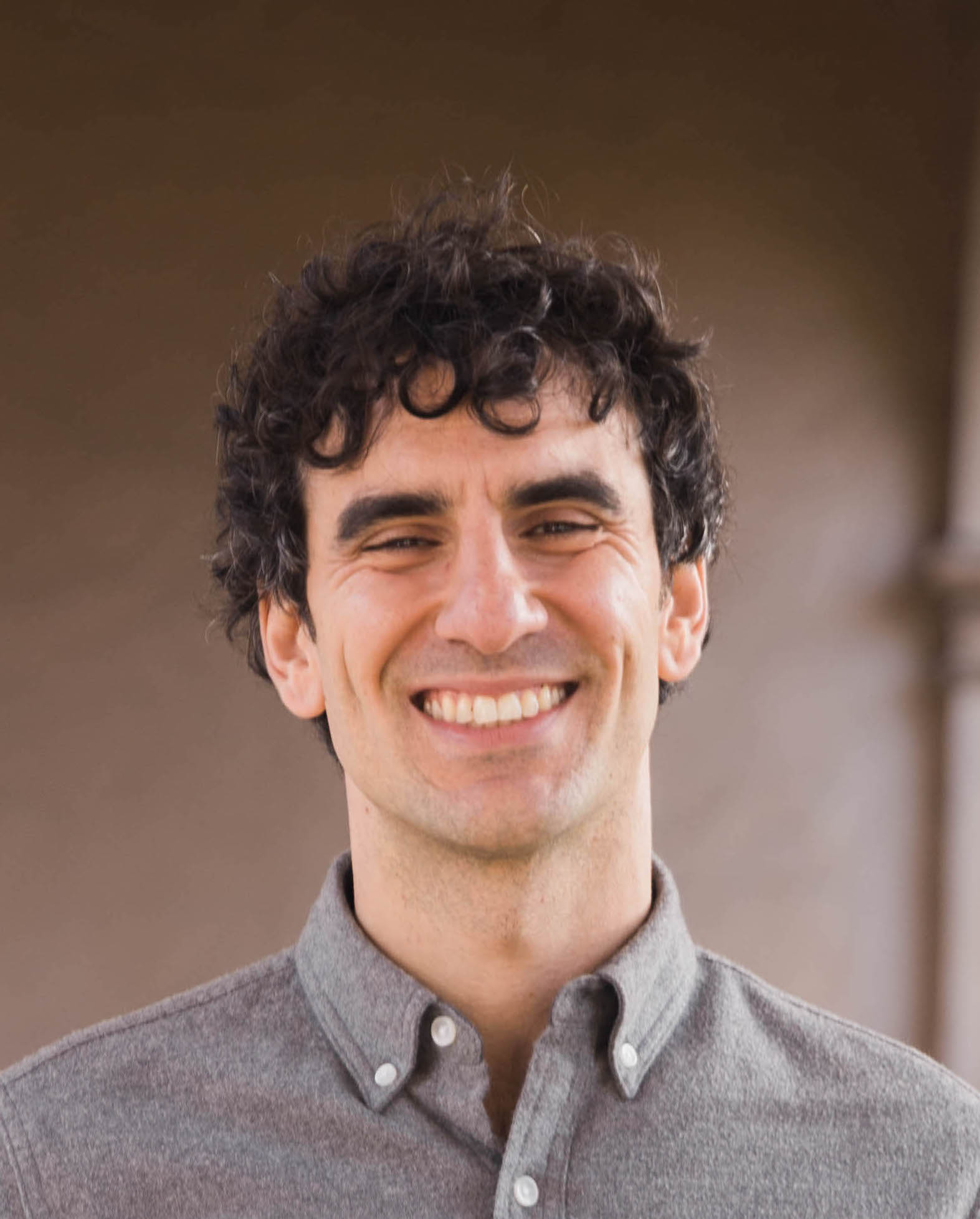
Dr. Shirag Shemmassian is the Founder of Shemmassian Academic Consulting and one of the world's foremost experts on medical school admissions. For over 20 years, he and his team have helped thousands of students get into medical school using his exclusive approach.
Over 90% of our students get into one or more of their top 3 schools
Get our free 110-page guide for strategies to become the kind of applicant that selective colleges love to admit: How to Get into America's Elite Colleges: The Ultimate Guide



THERE'S NO REASON TO STRUGGLE THROUGH THE COLLEGE ADMISSIONS PROCESS ALONE, ESPECIALLY WITH SO MUCH ON THE LINE. SCHEDULE YOUR COMPLIMENTARY CONSULTATION TO ENSURE YOU LEAVE NOTHING TO CHANCE.