Post-Baccalaureate Programs: Everything You Need to Know
Learn everything you need to know about post-bacc programs, how to be a competitive applicant, and review post-bacc personal statement examples.

Post-baccalaureate programs come in several formats and can offer a variety of benefits.

What You'll Learn
Structured vs. Unstructured Formats
How to distinguish between traditional, highly structured programs and flexible, unstructured options designed for non-traditional applicants.
Career-Changer Pathways
How post-bacc programs help non-science majors complete foundational medical school prerequisites, access specialized MCAT preparation, and navigate the application process.
Academic Enhancement Strategies
How students with lower undergraduate GPAs or test scores can leverage specialized post-bacc coursework to repair academic statistics and build stronger credentials.
Special Master’s Programs (SMPs)
The distinct role of graduate-level SMPs, including how taking classes alongside medical students impacts academic evaluations and graduate GPA calculations.
Linkage Agreements & Direct Pathways
How linkage agreements allow high-performing post-bacc students to bypass the traditional gap year via direct interviews or conditional admissions to affiliated medical schools.
Learning Environments & Cohort Structures
How different post-bacc structures determine whether you study alongside post-bacc peers, undergraduate pre-meds, or enrolled medical students.
Evaluating Program Selection & Fit
How to assess post-bacc options based on your academic background, career timeline, financial considerations, and specific medical school goals.
A post-baccalaureate program is for students who have already earned an undergraduate degree and want or need to take prerequisite courses required for medical school, gain clinical and research experience, or boost their GPA to be a more competitive med school applicant.
Often shortened to “post-bacc” or “postbacc,” these programs usually last one to two years. A post-bacc may grant you a certificate of completion, a master’s degree, or no degree or certificate at all.
If you’re a premed considering post-baccalaureate programs, you probably fall into one or more of the following categories:
You have a non-science bachelor’s degree and need to complete medical school prerequisite coursework.
You need more research or clinical experience.
You’ve completed all the prerequisite classes but your GPA is weak.
You want to strengthen your application before reapplying to medical school.
Some programs earn you undergraduate credit while others earn you graduate-level credit, a vital distinction if you’re looking to enhance your undergrad GPA. Choosing a post-bacc that counts for undergrad credit impacts your science GPA, which is crucial for your med school application.
In this article, you’ll find everything you need to know about post-bacc programs, including the different types of post-bacc, primary considerations when choosing where to apply, and post-bacc personal statement examples and analysis.
Quick Links:
Types of post-baccs
Post-baccalaureate programs come in a variety of formats and confer considerable benefits.
For instance, there are great post-baccs for boosting your GPA, completing prerequisites, changing careers later in life, improving your chances of admission to a particular medical school, or for osteopathic applicants (DOs).
Let’s look at the many different types of post-bacc programs below.
Structured vs. unstructured
First, you need to know the difference between structured and unstructured post-baccalaureate programs. You could think of structured programs as more traditional programs, while unstructured programs are great for non-traditional medical school hopefuls.
Structured post-bacc programs are formal, cohort-based academic tracks strictly designed for students who want to enter medical school. These programs offer a set curriculum, clear timelines, and built-in support systems such as academic advising, MCAT preparation, and opportunities for clinical or research experience. Many structured programs also provide linkage agreements with medical schools
Unstructured post-bacc programs (sometimes called “do-it-yourself” or informal programs) offer more flexibility and typically more affordability, allowing students to enroll in undergraduate science courses at a college or university without being part of a formal post-bacc cohort. These programs are often self-directed, with students choosing courses that best address their academic needs—whether to complete pre-med prerequisites or to boost their GPA.
Programs for career-changers
These post-baccalaureate programs are designed for students who have not completed pre-med courses, typically those who decided to become doctors after undergrad.
These programs catch their students up on medical school prerequisites, provide MCAT support, and advise students during the med school application process.
Top-tier examples of career-changer post-bacc programs include Bryn Mawr College, Goucher College, Johns Hopkins, and Columbia.
Here are more schools with post-bacc programs that are aimed at career changers:
Programs for academic enhancement
Academic enhancement post-baccalaureates are for pre-med students whose stats are not as competitive as they’d like (low cumulative or science GPA, poor MCAT scores).
These post-bacc programs can help raise students’ stats while offering extracurricular medical experience, MCAT prep, and application support.
Georgetown Medical Institute and UC Postbaccalaureate Consortium are probably the strongest academic enhancement post-bacc programs.
Here are some more schools with post-bacc programs that are great for academic enhancement:
Special master’s programs (SMPs)
A special master’s program (SMP) is a graduate degree-granting program designed for students interested in medicine. Whereas most post-baccalaureate programs are meant to help you complete med school prerequisites, SMPs are better if you just need to enhance your application.
SMP students may take courses alongside medical school students, which could help admissions committees compare their performance with that of MD candidates. This comparison will reflect positively on you if you excel, and negatively if you don’t.
Important: Because SMP coursework is graduate school level, it counts towards your graduate GPA—so it cannot improve your undergrad GPA. (SMPs aren’t traditional post-baccs.) For students who want to improve their undergraduate GPAs, an SMP may not be the best option.
Duke University’s Master of Biomedical Sciences and Tufts University’s MS in Biomedical Sciences are two high-quality examples of SMPs.
Linkage programs
Linkage programs may grant you an accelerated application process, a guaranteed interview, or conditional matriculation into a specific medical school if you meet certain criteria. Linkage programs can eliminate the glide year (the gap year traditionally between post-bacc and med school).
Benefits include a better chance of matriculation and savings on rising application fees. One downside is that linkage programs are typically very limited in where you’re able to go to medical school while taking advantage of the linkage.
For example, Columbia has linkage agreements with 15 medical schools, but admission is not guaranteed. On the other hand, the Lewis Katz School of Medicine ACMS postbaccalaureate program guarantees conditional acceptance to its MD program.
Programs for underrepresented groups in medicine
These post-baccalaureate programs exist to help underrepresented groups gain admission into medical school.
The AAMC’s definition of underrepresented in medicine (URiM) is any individual who self-identifies as one or more of the following race/ethnicity categories:
American Indian or Alaska Native
Black or African American
Hispanic or Latino
Native Hawaiian or Pacific Islander
UCSF’s Interprofessional Health Post-Baccalaureate Certificate is a great program for underserved groups, as is Drexel Pathway to Medical School.
Here are some additional schools with post-bacc programs aimed at serving those from underrepresented groups:
Programs for economically or educationally disadvantaged groups
This type of post-bacc program is designed for students from economically or educationally disadvantaged backgrounds.
For example, the UC Postbaccalaureate Consortium specifically lists as criteria for applying: “From an early age, you resided in a low-income community or experienced enduring family and/or societal hardship that significantly compromised your educational opportunities."
UC Davis’s post-bacc and Florida State University’s Bridge to Clinical Medicine post-bacc are fantastic programs that serve students from economically or educationally disadvantaged backgrounds.
Here are a few other schools with great programs meant to serve those from disadvantaged backgrounds:
Osteopathic programs
Schools of osteopathic medicine may offer post-bacc programs with varying degrees of affiliation to their DO programs. The application process and course offerings resemble those of other post-bacc programs but with an emphasis on osteopathic practices.
See AACOM’s list of post-bacc DO programs to explore further.
Some osteopathic post-bacc programs are designed to serve as a “transitional” program. This setup allows students to engage in a Master’s program sufficient to supply students with the science-based knowledge and credits needed to enroll in the school’s DO program.
A few examples of transitional programs include:
A.T. Still University-Kirksville College of Osteopathic Medicine (ATSU-KCOM)
Arizona College of Osteopathic Medicine of Midwestern University (AZCOM-MWU)
MA in Biomedical Sciences, a 9-month program
MSB in Biomedical Sciences, a 21- to 24-month program
Campbell University Jerry M. Wallace School of Osteopathic Medicine (CUSOM)
Chicago College of Osteopathic Medicine of Midwestern University (CCOM-MWU)
Des Moines University College of Osteopathic Medicine (DMU-COM)
NIH postbac intramural research training
The National Institutes of Health (NIH) Office of Intramural Training & Education offers a Postbac Program for recent college graduates to spend 1-2 years performing full-time research at the NIH.
This is a unique program, unlike other post-bacc programs, so we’ve published a separate guide on it.
Learn everything you need to know to get into medical school.
Get our free 102-page guide: Get Into Medical School: 6 Practical Lessons to Stand Out and Earn Your White Coat
Considerations when thinking of applying
With so many post-bacc programs (the AAMC non-exhaustively lists 340 programs on its website), how should you narrow down your choices and apply to programs that match your needs and goals? It’s a daunting task, but not an impossible one if you know what to look for.
Below are the most important considerations as you decide whether to apply to post-baccalaureate programs.
Basic qualifications
First, determine whether you qualify as a career changer or an academic enhancer.
This consideration should be straightforward. You either completed your medical school prerequisites in undergrad and want to improve your performance in an academic enhancer, or you did not complete the required courses, and a career changer is the best program for you.
Second, determine whether you qualify for programs geared toward underrepresented or disadvantaged students.
If you do qualify, select a program designed for these groups. In other words, prioritize applying to programs that give you the greatest odds of admission and can be tailored for your needs and goals.
GPA eligibility and competitiveness
Programs’ GPA requirements may quickly determine whether you are a competitive post-baccalaureate applicant.
For example, Temple University’s academic enhancer ACMS post-bacc requires a minimum 3.4 GPA (cumulative and science) for consideration. On the other hand, California State University East Bay requires a bachelor’s degree with a minimum overall GPA of 2.8.
Length of program
Post-baccalaureate programs may last one to two years and may or may not include summer coursework. When deciding where to apply, consider whether you can set aside a year or two for studying, and how this will ultimately impact your medical school application process.
How long will the med school application process be delayed? Does a post-bacc really fit into your life plans?
If the length of a program is important to your plans, consider a post-bacc with linkage to a medical school to accelerate your application process or guarantee that your time invested in the post-bacc will result in med school acceptance.
Part-time vs. full-time enrollment
Though the vast majority of post-baccalaureate programs are full-time commitments, some post-baccs offer part-time enrollment.
Part-time post-bacc programs may be attractive to applicants with significant responsibilities during the week or to applicants with stats that are very close to being competitive who only need a little boost.
For instance, UC Berkeley’s post-bacc offers night and weekend classes, and Harvard Extension offers evening courses.
Cost
Post-bacc programs do not come cheap, and financial aid is typically available only in the form of loans. State school post-baccs may cost $12,000 to $40,000, while private institutions’ post-bacc programs may run $30,000 to $70,000.
In some cases, like UC Davis and the University of Pittsburgh, in-state residency can help reduce the cost of tuition. Also, career changer programs usually cost less.
In the recent past, students could take out Grad PLUS loans from the federal government to pay for post-bacc, as well as other graduate studies. However, Grad PLUS loans are no longer available as of July 1, 2026. Instead, graduate borrowing will be capped at $100,000, and professional graduate borrowing (including MD) will be capped at $200,000.
Coursework, clinical experience, and research
It makes a significant impact whether a program emphasizes coursework, clinical hours, or research, and whether its curriculum is regimented.
Questions to ask yourself:
Are there extracurricular opportunities for clinical experience and research?
Is there more of an emphasis on lectures, labs, or practicums?
Do you choose courses a la carte (non-regimented), or is there a predetermined curriculum that all post-bacc students must follow (regimented)?
Understanding the differences between program requirements and resources could help you determine whether a program is the right fit for you.
For instance, students whose undergrad performance is inconsistent (i.e., performing poorly in some science courses but well in others) may prefer a program where they select their coursework rather than adhere to a pre-set curriculum.
Students whose undergraduate performance needs overall improvement, or students who are changing careers, may prefer programs with a structured curriculum.
Standardized test scores
Some post-baccalaureate programs may require you to include a standardized test score in your application. Different programs have different test reporting requirements. If you are required to submit a low standardized test score, consider removing that program from your list.
You may be asked to include SAT, ACT, MCAT, GRE, PCAT, DAT, OAT, or even Casper scores. On the other hand, like with Cal State University East Bay, you may not have to submit any of these. It’s important to check with the program’s admissions requirements.
Your peer group
Who will your classmates be? It’s an important consideration who your peer group will be when applying to post-baccalaureate programs.
In some post-bacc programs, you'll take classes with members of your cohort.
In other programs, you’ll take courses with pre-med undergraduates.
In a few programs, you’ll take courses alongside medical school students, particularly if the post-bacc is linked with a medical school.
There are advantages and drawbacks to each grouping. Taking courses with one’s peers increases the likelihood that courses are tailored to your needs and may result in a smaller student-to-instructor ratio, depending on class, faculty, and cohort sizes.
On the other hand, post-bacc students in undergraduate courses may have an advantage if they’ve taken the courses before and are encountering the material for the second time. They should be able to increase their GPA this way.
That said, admissions committees will look favorably on post-bacc students who held their own in medical school-level courses.
Application deadlines
A few post-bacc programs have two different application deadlines: one early deadline for medical school reapplicants—roughly March or April—and a later deadline for first-time medical school applicants—around May or June.
Consider your personal schedule when deciding whether to apply to schools with multiple deadlines. Which application deadline must you adhere to?
It’s important to always take advantage of rolling admissions and submit your application as early as possible to maximize your odds of landing an interview and getting accepted.
Medical school acceptance success rate
Post-baccalaureate graduates typically matriculate into medical school at a higher rate. The medical school acceptance rate from a post-bacc speaks to the quality and reputation of the program in the medical school community, so take note.
Bryn Mawr College, Goucher College, Johns Hopkins, Scripps, and Tufts boast medical school acceptance rates above 90%, well above the national average of right under 50%.
Not all post-baccs boast a 90% acceptance rate to med school, but determined individuals are almost always increasing their odds of acceptance if they make it into and complete a post-bacc.
Over 90% of our students get into med school—the first time.
Get our free 102-page guide to help you with every step: Get Into Medical School: 6 Practical Lessons to Stand Out and Earn Your White Coat
Post-bacc personal statement example
Usually but not always required, the post-bacc personal statement should demonstrate why you want to be a doctor, how you’ve grown in recent years, how you will continue to grow at this institution, and—if applicable—why you took the non-traditional path (i.e., career changers).
The post-bacc personal statement is similar enough to the medical school personal statement that it’s worth reading our article, Medical School Personal Statement: The Ultimate Guide.
There is a centralized portal for post-bacc applications—similar to the Common App or AMCAS—called PostBacCAS. Less than half of the approximately 340 U.S. post-bacc programs participate in this centralized service.
Within the platform itself, individual programs can determine which essays and documents are required from applicants. There’s a lot of variation in which documents are required from program to program:
Some programs, like Bennington, will require a full-length personal statement akin to the med school statement.
Others, such as the UC Postbaccalaureate Consortium, ask that you write a 2,500-character essay.
Still, some, like Washington University in St. Louis, won’t require a personal statement essay at all.
We’ve provided a full-length personal statement below that can easily be modified to fit smaller character or word count limits. As you read the personal statement written by Marisol, keep the following questions in mind:
Does the applicant demonstrate qualities that are desirable in a physician? If so, which ones?
Is the personal statement mostly about the applicant, or other people?
Could anyone else have written this personal statement, or is it unique to the applicant?
Does the personal statement cover too much, or does it show real depth?
At La Clínica de la Raza, I was in my element, surrounded by rapid Spanish and chaos. Lupe frowned as I filled out her intake form. Perhaps she’d encountered university freshmen on previous visits because she said, “The school sent you, huh? I can tell you’re not from around here.” I asked, “How can you tell?” Lupe said, smiling wryly, “Because you use ‘tu,’ instead of ‘usted.’” My face went hot with embarrassment as I realized my choice of address had been rude. It was a mistake I had made my whole life, my bad manners a source of suspicion for some Spanish-speakers. I smiled sheepishly and apologized, taking care to refer to her with the formal “usted” throughout the rest of the intake to show my respect. By the end of the questionnaire, Lupe’s shoulders relaxed, her expression open. “This is why I come here,” she said. “For people like you. It’s so scary when doctors tell you things you can’t understand.” I understood Lupe came to us because we could serve her in her native language.
From age 11, when I accompanied my father to have his warts cryosurgically removed, I have helped Spanish-speakers like Lupe confront their medical fears. Back then, the dermatologist had wielded a canister of liquid nitrogen and warmly explained the wart-removal procedure, but my Spanish-speaking father just gazed at her, terrified. I knew what he needed and started to translate. By the time I finished repeating in Spanish what the doctor had said, my father had relaxed and even smiled as he anticipated seeing his face wart-free. At the end of the procedure, noting my fascination with the nitrogen, the doctor opened the canister and spilled some liquid on the floor. It crashed and disappeared. In that moment, as my father and I laughed in delight, the connection between helping others through medicine and eliciting joy was clear to me. I knew I wanted to become a doctor.
I volunteered at La Clínica because I wanted to work with uninsured patients who had nowhere else to go. I was surprised to find that many patients did have insurance, but chose La Clínica anyway, despite it being overcrowded and understaffed. Melchor, for example, took a day off from work for a basic physical even though he had Medi-Cal. When I asked him why he didn’t visit a primary care physician within his health insurance, he told me the provider he’d been assigned didn’t have any Spanish-speaking staff who could communicate with him. “And it’s too far away,” he said. “I can’t get there by bus.”
This experience inspired my Ride or Die initiative. I organized Spanish-speaking volunteers to serve as interpreters for and give rides to insured patients. By doing so, we were able to clear space in the clinic for patients who truly needed it, rather than patients who could seek care elsewhere. Months later, I saw Melchor at the grocery store. He beamed as he noted that the influx of Spanish-speaking patients had motivated his Medi-Cal physician to hire a Spanish-speaking assistant. Seeing the difference my Ride or Dies made motivated me to persist with my goal of finding creative solutions to problems of access.
But by my sophomore year of college, I was facing my own access problems. My high school science classes had not properly prepared me for the rigor of university coursework. By midsemester, I was receiving grades on the lower end of the class curve in principles of molecular biology. Though my grades improved during my final two years of college, my GPA was not competitive for medical school. I doubted my ability to become a doctor for the first time since that fateful visit to the dermatologist.
Thankfully, I reconnected with my purpose a year after graduation. One autumn day, as I assisted Dr. Reynolds, he explained to two parents that their son’s appendix had burst; they had to operate immediately. While the father nodded, the woman’s eyes were wide with confusion and fear. After Dr. Reynolds left, I lingered and learned that the woman’s name was Gloria. Her husband explained to her in Spanish what the doctor had said, and Gloria burst into tears. She cried that it was her fault—if only she had not forced her son to sit through the pain because they were uninsured, it would never have advanced to this stage. I knelt by her seat, put my hand on her shoulder, and told her it wasn’t her fault. It wasn’t her fault that the difference between sickness and health for millions was a flimsy plastic card. I told her she had done the right thing by bringing her son in when she did. I told her it would be okay. I was careful to use “usted.”
Since receiving Gloria’s grateful embrace after her son awoke from surgery, groggy but fine, I’ve known I can’t only be a nursing assistant. I must become a physician. Doing so will allow me to continue providing the warmth, reassurance, and relief that have been the highlights of every significant clinical experience I’ve had so far. Attending a post baccalaureate program would help me ace biochemical pathways so that I can focus on the journeys that matter: from uncertainty and hardship to solace and hope. I am more than my GPA, and my experiences with my father, Lupe, Melchor, and Gloria are proof. I have no doubt that with the proper support, I can succeed in a fulfilling career as a physician.
Personal statement analysis
Now, let’s analyze the entire personal statement and answer the questions posed above.
-
DescripAt La Clínica de la Raza, I was in my element, surrounded by rapid Spanish and chaos. Lupe frowned as I filled out her intake form. Perhaps she’d encountered university freshmen on previous visits because she said, “The school sent you, huh? I can tell you’re not from around here.” I asked, “How can you tell?” Lupe said, smiling wryly, “Because you use ‘tu,’ instead of ‘usted.’” My face went hot with embarrassment as I realized my choice of address had been rude. It was a mistake I had made my whole life, my bad manners a source of suspicion for some Spanish-speakers. I smiled sheepishly and apologized, taking care to refer to her with the formal “usted” throughout the rest of the intake to show my respect. By the end of the questionnaire, Lupe’s shoulders relaxed, her expression open. “This is why I come here,” she said. “For people like you. It’s so scary when doctors tell you things you can’t understand.” I understood Lupe came to us because we could serve her in her native language.
Goal: Engage the reader.
Analysis: Marisol places us in the setting, a chaotic community clinic, and focuses on the dynamic between Lupe, the patient, and herself. It’s easy to remain engaged because Marisol utilizes dialogue, which serves to efficiently characterize Lupe and Marisol and helps subvert the expectation she set for the reader in the first line (that of being “in [her] element”).
This subtle unsettling of expectations creates the conditions for Marisol to demonstrate self-awareness, cultural competence, and humility. Eventually, it is Marisol’s readjustment that contributes to Lupe’s transformation from frowning to open and relaxed. This reflects positively on her because it demonstrates that she can bounce back from bad first impressions and turn a fraught situation into a positive one.
At this point, we don’t know about Marisol’s interest in medicine, but we know she is involved in community service, willing to step out of her comfort zone, can respond conscientiously to criticism, and demonstrate cultural competence.
Finally, the intro’s final observation sets the stage for the narrative threads of Spanish-speakers and medical understandings, which reappear in Marisol’s own eventual difficulty in understanding her pre-med courses and doubting her medical path.
1. Does the applicant demonstrate qualities that are desirable in a physician? If so, which ones?
Conscientious, respectful, flexible (e.g., “It was a mistake I had made my whole life, my bad manners a source of suspicion for some Spanish-speakers. I smiled sheepishly and apologized, taking care to refer to her with the formal “usted” throughout the rest of the intake to show my respect.”)
Comforting, committed to patient understanding (e.g., “By the end of the questionnaire, Lupe’s shoulders relaxed…” “This is why I come here,” she said. “For people like you.”)
2. Is the paragraph mostly about the applicant, or other people?
Although Marisol discusses Lupe and “Spanish-speakers,” she is the primary character in the introduction, as demonstrated by the emphasis on her transformation and growth in a single interaction.
3. Could anyone else have written this introduction, or is it unique to the applicant?
Though many applicants may write about serving in community clinics, Marisol gives her own spin on this topic by doing the following:
Including highly specific details about her conversation with Lupe
Describing her internal insights and thoughts
Linking her interaction to her individual life
4. Does the introduction cover too much, or is there real depth?
The intro includes a single conversation with a single patient at a clinic unlike any other.tion text goes here
-
DescFrom age 11, when I accompanied my father to have his warts cryosurgically removed, I have helped Spanish-speakers like Lupe confront their medical fears. Back then, the dermatologist had wielded a canister of liquid nitrogen and warmly explained the wart-removal procedure, but my Spanish-speaking father just gazed at her, terrified. I knew what he needed and started to translate. By the time I finished repeating in Spanish what the doctor had said, my father had relaxed and even smiled as he anticipated seeing his face wart-free. At the end of the procedure, noting my fascination with the nitrogen, the doctor opened the canister and spilled some liquid on the floor. It crashed and disappeared. In that moment, as my father and I laughed in delight, the connection between helping others through medicine and eliciting joy was clear to me. I knew I wanted to become a doctor.
Goal: Provide context and insight on medical interest.
Analysis: Marisol uses the thesis paragraph to give context about the interest in medicine that preceded her interaction with Lupe. She establishes a long-standing commitment to serving underserved monolingual Spanish-speaking patients. It becomes evident why Marisol started her essay writing about a single instance when she made a cultural faux pas during a patient interaction at the clinic.
Marisol describes how the desire to pursue a medical career has a very personal connection to her past. The applicant conveys the pivotal moment her interest in medicine was sparked by including a scene that demonstrates not only her ability to comfort her father, but also her fascination and wonder with the medical field.
The liquid nitrogen is a surprising detail that invites the reader to visualize the gas dissipating into the air, like a magic trick, and this implication of magic imbues medicine with a similarly fantastic quality.
Finally, notice that this thesis paragraph eschews dialogue in favor of a more direct description. Though the paragraph continues to “show” the scenario, it also allows a bit of direct “telling” when the applicant writes, “In that moment, as my father and I laughed in delight, the connection between helping others through medicine and eliciting joy was clear to me. I knew I wanted to become a doctor.” Just like that, the motivation for Marisol’s path becomes obvious.
1. Does the applicant demonstrate qualities that are desirable in a physician? If so, which ones?
Marisol demonstrates empathy when she sees her father’s face, terrified at his lack of understanding. Without him having to indicate he’s distressed or why, she picks up on the source of it and automatically provides a solution: her interpretation of the procedure for his benefit.
Wonder and curiosity also come across with the liquid nitrogen detail.
2. Is the paragraph mostly about the applicant, or other people?
The details in this thesis paragraph are carefully selected to illustrate aspects of Marisol's personality and interests that would be difficult to accept if they were simply stated outright.
The dermatologist and the father, while characters themselves, motivate Marisol’s response to the situation, helping her shine.
3. Could anyone else have written this paragraph, or is it unique to the applicant?
Between the liquid nitrogen, the wart removal, and the importance of translation, it’s difficult to imagine another applicant convincingly recreating Marisol’s thesis.
4. Does the paragraph cover too much, or is there real depth?
This paragraph focuses on a pivotal experience early in Marisol’s trajectory and zeroes in on important details to help illustrate the significance of the day. This focus on details has a payoff later in the essay as well, when the applicant experiences doubt about her potential to become a doctor.
The writer took care to select details that could resonate across paragraphs while holding serious weight in their “home” paragraphs.ription text goes here
-
I volunteered at La Clínica because I wanted to work with uninsured patients who had nowhere else to go. I was surprised to find that many patients did have insurance, but chose La Clínica anyway, despite it being overcrowded and understaffed. Melchor, for example, took a day off from work for a basic physical even though he had Medi-Cal. When I asked him why he didn’t visit a primary care physician within his health insurance, he told me the provider he’d been assigned didn’t have any Spanish-speaking staff who could communicate with him. “And it’s too far away,” he said. “I can’t get there by bus.”
This experience inspired my Ride or Die initiative. I organized Spanish-speaking volunteers to serve as interpreters for and give rides to insured patients. By doing so, we were able to clear space in the clinic for patients who truly needed it, rather than patients who could seek care elsewhere. Months later, I saw Melchor at the grocery store. He beamed as he noted that the influx of Spanish-speaking patients had motivated his Medi-Cal physician to hire a Spanish-speaking assistant. Seeing the difference my Ride or Dies made motivated me to persist with my goal of finding creative solutions to problems of access.
Goal: Provide specific examples to build on a key message.
Analysis: The first body paragraph returns to the setting of the community clinic, demonstrating that the applicant’s commitments run deeper than helping Spanish-speakers alone. She is particularly interested in serving those least likely to receive medical attention: the uninsured.
Marisol doesn’t stand on a soapbox to convey this motivation. Instead, she includes the “inciting incident” for the accomplishment she wishes to highlight: the Ride or Die initiative, which is her major contribution not to individual care seekers, but to the clinic as a whole.
This approach demonstrates initiative and creativity, as well as a commitment to values (access for those who need it most).
1. Does the applicant demonstrate qualities that are desirable in a physician? If so, which ones?
The applicant demonstrates these desirable qualities:
Resourcefulness
Creativity
Principles
Accomplishment
Passion
2. Is the paragraph mostly about the applicant, or other people?
Once again, Marisol does an excellent job of using character to motivate the story to convey their best qualities.
The first body section is ultimately not about Melchor, the Ride or Dies, or the clinic. It’s about Marisol evaluating a situation and creating solutions that benefit everyone involved.
3. Could anyone else have written this paragraph, or is it unique to the applicant?
The humor of the Ride or Dies, the specificity of Medi-Cal, and the impact of the influx of Spanish-speaking patients to network providers makes this section unique to Marisol.
4. Does the paragraph cover too much, or is there real depth?
Marisol focuses on how their principles aren’t merely abstractions; they are actionable possibilities with significant results in the form of a transformation of the clinic environment and the experiences of those who visit it.
The specificity of the solution—offering Ride or Dies—keeps it tight and specific, with the most efficient details selected to get the point across.
-
But by my sophomore year of college, I was facing my own access problems. My high school science classes had not properly prepared me for the rigor of university coursework. By midsemester, I was receiving grades on the lower end of the class curve in principles of molecular biology. Though my grades improved during my final two years of college, my GPA was not competitive for medical school. I doubted my ability to become a doctor for the first time since that fateful visit to the dermatologist.
Goal: Describe what led you to the post-bacc route.
Analysis: The pivot contains the key difference between a personal statement for medical school admission and a personal statement for post-bacc admission. In a medical school personal statement, an applicant would not intentionally draw attention to a seemingly negative aspect of their academic career—in this case, an unsatisfactory undergraduate GPA.
However, in a post-bacc essay, it’s important to use the particularities of one’s journey—whether it was a low GPA or a lack of interest in medicine until after undergrad—to one’s advantage.
Notice that the applicant does not merely include their low GPA without context. Instead, the applicant contextualizes it without making excuses for it. She demonstrates how the poor performance was the exception, not the rule, as the grades improved by the end of their college career.
In addition, the authenticity of self-doubt elevates the whole essay, and the inclusion of this detail makes the applicant’s recentering in her purpose in the next section that much more poignant.
1. Does the applicant demonstrate qualities that are desirable in a physician? If so, which ones?
The applicant demonstrates self-awareness and the ability to take responsibility and learn from mistakes.
2. Is the paragraph mostly about the applicant, or other people?
This paragraph is exclusively about the applicant’s unique experiences.
3. Could anyone else have written this paragraph, or is it unique to the applicant?
Perhaps other students have experienced a similar academic low, but the specificity of the class curve in principles of molecular biology and the mention of the dermatologist visit that sparked her medical interest make this paragraph not only unique to Marisol.
4. Does the paragraph cover too much, or is there real depth?
Marisol focuses on the reasons behind her poor academic performance at the beginning of college (insufficient academic preparation in high school, which may also speak to an educational disadvantage) and how this impacted her medical journey (by lowering her GPA).
Also, Marisol suggests that the grades were not an accurate reflection of her abilities by demonstrating her upward trajectory in the latter half of her undergraduate studies. This offers a complete, yet succinct, picture of the circumstances that led her to apply to post-baccs.
Body section 3: Illustrative anecdote 2
Thankfully, I reconnected with my purpose a year after graduation. One autumn day, as I assisted Dr. Reynolds, he explained to two parents that their son’s appendix had burst; they had to operate immediately. While the father nodded, the woman’s eyes were wide with confusion and fear. After Dr. Reynolds left, I lingered and learned that the woman’s name was Gloria. Her husband explained to her in Spanish what the doctor had said, and Gloria burst into tears. She cried that it was her fault—if only she had not forced her son to sit through the pain because they were uninsured, it would never have advanced to this stage. I knelt by her seat, put my hand on her shoulder, and told her it wasn’t her fault. It wasn’t her fault that the difference between sickness and health for millions was a flimsy plastic card. I told her she had done the right thing by bringing her son in when she did. I told her it would be okay. I was careful to use “usted.”
Goal: Reinforce desire to pursue medicine.
Analysis: The applicant successfully demonstrates her unwavering dedication to becoming a physician and the ability to comfort, respect, and reassure patients—completing the arc that was introduced in the pivot paragraph.
1. Does the applicant demonstrate qualities that are desirable in a physician? If so, which ones?
The applicant demonstrates compassion (e.g., kneeling down to appear less imposing, noting that “It wasn’t her fault that the difference between sickness and health for millions was a flimsy plastic card. I told her she had done the right thing by bringing her son in when she did. I told her it would be ok.”)
2. Is the paragraph mostly about the applicant, or other people?
Although there are other people in the anecdote, it’s Marisol who shines. It is her insight, awareness, and warmth that are on full display.
3. Could anyone else have written this paragraph, or is it unique to the applicant?
The resulting insight with Gloria and the ways that the lack of insurance ties up threads that were planted in the earlier Melchor paragraph makes it not only unique to Marisol, but also coherent with the rest of the statement.
4. Does the paragraph cover too much, or is there real depth?
The depth of empathy and detail here—a burst appendix, a lack of insurance, a kneeling young woman comforting a mother—makes this a model example.
-
ItSince receiving Gloria’s grateful embrace after her son awoke from surgery, groggy but fine, I’ve known I can’t only be a nursing assistant. I must become a physician. Doing so will allow me to continue providing the warmth, reassurance, and relief that have been the highlights of every significant clinical experience I’ve had so far. Attending a post-baccalaureate program would help me ace biochemical pathways so that I can focus on the journeys that matter: from uncertainty and hardship to solace and hope. I am more than my GPA, and my experiences with my father, Lupe, Melchor, and Gloria are proof. I have no doubt that with the proper support, I can succeed in a fulfilling career as a physician.
Goal: Tie it all together.
Analysis: The paragraph closes the loop with the essay’s most important narrative thread: Marisol’s commitment to medicine and how they intend to succeed despite setbacks. They end on a high note by emphasizing their enthusiasm for a future as a physician.
The final paragraph accomplishes the following:
It concludes the story about Gloria and her son
It brings the applicant’s insights full circle
And it restates their interest in medicine while emphasizing their principles and values, which hint at the type of values the applicant hopes to exercise as a physician
1. Does the applicant demonstrate qualities that are desirable in a physician? If so, which ones?
The applicant demonstrates perseverance when the nursing assistant position is not enough, and she needs to continue with her original plan of becoming a doctor.
2. Is the paragraph mostly about the applicant, or other people?
Definitely about the applicant. All details are to convey why this person should be admitted to the post-bacc program, even when other characters are invoked.
3. Could anyone else have written this paragraph, or is it unique to the applicant?
The insights of this paragraph were carefully built up over the course of the entire essay. There is no way any other applicant could have written this paragraph in precisely this way.
4. Does the paragraph cover too much, or is there real depth?
Because it’s a conclusion paragraph, it must solidify previous points without unnecessarily launching into new information.
The conclusion actually leaves the door open for the applicant to explain other aspects of their experience in additional post-bacc essays or an interview.em description
Bonus post-bacc personal statement sample
Because both my parents are surgeons, as a child, I thought being a doctor was indistinguishable from long hours. My parents were very loving and generous and made every effort to stagger their schedule to accommodate mine, but I remember viscerally on a rainy afternoon waiting for my mom to pick me up from after care. I didn’t have an umbrella and squeezed myself against a wall, backpack over my head. My mom was only late by thirty minutes—the result of traffic and an appointment that went on a touch too long—but sitting in the car, the seat drenched, my teeth quivering, I vowed never to follow the traditional path, to never be like my parents.
After that day I became somewhat of a rebel. In college, rather than following my parents’ wishes to “at least” major in psychology (I minored), I pursued the life of the artist. I loved gouache painting, how the right blend seemed to capture the psyche. Getting lost in my art healed me and I shared with others the ability to express yourself without the use of words. I went on to grad school at RISD and in an interview when asked what I would do if I failed as an artist, I said without hesitation: be a doctor.
I realized later that I did love medicine; I just didn’t want to be a surgeon. All along I had been moving in the direction of medical school. In grad school, I was a peer counselor trained by UHS in motivational interviewing and suicide prevention. In undergrad, I worked with Health Leads to connect under-resourced community members to the options they needed to address urgent issues. And finally, my last two years were spent as a research assistant in a psychology lab.
I am confident I have the competencies to handle the rigor of medicine. While I didn’t complete all of the pre-requisites for medical school, I did well in the ones I completed, studying the material as if it would help me understand the passion my parents had for the wellbeing of their patients. I think my nontraditional profile could benefit from demonstrating that I wholeheartedly devote myself to this career path by doing a post bacc and completing the academic requirements for med school.
My vision for myself is to be a Psychiatrist, specializing in art and play therapy. I would like to work with children and young adults. Many people would benefit from getting to express themselves creatively and in my volunteer position leading art therapy sessions with patients at McLean, I saw firsthand the transformative effect that understanding the colors and the shapes that emerge from you can have on your own sense of yourself, which, of course, affects your overall wellbeing. While this can be done without a medical degree, I do believe that my training as a doctor would only enhance what I can offer to my patients.
Hello, World!
Other common essays and prompts
There are common prompts that come up again and again in post-bacc applications. For this reason, we’ve created three categories of essays that frequently appear on post-baccalaureate applications. Note that these categories are not exhaustive.
Looking for help with your application essays?
Get our free 102-page guide to help you with every step: Get Into Medical School: 6 Practical Lessons to Stand Out and Earn Your White Coat
The “Why us?” essay
The first step to writing an effective “Why us?” post-bacc essay is to avoid writing about how great the program or its location is.
Admissions committees ask you to answer these prompts not to have you parrot their promotional materials back to them, but to see if you’ve considered their post-bacc program for reasons beyond their career changer vs. academic record enhancer status, its medical school acceptance rate, or its desirable location.
Your goal for this essay should be to align your qualities, experiences, and aspirations with their specific mission and resources. Demonstrate your “fit” for the program. Because you have a short space to make your case, avoid narrative flourishes that are best reserved for the personal statement.
Let’s look at the “Why Us?” essay prompt from Temple University’s Advanced Core in Health Professions (ACHS) Post Baccalaureate Pre-Health Program.
Please give a brief statement about why you chose to apply to Temple University’s CST Post-Baccalaureate Program (500 characters with spaces).
Essay Example: Temple University’s ACHS track will align my EMT experience with training at the William Maul Measey Institute for Clinical Simulation and Patient Safety. In 10 years of emergency response work, I gained a reputation for achieving the highest standards of safety. In fact, I was responsible for implementing lessons from our staff’s annual World Trauma Symposium trip for 8 years. ACHS would allow me to assist peers with less prehospital trauma care experience both inside and outside the classroom.
Why It Works: The essay aligns one of the applicant’s areas of distinction—his affinity for trauma care in his previous career—with the program’s institutional resources. By indicating both his previous experience and gesturing toward how it would allow him to help his peers, the applicant suggests he will be a valuable addition to the cohort.
The disadvantaged essay
There are several reasons a school could be interested in your response to this kind of essay prompt.
Some programs may specifically serve students from disadvantaged or underrepresented backgrounds, and want to ensure you meet the eligibility criteria for their program and mission.
Other programs may be interested in understanding how this aspect of your life has impacted your ability to succeed in pre-medical coursework.
Some post-baccs may need this information for financial aid considerations.
This is especially relevant for applicants whose disadvantages reduced their exposure to the medical field, like career changers who later in life decided to redirect their path, or students whose poor undergraduate performance was influenced by their disadvantaged status.
For instance, if a student’s high school had not offered advanced science courses and the student entered university with less preparation for rigorous science courses than their more educationally advantaged peers, a student could speak to this aspect of this experience.
Let’s take a look at the prompt from Drexel’s Pathway to Medicine Program.
Describe ways in which you consider yourself an appropriate applicant to the program, including what qualifies you as a disadvantaged student. (1.5 single-spaced pages, 12 pt font)
Essay Example: My high school science courses didn’t adequately prepare me for the rigor of university science classes. Looking around my organic chemistry lab in sophomore year of university, I realized that most of my peers had attended schools which offered Advanced Placement (AP) biology, chemistry, and physics. My school, on the other hand, only offered AP Calculus AB. I could see this disadvantage reflected in my academic performance. My peers consistently scored higher on exams than I, and it was difficult for me to grasp concepts.
This was just one consequence of having grown up in a working-class neighborhood; the schools in my area tended to be under-resourced and crowded, and my mom and dad, a part-time clerical worker and truck driver, respectively, could not afford to pay for additional tutoring. Even our requests for an intra-district transfer to nearby Montgomery High School, which did have AP science courses, were not approved, and though we appealed, the appeal was rejected.
I decided that, if I wanted to receive advanced credit, I would have to seek out resources myself. I took a part-time job at a frozen yogurt business to save money to hire a private tutor. With my tutor’s help, I was able to supplement my college prep classes with more advanced topics in bio and chem. With my paychecks, I also paid for the AP exams in bio and chem and passed each test with a score of three. Although my educational challenges were sizable, by committing to my path and finding ways around the obstacles, I was able to prepare myself for advanced science coursework. By the time I enrolled in my local community college, I was performing at a higher level—consistently receiving As in college bio—than my high school peers who had not been able to prepare and successfully pass the AP exams.
Though I was able to mitigate the consequences of a lack of educational resources, I eventually faced yet another challenge in my junior year of high school. My father had an accident that forced him to take time off work and, though he received disability benefits, it was not enough to pay the house mortgage. I was forced to take on a job to help with the family finances, which further cut into my study time and ultimately resulted in a dip in my grades for junior year—I was now a B to B+ student. With my father now better and returned to work, I am now better able to focus on my studies as I prepare to apply to medical school.
Why It Works: The essay notes the educational disadvantage, describes efforts to overcome it, demonstrates the applicant’s success in doing so, and indicates that the disadvantage persisted in the form of family hardship during college, which accounts for the student’s grade fluctuations.
The student mentions these things without making excuses or using sentimental language, establishing his authority and making his case more convincing.
It’s critical to demonstrate growth with essays like these, as the goal is to convince AdComs that you are no longer hampered by what previously prevented you from succeeding, or that, if still experiencing similar circumstances, you have found a way to mitigate the negative impact while pursuing post-bacc studies.
The academic performance essay
Although programs are aware that you’re pursuing post-baccalaureate study because something in your academic record was not up to par with medical school admissions, they also want to know you have the necessary self-insight, determination, and ability to mitigate these circumstances going forward.
With limited space and resources, they want to ensure they’re accepting the kind of student who qualifies for their support but is also able to take the fullest advantage of program resources.
A student incapable of demonstrating that they have addressed the factors that led to their poor academic performance is a risk for post-bacc programs because they may increase the program’s attrition rate and reduce their med school acceptance rate.
The academic performance essay is a key difference between MD/DO and post-bacc applications. It’s an opportunity to convey both what led you to the post-bacc route and how you were able to overcome your challenges.
This essay might appear similar to the disadvantage statement, especially if the disadvantage was the reason your academic performance was less than spectacular. However, they are not exactly the same, as one can perform poorly in school without it being a consequence of disadvantage. For the purposes of this example, assume that the student didn’t face any significant hardship, but still failed to perform well. If, however, disadvantage played a role in your academic performance, make sure to include it as noted in the disadvantage essay.
Let’s examine the Touro University—California, Master of Science in Medical Health Sciences essay prompt.
Master’s level, post baccalaureate degree programs are commonly used to improve the academic record in preparation for applying to medical school. With this in mind, are there any areas of your academic record where you believe you performed below your expectations? What do you believe are the factors which influenced your performance and what have you done to address those factors? (1500 characters with spaces)
Essay Example: My first-year science grades are abysmal relative to my grades for the rest of my university career. Unfortunately, this is due to my own personal decisions, which I regret. As a college freshman, I took to life on my own like paper to water. I rushed a fraternity, moved into the house, and became part of a vibrant community which prided itself on its ability to party. Unfortunately, I got caught up in the fraternity lifestyle and my grades took a hit.
As a sophomore, noticing that my academic performance was significantly lower than my STEM student peers, I moved out of my fraternity and recommitted myself to academics. I found a studio in the part of town where graduate students live and withdrew from the partying lifestyle. I stopped drinking. I stopped smoking. I was a brain on a stick. I also joined a campus youth ministry and found friends through my lab—friends who encouraged me to pursue my academic goals.
By the end of my sophomore year, I had made the Dean’s list and discovered a new application for CRISPR; instead of merely editing genomes, I applied the technology to the field of epigenetics, which was previously considered laughable. As is visible on my transcript, the rest of college saw improved grades across all subjects for me. Having reached a low at a young age, I know what is required to pull myself out of a bad situation and recommit myself to hard work.
Why It Works: Our applicant here knows exactly where his weak spots are: freshman year. He also has a blight on his academic record—an infraction for underage drinking, something that might automatically disqualify him from some admissions processes.
By tackling it head-on with a story of growth and resilience, he both handles the weak spot and turns it into a strength. He makes it clear that an investment in his academic future won’t go to waste because he’s already been tested and knows the route to his future.
Another step closer to becoming a physician
Post-baccalaureate programs are a tried and true way to gain admission into medical school. By submitting a strong application, you’re another step closer to fulfilling your dream of becoming a doctor.
----
About the Author
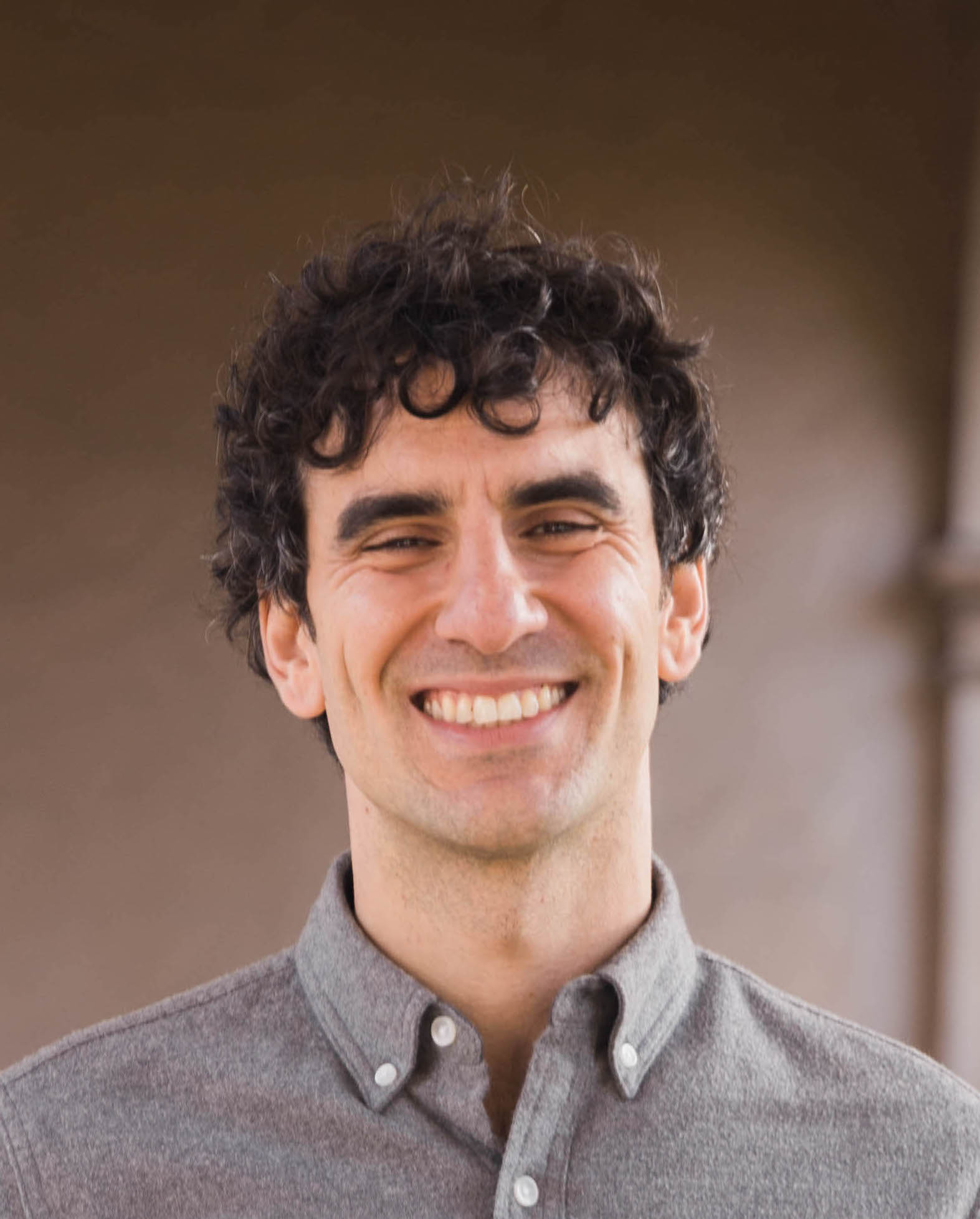
Dr. Shirag Shemmassian is the Founder of Shemmassian Academic Consulting and one of the world's foremost experts on medical school admissions. For over 20 years, he and his team have helped thousands of students get into medical school using his exclusive approach.
THERE'S NO REASON TO STRUGGLE THROUGH THE MED SCHOOL ADMISSIONS PROCESS ALONE, ESPECIALLY WITH SO MUCH ON THE LINE. SCHEDULE YOUR COMPLIMENTARY CONSULTATION TO ENSURE YOU LEAVE NOTHING TO CHANCE.