
Thermochemistry for the MCAT: Everything You Need to Know
Master MCAT thermochemistry with clear explanations of enthalpy, calorimetry, and Hess’s law, plus practice questions with detailed answers.
(Note: This guide is part of our MCAT General Chemistry series.)
Table of Contents
Part 1: Introduction to thermochemistry
Part 2: Principles of thermochemistry
a) Laws of thermodynamics
b) Endothermic and exothermic reactions
c) Spontaneous and nonspontaneous reactions
d) Gibbs free energy
Part 3: Calorimetry
a) Heat transfer
b) Forms of heat transfer
Part 4: Phase Change
a) Isothermal process
b) Phase change diagrams
c) Hess' Law
Part 5: High-Yield Terms
Part 6: Passage-Based Questions and Answers
Part 7: Standalone Questions and Answers
-----
Part 1: Introduction to thermochemistry
Chemical reactions involve the cleavage and formation of chemical bonds. Physical reactions rearrange molecular interactions without changing the chemical identity of a substance-such as in the familiar phase change of freezing liquid water to form solid ice. Bond cleavage and formation, as well as intermolecular arrangements during phase change, are associated with the absorption and release of heat. Thermochemistry examines these quantitative changes in heat in the context of a variety of chemical reactions. In summary: thermochemistry is the quantitative study of heat that is released, absorbed, or evolved during chemical and physical reactions.
As a subdivision of thermodynamics, thermochemistry follows the zeroth, first, and second laws of thermodynamics. Thermodynamics studies how different forms of energy-such as mechanical and potential energy-are transferred. These overarching concepts will help you understand more about thermochemistry.
-----
Part 2: Principles of thermochemistry
a) Laws of thermodynamics
There are three laws of thermodynamics that are important for the MCAT. In the context of thermochemistry, a “system” refers to the molecules, bonds, and atoms involved in a chemical reaction. Its “environment” may refer to anything that is not involved in the reaction, including a solvent, the ambient air, or even the room the reaction is conducted in.
The zeroth law of thermodynamics states that if two thermodynamic systems are in thermal equilibrium with a third system, then all three systems are in thermal equilibrium with each other. Put another way, the zeroth law states that if systems A and B are in thermal equilibrium, and systems B and C are in thermal equilibrium, then systems A, B, and C are all in thermal equilibrium.
Even if the three systems were allowed to exchange energy, there would be no net heat exchange, and the three systems will possess the same temperature. Thus, the zeroth law introduces the concept of temperature as it relates to heat.
Note that the temperature and the heat possessed by an object are different quantities. Temperature is a measure of the average kinetic energy of a substance and is given by units Celsius (C), Kelvin (K), or Fahrenheit (F). We can convert between these units using the following formulas - make sure to review them as unit conversions are essential to problem-solving on the MCAT.

Figure 1 We can convert between temperature units with these formulas.
Heat is the transfer of energy that results from a temperature difference between substances. Heat is given in the units of joules (J). Note that heat transfer is a prerequisite for a change in temperature.
Additionally, heat is a process function, while temperature is a state function. A state function results in a property whose value does not depend on the path taken to reach the final “state” at which the value is obtained. This is the opposite of a process function, in which the value of the property changes depending on the prior steps taken to achieve the final state.
The first law of thermodynamics states that energy is conserved. Energy is neither created nor destroyed; rather, it can only be transferred between individual objects and systems. For a closed system, a system that can exchange energy but not matter, the first law of thermodynamics can be stated as:
ΔU = Q-W
where ΔU = change in system’s internal energy,
Q = heat added to the system,
W = work done by the system
Thus, the internal energy of a system can be transferred into heat loss or gain, or into forms of work.
The second law of thermodynamics states that systems tend toward increasing entropy. This law introduces the concept of entropy as a measure of disorder. To better understand entropy, consider the relative entropies of gas, liquid, and solids. Gaseous molecules possess the highest entropy, followed by liquid, and then finally, solids.
Entropy can be described by the following equation:
ΔS = k * ln(W)
where ΔS = change in entropy,
k = Boltzmann’s constant,
ln(W) = natural logarithm of W
In this context, W does not represent work—but rather, the total number of possible microstates the system can adapt. A microstate refers to any combination of all possible orientations of particles within a system. Thus, since the number of microstates depends on the number of particles within a system, the entropy of a system tends to increase as more particles are added.
b) Endothermic and exothermic reactions
Endothermic reactions are chemical reactions in which energy, often in the form of heat, is transferred from the environment into the system. As a result, the temperature of the system may rise while the temperature of the environment may drop.
Recall that the variable Q represents heat. As a result, ΔQ (final Q - initial Q) for an endothermic is positive. The change in enthalpy (ΔH) for an endothermic reaction is always positive (ΔH > 0). Enthalpy is a thermodynamic quantity that will be discussed later in this guide.
Exothermic reactions are chemical reactions in which heat is released from the system. As a result, the temperature of the system may drop while the temperature of the environment may rise. The ΔQ for an exothermic reaction is negative. The change in enthalpy (ΔH) is also negative (ΔH < 0).
What’s the difference between ΔQ and ΔH? Enthalpy is a state function, which means its value only depends on the starting and ending states of a process. Heat is a process function; its value depends on the particular process(es) taken to go from a starting to an ending state. Further, ΔH equals ΔQ when the reaction occurs under constant pressure.
c) Spontaneous and nonspontaneous reactions
The Gibbs free energy equation is given by:
ΔG = ΔH - TΔS
where ΔG is the change in Gibbs free energy,
ΔH is the change in enthalpy,
T is the temperature of the system,
ΔS is the change in entropy
Note that these thermodynamic properties are provided in terms of a relative value. In other words, the quantities of Gibbs free energy, enthalpy, and entropy will always be provided as an amount of change relative to some baseline value or previous measurement.
The value of ΔG is used to decide if a given process is spontaneous, nonspontaneous, or in dynamic equilibrium. Exergonic reactions are reactions with a negative ΔG. In these reactions, free energy is released. Since the release of free energy (ΔG < 0) is favorable, the reaction will occur spontaneously. Endergonic reactions are reactions with a positive ΔG. These reactions require free energy (ΔG > 0) and are nonspontaneous.
Changes in temperature (T) influence the spontaneity of a reaction. As temperature increases, a non-spontaneous reaction can become spontaneous if the reaction is temperature-dependent. The sign of a reaction’s free energy change can be dependent on temperature if the ΔH and ΔS of the reaction are both positive or both negative. Note that since temperature is always measured in Kelvin for the Gibbs free energy equation, temperature will be positive (T > 0). Consider the following conditions:
If ΔH > 0 and ΔS < 0, then ΔG > 0. The reaction will be endergonic and will be non-spontaneous.
If ΔH < 0 and ΔS > 0, then ΔG < 0. The reaction will be exergonic and spontaneous.
However, if the signs of ΔH and ΔS are the same (both negative or both positive), the spontaneity or non-spontaneity of the reaction will depend on the magnitude of T. ΔG could be negative, equal to zero, or positive.
Table 1 Spontaneity of reactions given different variables of the Gibbs Free Energy equation
-----
| ΔG | ΔH | ΔS | T |
|---|---|---|---|
Although numeric values of H and ΔS may be directly provided on an MCAT question, this is not always the case. Sometimes, the signs of ΔH and ΔS can be ascertained through context information. For example, if the passage describes a reaction in which a solid is split into multiple aqueous molecules, or a single gas decomposes into 2 gaseous substances—entropy has increased, and thus ΔS is positive.
Certain chemical reactions are extremely favorable, and thus have an extremely negative value of ΔG (ΔG << 0). For instance, the hydrolysis of ATP to form ADP and inorganic phosphate (Pi) is extremely favorable. The free energy that is released during this reaction can be harnessed to perform other chemical reactions. One such instance occurs during glycolysis, in which the hydrolysis of ATP is coupled with a nonspontaneous reaction to drive it forward.
For more information on glycolytic reactions, be sure to refer to our guide on carbohydrate metabolism.
d) Gibbs free energy
where K is the equilibrium constant for the reaction,
R is the ideal gas constant 8.314 J mol-1 K-1,
T is the temperature of the reaction
For more information on how to calculate equilibrium constants, be sure to refer to our guide on chemical equilibrium and kinetics.
where Q is the reaction quotient,
K is the equilibrium constant,
R is the ideal gas constant 8.314 J mol-1 K-1,
T is the temperature of the reaction
-----
Part 3: Calorimetry
Calorimetry is a technique that allows for the calculation of heat transfer associated with chemical or physical reactions using a tool called a calorimeter under specific constraints. In constant-pressure calorimetry, pressure is kept constant. This may also be referred to as an isobaric process. In constant-volume calorimetry, volume is kept constant. This is an isochoric (also known as isovolumetric) process housed in the calorimeter.
The MCAT will not ask complex equations about calorimeters, but the following subtopics that are derived from calorimetry calculations should be understood.
a) Heat transfer
The heat (q) absorbed or released during a given process is given by the following equation:
q = mcΔT
where m is the mass of the substance,
c is the specific heat of the substance,
ΔT is the change in temperature in Celsius or Kelvin
Note that the units for ΔT can be in Celsius or Kelvin. Recall that one degree unit of Celsius is equivalent to one degree unit of Kelvin (e.g., ΔT=10C=10K). To convert a temperature measurement in Celsius to temperature measurement in Kelvin, simply add the value 273.15 to the degrees given in Celsius.
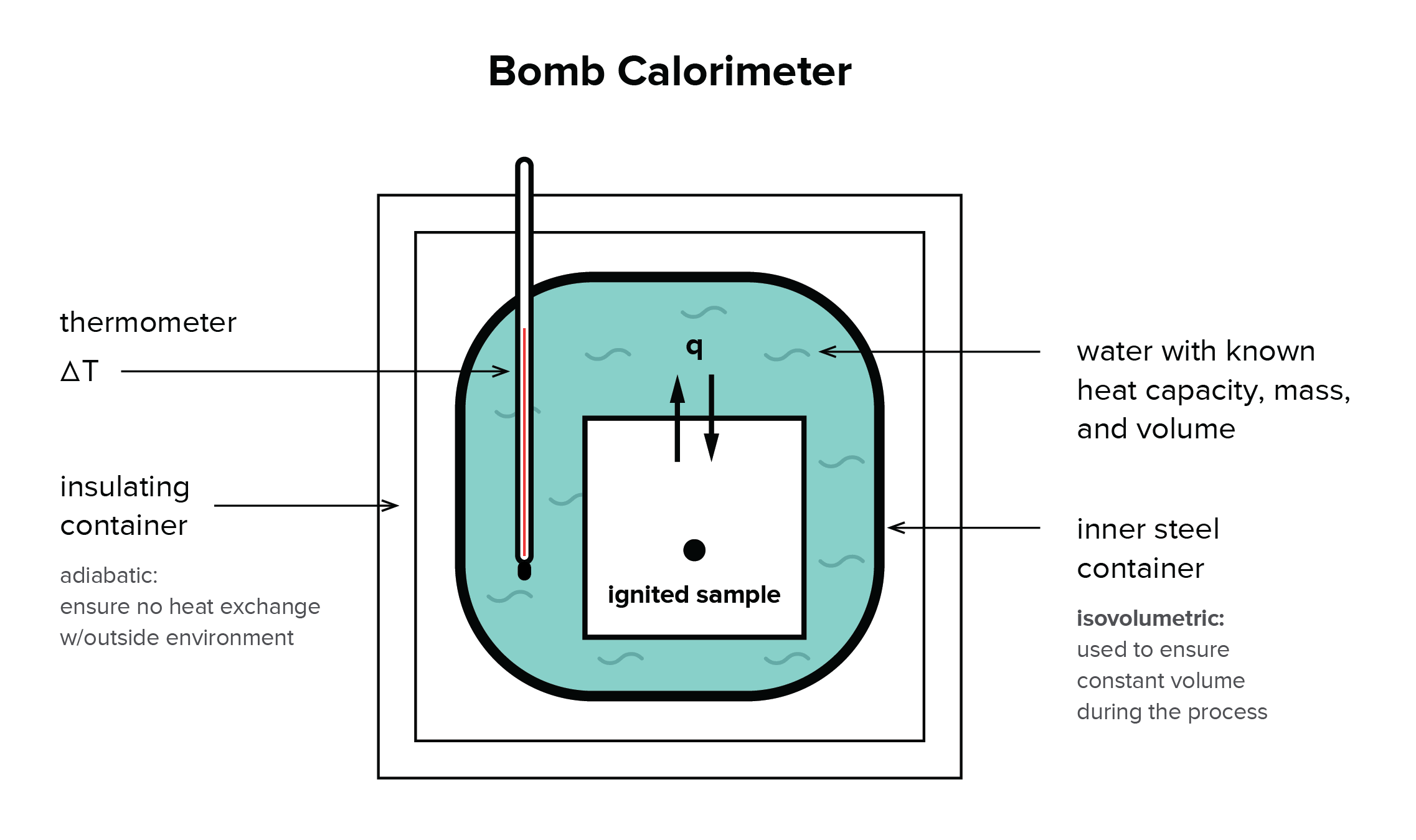
Figure 2 Setting up constant-volume calorimeter.
mrcrΔTr = mcccΔTc
where mr is the mass of the reactants,
cr is the specific heat capacity of the reactants,
ΔTr is the change in temperature of the reactants,
mc is the mass of the fluid in the calorimeter,
cc is the specific heat capacity of the fluid in the calorimeter,
and ΔTc is the change in temperature of the fluid in the calorimeter
Thus, with knowledge of any five of these variables, the sixth may be calculated.
Take a moment to anticipate the units of specific heat capacity (c). Specific heat is the amount of energy required to raise the temperature of one gram of a substance by one degree Celsius or Kelvin. The units of mass, temperature, and heat should be straightforward. Mass is provided in SI units of kg, the temperature is provided in SI units of Celsius or Kelvin, and heat is provided in SI units of calories or joules. Together, the units of specific heat must be equivalent to J/ (kgK)
b) Forms of heat transfer
When two substances at different temperatures are placed in physical contact, heat will flow from the hotter object to the colder object. The equation for heat absorbed or given during a process is applicable here: q = mcΔT. Note that the first law of thermodynamics also states that the amount of heat released by one system is equal to the amount of heat gained by a second.
Heat transfer or exchange can occur in one of three ways:
1. Conduction: a direct transfer of heat through contact and without movement of the objects
2. Convection: a transfer of heat through the motion of a liquid or gas over another object
3. Radiation: an indirect transfer of heat through electromagnetic waves that do not require the two objects to be in contact
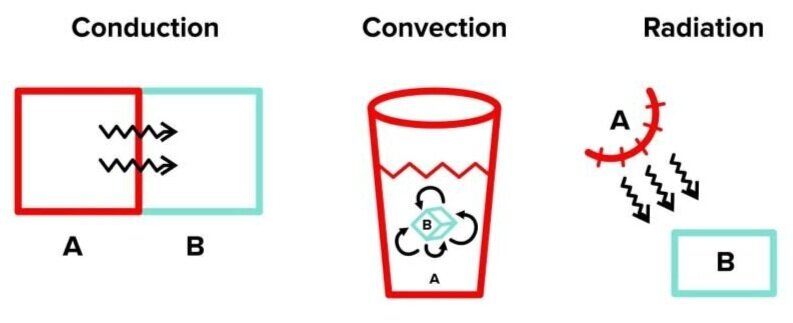
Figure 3 Different forms of heat transfer. In these diagrams, system A is initially hot, while system A is initially cold (lacks heat).
-----
Part 4: Phase change
Phase changes are the physical changes that take place when a substance changes phases, but not chemical identity. In other words, the intramolecular bonds within a molecule are not altered. However, the physical properties—including density and temperature—of the substance are altered.
The three phases of matter are solid, liquid, and gas. Enthalpy of fusion, also referred to as heat of fusion, is the heat transferred during the phase change from solid to liquid. Enthalpy of vaporization, also referred to as heat of vaporization, is the heat transferred during the phase change from liquid to gas.
a) Isothermal process
A phase change is an isothermal process. Perhaps counterintuitively, the temperature of a material does not change as the material changes phases. As heat is absorbed or released by the system, all of the transferred heat is used to rearrange the intermolecular bonds that result in phase change—without a change in temperature.
To determine the amount of heat transferred during a phase change, use the equation:
q = mL
where m is mass (in g),
and L is the latent heat (in cal/g)
The latent heat of a substance is a quantity that gives the enthalpy of an isothermal process.
An equivalent equation is:
where n = number of moles,
and ΔH° is the standard enthalpy of phase change
Various values of ΔH° exist depending on the identity of the substance (such as water) and the phase change taking place. For instance:
The standard enthalpy of fusion (changing from solid to liquid phase) of water is equal to 6 kJ/mol
The standard enthalpy of solidification (changing from liquid to solid phase) of water is -6 kJ/mol
The standard enthalpy of vaporization (changing from liquid to gas phase) of water is 41 kJ/mol
The standard enthalpy of condensation (changing from gas to liquid phase) of water is -41 kJ/mol
The standard enthalpy of sublimation (changing from solid to gas phase) of water is 51.1 kJ/mol
The standard enthalpy of deposition (changing from gas to solid phase) of water is -51.1 kJ/mol
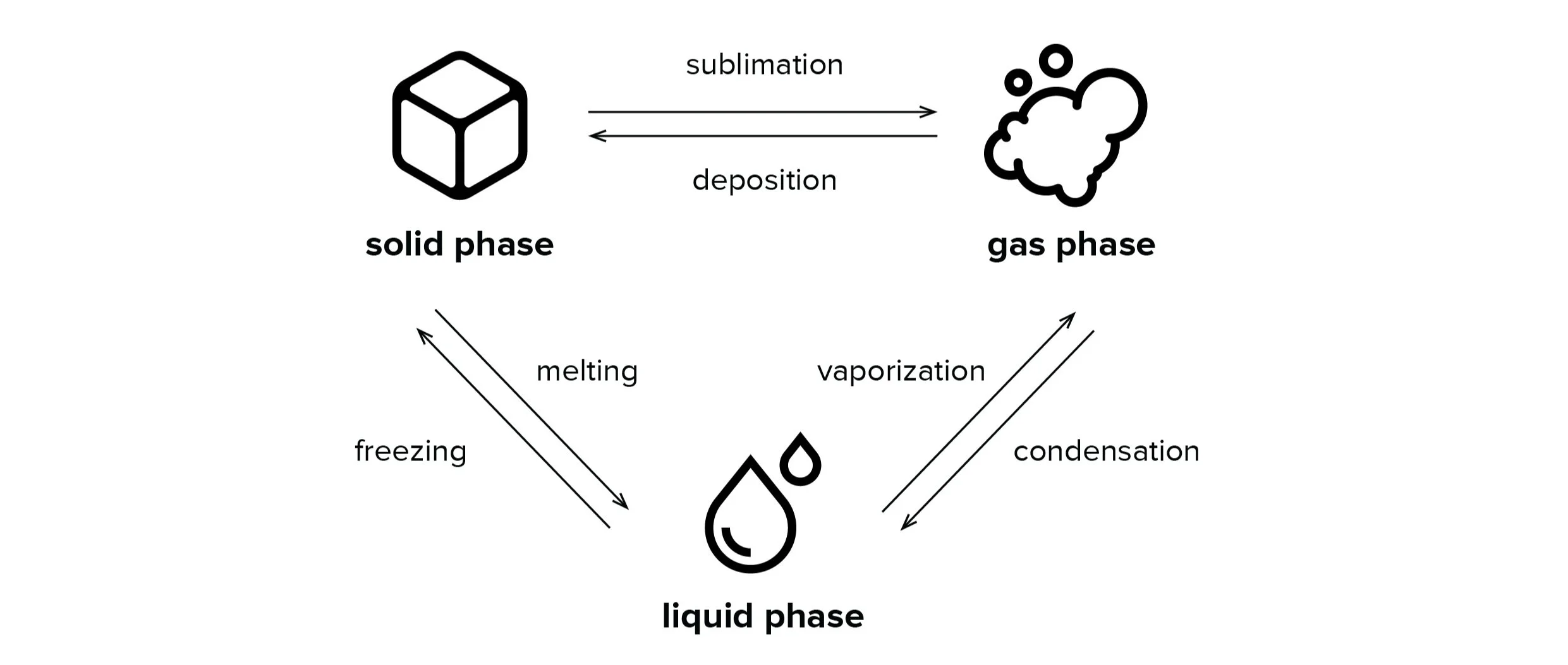
Figure 4 Relevant phase changes for the MCAT.
b) Phase change diagrams
The specific temperatures and pressures at which phase changes occur for a specific substance are graphed by a phase change diagram, where the x-axis denotes temperature and the y-axis denotes pressure. Each of the solid lines is referred to as phase boundaries.
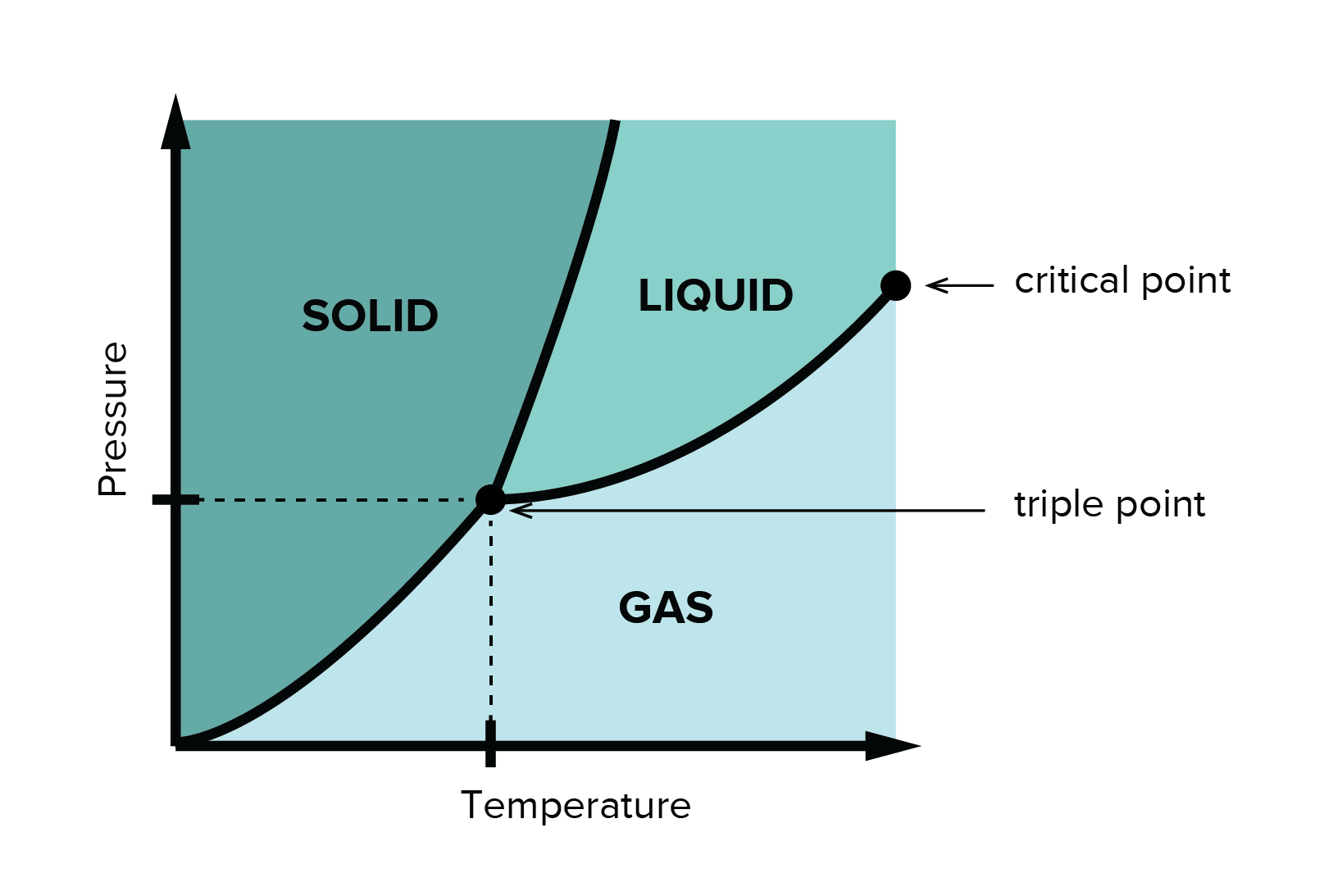
Figure 5 A pressure-temperature phase change diagram.
Phase changes do not occur only at one pressure and temperature but rather within the set of various pressure and temperature combinations. This set of combinations are delineated as boundary lines in a phase diagram.
The triple point is where all three boundary lines intersect, resulting in the temperature and pressure at which all three phases of matter (solid, liquid, and gas) can exist together simultaneously in equilibrium. The critical point is the point beyond which the distinction between liquid and gas phases can no longer be made; the substance is of uniform density and is referred to as a supercritical fluid.
A different form of the phase change diagram uses the x-axis to denote heat added and the y-axis to denote temperature.

Figure 6 A temperature-energy phase change diagram.
c) Hess’s law
Hess’s law of constant heat summation (Hess’s law) states that the total enthalpy change of a reaction is the same. In other words, the combination of individual steps taken to form the products from the reactants has no effect on the total change of enthalpy.
ΔH°rxn = ΣΔH° bonds broken - ΣΔH° bonds formed
The ΔH° of a bond is known as its bond dissociation energy. For example, the bond dissociation energy for C-C is 350 kJ/mol and for C=C is 611 kJ/mol. Since the sign of ΔH° is positive, it can be inferred that energy is transferred into the bonds.
The opposite value of the bond dissociation energy is bond formation energy. For instance, the bond formation energy of C-C is -350 kJ/mol, and C=C is -611 kJ/mol. These values are the same magnitude of bond dissociation energy. However, the sign is the opposite as energy must be released during the formation of a bond.
Hess’s law can be extended to other thermodynamic properties, including entropy and Gibbs free energy.
ΔG°rxn = ΣΔG°products - ΣΔG°reactants
-----
Part 5: High-yield terms
Calorimetry: the science of calculating the heat transfer associated with chemical or physical reaction using a tool called a calorimeter under constant-pressure or constant-volume constraints
Endothermic reactions: chemical reactions in which heat is absorbed by the system. ΔQ for an endothermic is positive
Heat: the transfer of energy that results when there is a temperature difference between substances and possesses the units Joules (J)
Entropy: a measure of disorder denoted by S
Endergonic reactions: nonspontaneous reactions that absorb free energy, resulting in a positive ΔG value
Exergonic reactions: spontaneous reactions that release free energy, resulting in a negative ΔG value
Exothermic reactions: chemical reactions in which heat is released, with a negative ΔQ value
First law of thermodynamics: a law of thermodynamics that states that energy is conserved; states that ΔU = Q - W
Gibbs free energy equation: ΔG = ΔH - TΔS
Enthalpy of fusion: heat transferred during a phase change from solid to liquid
Enthalpy of vaporization: heat transferred during a phase change from liquid to gas
Phase changes: takes place when a substance changes between solid, liquid, or gas states with no change in temperature
Phase change diagram: plots the specific temperatures and pressures at which phase changes occur for a specific substance
Second law of thermodynamics: a law of thermodynamics states that systems tend toward increasing entropy
Specific heat: amount of energy required to raise the temperature of one gram of a substance by one degree Celsius or Kelvin
Temperature: a quantitative measure of the average kinetic energy of a substance
Triple point: point at which all three boundary lines (solid-liquid, liquid-gas, gas-solid) of a phase diagram intersect, resulting in the temperature and pressure at which all three phases of matter exist together simultaneously in equilibrium
Zeroth law of thermodynamics: states that if two thermodynamic systems are in thermal equilibrium with a third system, then all three systems are in thermal equilibrium with each other
-----
Part 6: Passage-based questions and answers
Limited energy reserves and the global environmental impact of fossil fuel highlights the need for biofuels as renewable sources of energy. Out of many possible candidate compounds, 2-methoxyethanol (2ME) is an excellent candidate for the production of biofuel. Researchers investigated the thermochemical properties of 12 conformational isomers of 2ME.
Among the measured quantities was bond dissociation energy, provided in kcal/mol. The least stable conformational isomers (gGt) among those studied were found to have a total bond energy 4.38 kcal/mol higher than another conformational isomer (tGg−). In turn, the conformational isomer tGg− is 1.6 kcal/mol more stable than the conformational isomer gGg−. The bond dissociation energies of a particular conformational isomer are shown in Figure 1.

Figure 1 Bond dissociation energies (kcal/mol) of a conformational isomer of 2ME.
Enthalpies of formation were calculated for 2ME, and the resulting products formed after combustion at room temperature. All of the investigated reactions were found to be endothermic. Production of methoxyethene via 1,3-H atom transfer appeared to be the most kinetically favored path in the course of 2ME pyrolysis at room temperature. This reaction required less energy than the weakest Cα − Cβ simple bond fission.
CREATOR AND ATTRIBUTION PARTY: ABDEL-RAHMAN, M.A., AL-HASHIMI, N., SHIBL, M.F., ET AL. THERMOCHEMISTRY AND KINETICS OF THE THERMAL DEGRADATION OF 2-METHOXYETHANOL AS POSSIBLE BIOFUEL ADDITIVES. SCI REP 9. ARTICLE NUMBER: 4535 (2019). THE ARTICLE’S FULL TEXT IS AVAILABLE HERE: HTTPS://DOI.ORG/10.1038/s41598-019-40890-2. THE ARTICLE IS NOT COPYRIGHTED BY SHEMMASSIAN ACADEMIC CONSULTING. DISCLAIMER: SHEMMASSIAN ACADEMIC CONSULTING DOES NOT OWN THE PASSAGE PRESENTED HERE. CREATIVE COMMON LICENSE: HTTP://CREATIVECOMMONS.ORG/LICENSES/BY/4.0/. CHANGES WERE MADE TO ORIGINAL ARTICLE TO CREATE AN MCAT-STYLE PASSAGE.
Question 1: According to Figure 1, which of the following bonds in 2ME has the largest enthalpy of association?
A) Cα—H
B) Cβ—H
C) Cα—Cβ
D) Oα—H
Question 2: What is the hybridization state and electron geometry of Cα shown in Figure 1?
A) sp2; trigonal pyramidal
B) sp2; tetrahedral
C) sp3; trigonal pyramidal
D) sp3; tetrahedral
Question 3: Suppose that the value of ΔS of the combustion reaction described in the passage is positive. Which of the following statements about the ΔG of the combustion of 2ME must be true?
A) ΔG is negative
B) ΔG is positive
C) ΔG is zero
D) There is not enough information to determine the sign of ΔG
Question 4: What is the most reasonable value of temperature used to calculate the enthalpy of formation of 2ME and its associated combustion products?
A) 273 K
B) 298 K
C) 25 C
D) 0 C
Answer key for passage-based questions
1. Answer choice D is correct. Figure 2 depicts the structure of 2ME and the bond dissociation energies (kJ/mol) corresponding to each of its substituent bonds. A high value of bond strength indicates a high-magnitude bond association energy A stronger bond would require a higher absorption of heat energy per mol than a weaker bond. The bond dissociation energies are: Cα—H (96.17 kJ/mol), Cβ—H (96.73 kJ/mol), Cα—Cβ (86.69 kJ/mol), and Oα—H (108.13 kJ/mol) (choice D is correct).
2. Answer choice D is correct. Cα has formed four bonds to unique atoms: two hydrogen atoms, one carbon atom, and one oxygen atom. Thus, the Cα has sp3 hybridization and a tetrahedral shape as predicted by VSEPR theory (choice D is correct). If the Cα atom were bonded to three unique atoms and one lone electron pair, then it would assume a trigonal pyramidal geometry (choice C is incorrect). sp2 hybridization results from the bonding of the atom to three other unique atoms or lone pairs (choices A and B are incorrect).
3. Answer choice D is correct. The passage states that the combustion of 2ME is endothermic, implying that the value of ΔH is positive. The reaction is stated to occur at room temperature, which is 298 K. The Gibbs free energy equation is given by ΔG = ΔH - TΔS. If ΔH and ΔS are both positive and temperature is 298K, the sign of ΔG would depend on the relative magnitudes of ΔH and ΔS. Since this information is not provided, there is not enough information to answer the question (choice D is correct).
4. Answer choice B is correct. The passage states that the combustion of 2ME is assumed to take place at room temperature. To convert temperatures from degrees Celsius to Kelvin, simply add 273 K. Thus, a room temperature of 25 C is equivalent to 298 K (choice B is correct). The Gibbs free energy equation utilizes units of Kelvin; thus, the provided temperature should be in Kelvin (choices C and D are incorrect). At standard temperature and pressure (STP), the temperature is 0 C or 273K. STP conditions are generally used for gas calculations, such as in applications of the ideal gas law; thus, they are not applicable to this scenario (choice A is incorrect).
-----
Part 7: Standalone practice questions and answers
Question 1: Suppose that a reaction is known to have positive ΔS and negative ΔH. Which of the following conclusions can be drawn?
A) The reaction is spontaneous and endergonic
B) The reaction is spontaneous and exergonic
C) The reaction is nonspontaneous and endergonic
D) The reaction is nonspontaneous and exergonic
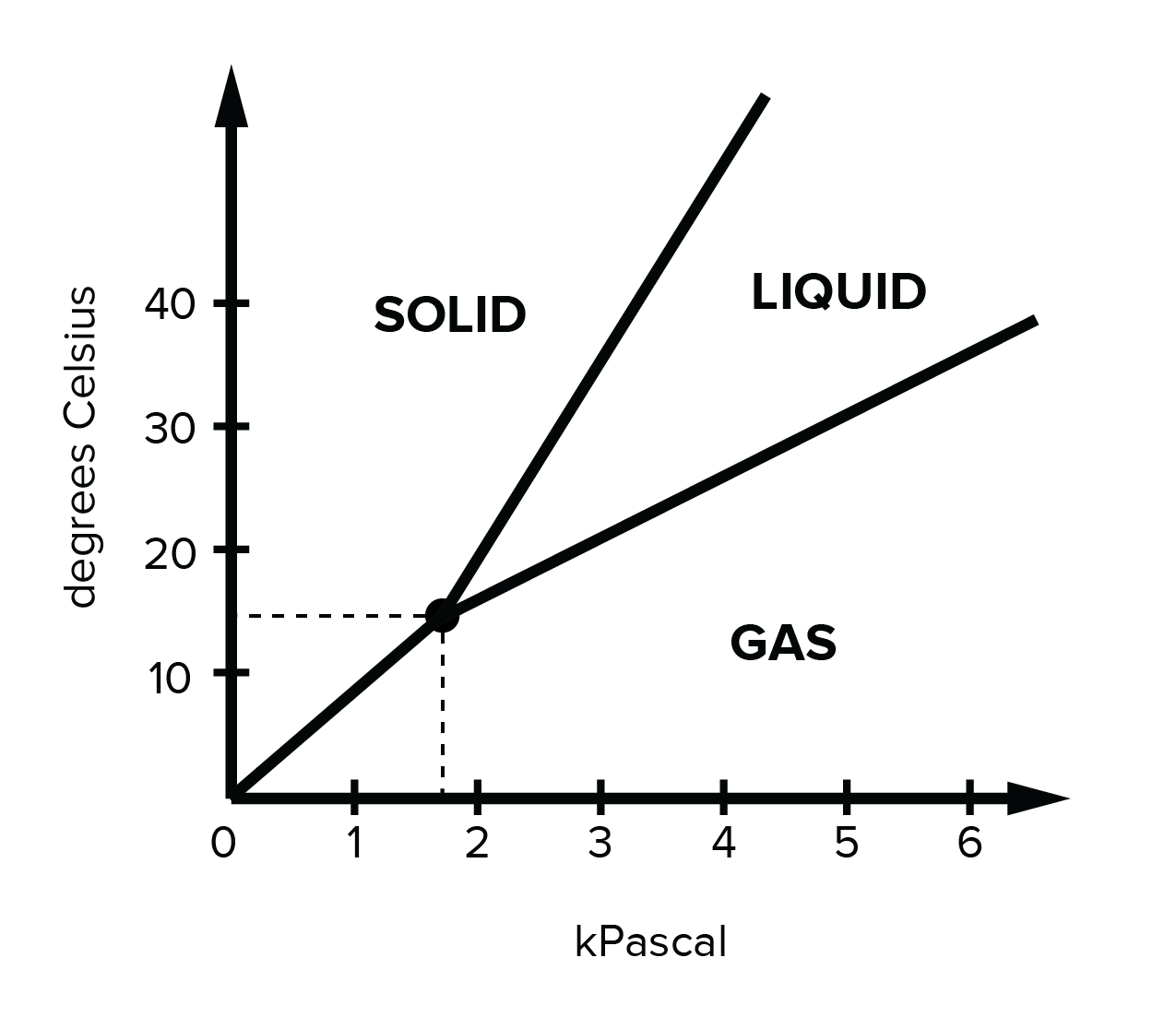
Question 2: Refer to the phase diagram provided below. What phases does this substance experience as the pressure is changed from 1 to 5 kPa at a constant temperature of 30℃?
A) Solid phase only
B) Liquid phase only
C) Solid to liquid phase
D) Solid to liquid to gas phase
Question 3: What is the standard enthalpy of formation of O2 at 298 K and 1 atm?
A) There is not enough information to answer this question
B) 0 kJ/mol
C) 25 kJ/mol
D) 100 kJ/mol
Question 4: The latent heat of vaporization of water is 2230 kJ/kg. What is the amount of heat needed to completely boil 1 mL of liquid water from 100℃?
A) 0J
B) 2.23J
C) 223J
D) 2.23kJ
Question 5: A reaction has an equilibrium constant of 10 and a reaction quotient of 29. Which of the following statements must be true?
A) ΔG is negative; the reaction will progress towards the reactants until equilibrium is reached
B) ΔG is negative; the reaction will progress towards the products until equilibrium is reached
C) ΔG is positive; the reaction will progress towards the reactants until equilibrium is reached
D) ΔG is positive; the reaction will progress towards the products until equilibrium is reached
Answer key for standalone questions
1. Answer choice B is correct. The reaction is spontaneous and exergonic. Recall that the Gibbs free energy equation states ΔG = ΔH - TΔS. In this case, ΔH is negative and ΔS is positive. As a result, ΔG will always be negative, regardless of the magnitude of temperature. This negative value implies that the reaction is spontaneous (choices C and D are incorrect). This has the same meaning as an exergonic reaction, or a reaction in which free energy is released (choice B is correct).
2. Answer choice D is correct. At 30C and 1 kPa, the substance is a solid (located to the left of the solid-liquid boundary line in the phase diagram). As pressure increases, the substance turns into a liquid and finally into a gas (choice D is correct; choices A, B, and C are incorrect).
3. Answer choice B is correct. The standard enthalpy of formation for an element in its naturally occurring form at standard conditions (298 K, 1 atm) is 0 kJ/mol (choice B is correct).
4. Answer choice D is correct. Use the equation q=mL to calculate the heat transfer of phase change reactions. Since water has a density of 1 g/1 mL, 1 mL of water indicates there is 1g of water. Thus, q=(1 x 10^-3 kg)(2230 kJ/kg) = 2.23 kJ =2230 J (choice D is correct).
5. Answer choice C is correct. ΔG can be calculated with the equation: ΔG = -RTln(K/Q) = RT ln(Q/K). The question stem states that K=10 and Q = 29. Since Q is greater than K, Q/K must be greater than one, and ln(Q/K) must be positive. The values of R and T are always positive. ΔG will therefore yield a positive value (choices A and B are incorrect). The forward reaction must be nonspontaneous. As a result, the reaction will progress leftward to reach equilibrium (choice D is incorrect).