
Everything you need to know about Boston University premed, including premed requirements, the best extracurriculars, and the Boston University premed acceptance rate

As the first university in the nation to admit women to medical school and boasting Nobel Prize-winning faculty, Boston University has a lot to offer ambitious premeds. But what does the premed journey actually look like at this prestigious institution?

What You'll Learn
Core Course Requirements
The required and recommended coursework in biology, chemistry, physics, math, English, and social sciences needed at Boston University to satisfy medical school prerequisites.
Major-Specific Course Planning
How different major paths, such as Biomedical Engineering, Neuroscience, or Biochemistry, alter your required course sequences and overall schedule.
MCAT Prep Strategy
Which upper-level science and behavioral courses at Boston University best align with the topics covered on the MCAT.
Campus & Local Clinical Opportunities
Strategies for securing shadowing, volunteering, and clinical experiences through Boston University’s affiliated medical centers and surrounding urban healthcare facilities.
Research Experience Access
How to pursue research opportunities through Boston University programs and research centers during your undergraduate years.
Pre-Health Advising Support
How to leverage Boston University's Pre-Professional Advising Office for guidance on committee letters, course selection, and application preparation.
Admissions Track Record
Insights into the historical medical school acceptance rates and application outcomes for Boston University pre-med graduates compared to national averages.
----
Is Boston University good for premed?
Boston University is an excellent institution for premed students, offering strong academic preparation, dedicated prehealth advising, and prime clinical and research opportunities. Located in a major healthcare hub, BU provides undergraduates with direct access to extensive clinical shadowing, volunteer work, and cutting-edge research at nearby facilities like Boston Medical Center (BMC) and the Chobanian & Avedisian School of Medicine.
Boston University premeds who utilize the Pre-Professional Advising Office benefit from comprehensive support, including assistance with prerequisite planning and competitive early-assurance options like the MMEDIC program. While the coursework is rigorous and class sizes in introductory sciences can be large, BU consistently places a high percentage of its advised applicants into top-tier MD and DO programs in Massachusetts and nationwide.
Nestled in the heart of Boston, Massachusetts, in an urban setting and founded in 1839 by Boston Methodists, Boston University is today one of the most prestigious research universities in the nation. While it holds onto its original historical ties to the United Methodist Church, it remains a private university with no specific religious affiliations.
Boston University has a 11% acceptance rate, but you’ll need to be high-achieving to keep this school on your list. The majority of matriculants have SAT scores that fall between 1400 & 1600.
Ranked as #42 in National Universities, BU offers many undergraduate degrees for its medium-sized student population (18,805). Some of the more popular majors at BU include Business (with 16% of recent BU graduates having majored in this program), followed by Social Sciences, and Communication, Journalism, and Related Programs, at 14% and 13% of BU graduates, respectively. (Interestingly, only 12% of recent grads majored in Biological and Biomedical Sciences.)
Did you know that this top-ranked university has global programs? Boston University has multiple locations in the United States—including Los Angeles and the District of Columbia—and they offer programs at two locations outside the U.S. (in London and Paris).
With so much going for it as a university, you’d no doubt be proud to call Boston University your alma mater! In this guide, we’ll cover the Boston University premed requirements, extracurriculars for premed students, and the end result: getting into med school as a BU graduate.
Want expert guidance on medical school admissions?
Enter your name and email for weekly advice plus our free 102-page guide to help you with every step: Get Into Medical School: 6 Practical Lessons to Stand Out and Earn Your White Coat
----
Boston University premed quick facts
| Boston University Premed Quick Facts | |
|---|---|
| Boston University applicants to med school per year | |
| Boston University premed acceptance rate to med school | |
| National medical school acceptance rate | |
| Average MCAT of accepted Boston University premeds | |
| Average GPA of accepted Boston University premeds | |
| Most popular premed major | |
| Prehealth advising available? | |
| Committee letter offered? | |
| Academic system |
Boston University premed course requirements
Before diving into the fun stuff, we must first cover the requirements. Regardless of where you end up in medical school, you’ll need to ensure you’ve taken a specific set of courses that most medical schools require. From there, you’ll want to look deeper into the requirements of the particular school(s) on which you set your heart.
BU's pre-health department has compiled a list of pre-health core courses you’ll need to take. We’ve collected that information and put it into the following table for ease of readability:
| Biology: One year (8 credits), with lab |
BI 107 (Biology I)
BI 108 (Biology II) |
BI 203 or BI 213 (Cell Biology)
BI 315 (Systems Physiology) NE 102 (Introduction to Cellular and Molecular Biology) BI 206 or BI 216 (Genetics) |
||||
| Chemistry: 1. General chemistry: One year (8 credits), with lab 2. Organic chemistry: One year (8 credits), with lab 3. Biochemistry: One semester |
For General Chemistry:
CH 101/102 (General Chemistry) For Organic Chemistry (choose from among the following options): CAS CH 203/204 CAS CH 203/214 CAS CH 203/216 CAS CH 211/212 For Biochemistry (choose from among the following options): BI/CH 421 (Biochemistry I with Laboratory) BI/CH 421/422 (Biochemistry I/II with Laboratory) CH 373 (Principles of Biochemistry no Laboratory) |
CH 109/110 (General and Quantitative Analytical Chemistry) CH 111/112 (Intensive General and Quantitative Analytical Chemistry) |
||||
| Calculus/Statistics: One year (at least one semester of each) |
Choose one of the following sequences for Calculus: MA 121 and/or 122 (Calculus for the Life and Social Sciences I & II) MA 123 and/or 124 (Calculus I & II) MA 127 (Enriched Calculus - covers material in MA 123 & 124) MA 129 (Honors Calculus) Choose one of the following sequences forStatistics: MA 113 (Elementary Statistics) MA 115 and/or 116 (Statistics I & II) MA 213 (Basic Statistics & Probability) MA 213/214 (Basic Statistics & Probability and Applied Statistics) |
|||||
| Physics: One year (8 credits), with lab |
Choose one of the following sequences:
PY 105/106 (Elementary Physics - algebra-based) PY 211/212 (General Physics - calculus-based) PY 241/242 (Principles of General Physics - calculus-based) |
CAS PY 211/212
CAS PY 241/242 PY 251/252 |
||||
| College-level English/writing: One year (two semesters) |
Choose from among the following: CAS WR 100 WR 120 CAS WR 150 CAS WR 151 CAS WR 152 CAS WR 153 |
|||||
| Psychology: One course/semester | PS 101 (General Psychology) | PS 261 (Social Psychology) | ||||
| Sociology: One course/semester | PS 261 (Social Psychology) | SO 215 (Sociology of Healthcare) | ||||
More information on Boston University premed requirements
The course subjects outlined above (first column) are the requirements for almost any medical school in the United States. The specific course options available at BU (second column) each have additional information and, in some cases, optional courses that will also meet the requirement.
Biology: For most students, one year of introductory biology courses will meet the premed requirements for medical school. However, to better prepare students for the MCAT, Boston University recommends students pursue an additional year of biology courses, particularly for students who are not biological science majors. Some courses they suggest students take in the second year include BI 203/BI 213 (Cell Biology), BI 206/BI 216 (Genetics), and/or BI 315 (Systems Physiology).
Additional notes for biological science majors: Students who major in Biochemistry and Molecular Biology aren’t required to take BI 107, but BU recommends those students take BI 108 (Biology II), BI 203 or BI 213 (Cell Biology), and BI 315 (Systems Physiology) to fulfill the med school requirements.
According to the pre-health department, those majoring in Biomedical Engineering tend to complete the requirements as part of their major requirements and pursue Organic Chemistry during their sophomore year.
In addition to the courses suggested above for biological science majors, neuroscience majors may take NE 102 (Introduction to Cellular and Molecular Biology) as part of their biology sequence to meet med school requirements.
General Chemistry: Students with a strong chemistry background may substitute the CH 101/102 sequence with CH 109/110 (General and Quantitative Analytical Chemistry) or CH 111/112 (Intensive General and Quantitative Analytical Chemistry). According to BU, all three sequences are introductory options for chemistry, so choosing the perfect fit will be an individual decision.
Biochemistry: While not all medical schools require biochemistry, it’s highly recommended that students take at least one semester in preparation for the MCAT. That said, a student’s major will likely determine whether a lab component is required with the biochemistry course. If no lab component is required, Boston University suggests CH 373 as an excellent biochemistry option that does not have an associated lab class.
Physics: Students have many options for completing the physics requirement, but it’s important to note that students in the School of Engineering must complete the PY 211/212 sequence. Students with a strong calculus and physics background may find CAS PY 211/212 or CAS PY 241/242 preferable (both sequences will meet the requirement for two semesters of physics).
Calculus and Statistics: Although most medical schools no longer require calculus, credits earned from AP or IB courses are typically accepted among those that do. Please note that students majoring in chemistry must take MA 123/124 (or MA 127 or MA 129).
Statistics has many levels, and all Boston University premed students should take at least one statistics course. Depending on your interests and goals, you may take a more research-oriented or department-based statistics course.Psychology and Sociology: If you’ve already taken the introductory courses recommended in the middle column in the table above, consider taking an advanced course, such as those listed in the third column.
Sample Boston University premed course plan
Regardless of how you look at it, there are a lot of courses you’ll be required to take before graduation, and many of the courses are somewhat intense. Depending on your major and background, you may find the premed requirements relatively easy compared to the rest of your major requirements, or they may be your toughest courses.
With this in mind, you need to set up a realistic schedule that enables you to leverage opportunities. For instance, consider taking your toughest science course during a semester when you have lighter courses to round out your semester. We don’t advise taking two challenging (for you) courses in a single semester if you can help it because doing so may put your GPA at risk.
Below is a sample of how you might set up your schedule for the first three years of your journey as a BU premed:
| Freshman Fall | BI 107 CH 101 MA 121 |
|||||
| Freshman Spring | BI 108 CH 102 MA 113 |
|||||
| Sophomore Fall | CAS CH 203 CAS WR 150 |
|||||
| Sophomore Spring | CAS CH 204 CAS WR 151 |
|||||
| Junior Fall | BI/CH 421 PY 105 PS 101 |
|||||
| Junior Spring | PY 106 PS 261 |
|||||
----
How do you maintain a high GPA as a Boston University premed?
Whether you choose to major in biological sciences or the arts, keeping your GPA up and maintaining that high GPA will be vital. What’s the best way to ensure that you can do so?
Effective time management:
Use a planner or digital calendar to schedule your study sessions, classes, extracurricular activities, and personal time. Some great options for paper planners include the Happy Planner and the Erin Condren Planner. If you’d prefer a digital planner, consider using one of the many options available. If an app seems more convenient, you might enjoy Notion or Todoist. Bottom line: stay organized!
As you schedule your classes and coursework, prioritize assignments based on deadlines and importance, allocating more time to challenging subjects.
Active learning techniques:
You must learn the material you’re being taught in your premed required courses, not only for the MCAT but also for your career! On that note, active learning techniques will help ensure you’re not passively absorbing content. Ask questions, take notes, and participate in discussions. (This may have the added bonus of helping you secure a future letter of recommendation from a professor impressed by your willingness to learn!) You may also benefit from using flashcards, mnemonic devices, and concept maps to reinforce learning and improve retention.
Maintain consistent study habits:
Establish a regular study routine, dedicating specific times daily to review course material and complete assignments. Additionally, choose a study environment that works for you. This may mean a quiet room in the school library or cozying up on the couches at Starbucks. Wherever you find yourself, make it a regular habit. (Pro tip: Sometimes treating yourself to tasty treats and drinks at the local coffee shop has the added benefit of becoming a reward for your studying hard and often!)
Seek help as needed:
Never feel ashamed or embarrassed to ask your professor, TA, or pre-health advisors for help! If you ever feel you don’t understand something or an intense concept just isn’t clicking with you, don’t hesitate to ask for help. Remember, your GPA is dependent upon it!
----
What extracurriculars should you do as a Boston University premed?
You probably already know that maintaining a high GPA and earning a high score on the MCAT are only the beginning steps! As a Boston University premed, you must also involve yourself in extracurriculars. Specifically, to get into med school, you’ll want to gain experience in patient care, community service, research, and shadowing.
BU premed students are in luck; there are numerous options for each in the Boston area.
Boston University premed volunteering
Boston University students are in a great position with plenty of opportunities for volunteer service in the area! Regardless of what you’re interested in doing—whether working with children, helping people with disabilities, or serving underprivileged communities—you’re sure to find something from the community service opportunities for BU students list the school has put together.
For instance, students interested in tutoring can become involved with Big Brothers Big Sisters of Eastern Massachusetts, Big Sister Association of Greater Boston, Boston Partners in Education, Boston’s After School for All Partnership, Dimock Community Health Center, Girl Scouts of Eastern Massachusetts, or Jewish Big Brothers Big Sisters of Greater Boston—among other organizations.
Additionally, there are tons of pre-health student groups with which BU premed students can get involved.
Boston University premed patient care
Students attending BU also have many local opportunities for patient care. For instance, the Center for Community Health Education, Research and Service (CCHERS), Codman Square Health Care Center, and Dimock Community Health Center are all local community health facilities accustomed to BU students looking for exploratory engagement.
There are also local facilities dedicated to caring for patients with specific conditions such as AIDS (AIDS Action Committee, Boston Living Center, CDC Foundation – Price Fellowship for HIV Prevention), Alzheimer's (Boston University Alzheimer’s Disease Center), diabetes (American Diabetes Association, Joslin Diabetes Center), cancer (Avon Walk for Breast Cancer, Dana-Farber Cancer Institute, The Jimmy Fund), and sickle cell disease (STRIVE), among other conditions.
Boston University premed research
As a research-based university, it’s no surprise that Boston University has numerous opportunities for students to participate in research. There are so many opportunities that BU has its own Undergraduate Research Opportunities Program. This program has an abundance of opportunities for on-campus research. BU faculty members have submitted each post on that page, so it’s a good idea to contact the posting professor to learn more about each opportunity.
Another great research option is to connect with BU’s medical school. Their website lists even more research opportunities. (You can also explore those research opportunities by professor or department.)
Boston University premed shadowing
There are numerous hospitals and medical centers within the Boston area, and we’d encourage you to reach out to several in your quest to find a doctor willing to allow you to shadow him or her. You might be interested to know that BU is very supportive of its students finding shadowing opportunities—so much so that they’ve even developed a shadowing database designed to connect students and alumni with opportunities.
Want to know exactly what it takes to get into America's top medical schools?
Get our free 102-page guide to help you with every step: Get Into Medical School: 6 Practical Lessons to Stand Out and Earn Your White Coat
----
Getting into medical school from Boston University
All of this hard work you’d have put in up to this point would be for naught if it didn’t result in acceptance into medical school!
Whether you’re interested in attending Boston University’s own medical school (Chobanian & Avedisian School of Medicine) or another school, you can rest assured that BU prepares its premed students well.
Boston University Medical College rankings and acceptance rate
According to US News, for 2024, the Boston University Medical College (BUMC) was ranked #32 in Best Medical Schools: Research and #38 in Best Medical Schools: Primary Care. This notable accomplishment ranks its research a few places above Brown’s Warren Alpert Medical School. (Note: BUMC is currently unranked on US News.)
BUMC also has a rich history. It was the first university in the world to provide an opportunity for females to obtain a medical education, and it was the first university to graduate an African American female. It’s also the nation’s first institute to combine cancer research with a teaching lab. It’s clear why anyone would be proud to call this school their alma mater.
Of course, such a notable school doesn’t make it easy for just anyone to gain acceptance. With an acceptance rate of 4.1%, BUMC achieves what it sets out to accomplish. Some of its additional rankings included #66 in Most Diverse Medical Schools, #112 in Most Graduates Practicing in Medically Underserved Areas, #95 in Most Graduates Practicing in Primary Care Fields, and #139 in Most Graduates Practicing in Rural Areas. Ultimately, there’s no doubt BU knows how to prepare its graduates for acceptance into medical school, and if their own medical school is any indication, the future for those graduates looks quite promising!
Boston University prehealth advising
Boston University’s Pre-Professional Advising Office provides you with comprehensive prehealth guidance to undergraduates across all majors planning to pursue medicine, dentistry, or other health professions. Key services offered by the office include:
Course planning & gap-year advising: Prehealth advisors assist you with structuring prerequisite courses, selecting majors, and strategizing potential gap years to build strong application portfolios.
Prehealth recommendation packets: Rather than writing a single institutional committee letter, Boston University’s Pre-Professional Advising Office collects, manages, and submits official letter packets to the central application services (AMCAS, AACOMAS, and TMDSAS) on your behalf. A packet can include up to five individual letters of evaluation from science faculty, research mentors, and clinical supervisors.
Application & interview preparation: The advising staff offers personal statement workshops, application reviews, and mock interviews to help you prepare for the health professions application cycle.
Boston University MMEDIC program
If you are interested in attending Boston University for both your undergraduate and medical school education, Boston University offers the Modular Medical/Dental Integrated Curriculum (MMEDIC) program, which offers an early assurance pathway to the Boston University Chobanian & Avedisian School of Medicine.
Program Highlights & Benefits:
Early acceptance: You apply during the second semester of your sophomore year. Provisional acceptance into Boston University’s medical school removes the requirement to navigate a traditional, multi-school application process during senior year.
Integrated graduate coursework: You begin incorporating graduate-level preclinical courses, such as biochemistry and cell biology, human physiology, or cellular organization of tissues, into your junior and senior undergraduate academic schedules.
Seamless transition: MMEDIC is a full eight-year track (four years undergraduate plus four years of medical school) designed to optimize educational continuity rather than accelerate time to degree completion.
MMEDIC admission requirements & criteria:
Academic eligibility: You must have sophomore standing at Boston University, demonstrate a minimum 3.30 cumulative and science GPA, and complete basic prerequisite science sequences (general chemistry, organic chemistry, and biology with labs) by the end of your second year.
Application components: Admission requires an academic evaluation, three letters of recommendation (including at least one science faculty member), a detailed activities record (clinical, research, and volunteer work), and essay prompts managed via the Pre-Professional Advising Office.
Promotion standards: To maintain provisional acceptance and fully matriculate into Boston University Chobanian & Avedisian School of Medicine, MMEDIC students must achieve at least a 3.50 cumulative GPA and a 3.40 science/math/engineering GPA by graduation.
----
Frequently asked questions
Is Boston University good for premed?
Yes, Boston University is an excellent choice for premed students. Boston University offers world-class science programs, direct clinical access to Boston Medical Center (BMC), and dedicated prehealth advising. Students benefit from extensive undergraduate research funding (such as Undergraduate Research Opportunities Program), competitive early assurance pathways like the MMEDIC program, and a track record of matriculating successful applicants into top-tier medical schools nationwide.
Does Boston University have a premed major or program?
Boston University does not offer a standalone "premed" major, but it provides a dedicated prehealth advising track. Premed at Boston University is an advisory track rather than a degree-granting major, meaning you can choose any major, including natural sciences, humanities, and social sciences, while completing required medical school prerequisite coursework alongside your general degree requirements.
What is Boston University's premed acceptance rate?
Though Boston University does not publish overall acceptance rate, specific majors such as the Human Physiology program report that 80 percent of qualifying graduating students are accepted into medical school. This significantly exceeds the national average medical school acceptance rate of around 44%.
What’s the best premed major at Boston University?
There is no single "best" premed major at BU. Medical schools accept applicants from all academic disciplines. However, the most popular and practical majors for Boston University prehealth students include Biology, Biochemistry and Molecular Biology, and Psychology.
Does Boston University offer premed advising?
Boston University provides comprehensive prehealth guidance through its Pre-Professional Advising Office. Advisors assist pre-health students with course selection, prerequisite scheduling, clinical and research placement, gap-year planning, MCAT timing, and navigating the medical school application process.
Does Boston University provide a committee letter?
No, Boston University does not issue a traditional committee letter. Instead, the Pre-Professional Advising Office compiles and submits an official letter packet. This packet bundles up to five individual letters of recommendation (from science faculty, research mentors, and clinical supervisors) into a unified institutional submission sent directly to central application services like AMCAS.
How hard is it to keep a high GPA as a Boston University premed?
Maintaining a high GPA as a Boston University premed is notoriously challenging, primarily due to intense academic rigor, uncurved "weed-out" science courses, and an institutional environment that lacks the generous grade inflation seen at some peer institutions. Boston University’s foundational STEM prerequisites, such as Organic Chemistry, are graded on strict evaluation criteria with notoriously tough exams, meaning top marks are hard-won. To keep your GPA up, you’ll need to utilize office hours, balance your lab requirements with general education courses, and be extremely disciplined about your overall study schedule and strategy.
----
Final thoughts
Boston University is known for being one of the nation’s top-ranked research universities. For Boston University premed, the future looks bright, and graduates can certainly count on being prepared to become a notable physician in their community. Whether you wind up at BUMC or another medical school, there’s no question that BU will send you on your way prepared, knowledgeable, and ready to impact the future of medicine positively.
About the Author
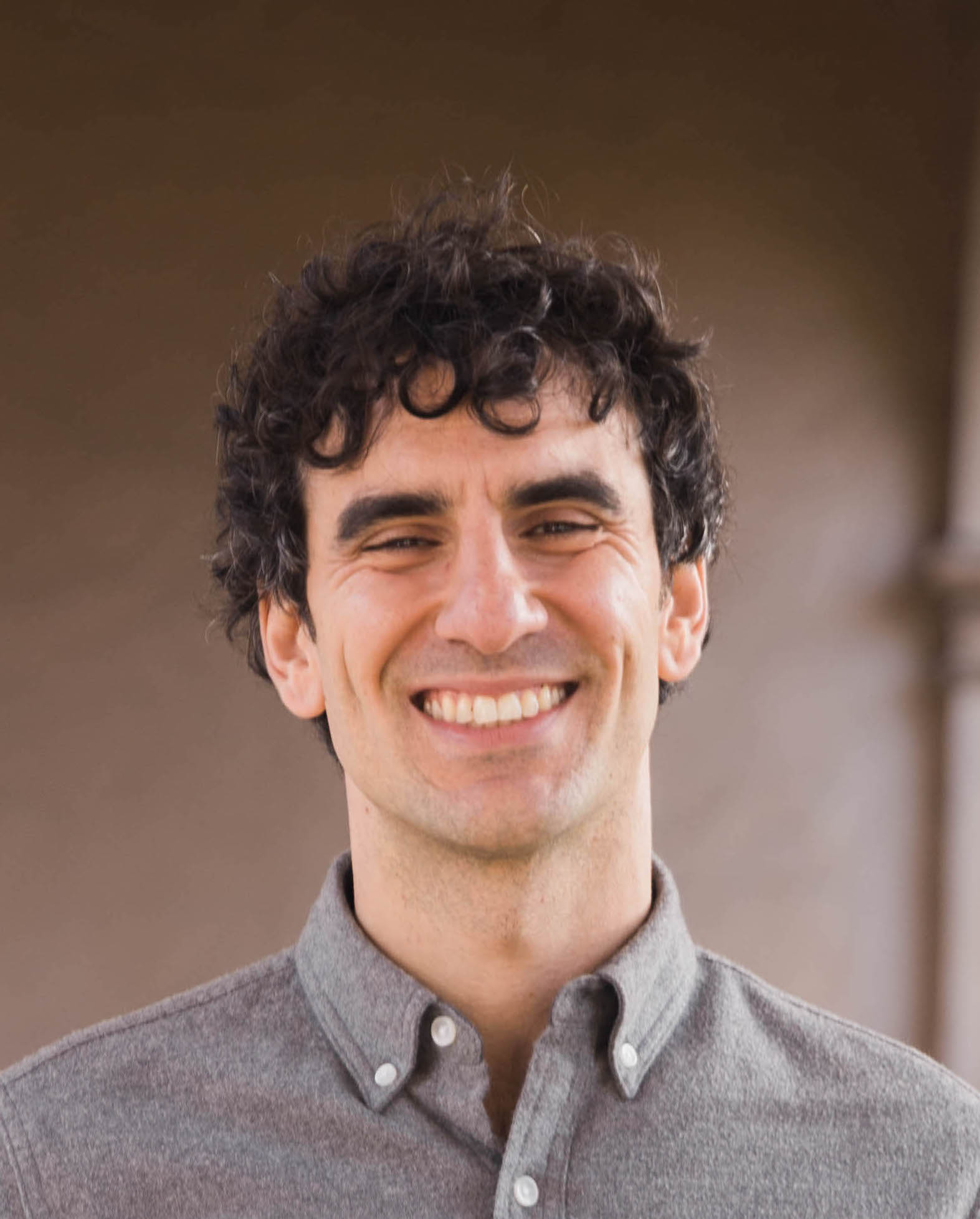
Dr. Shirag Shemmassian is the Founder of Shemmassian Academic Consulting and one of the world's foremost experts on medical school admissions. For over 20 years, he and his team have helped thousands of students get into medical school using his exclusive approach.
Over 90% of our students get into med school—the first time.
Get our free 102-page guide to help you with every step: Get Into Medical School: 6 Practical Lessons to Stand Out and Earn Your White Coat



THERE'S NO REASON TO STRUGGLE THROUGH THE COLLEGE ADMISSIONS PROCESS ALONE, ESPECIALLY WITH SO MUCH ON THE LINE. SCHEDULE YOUR COMPLIMENTARY CONSULTATION TO ENSURE YOU LEAVE NOTHING TO CHANCE.