Inside the Athens Polyclinic serving refugees and migrants: what you’ll do, how the program avoids the voluntourism trap, and how to turn the experience into stronger medical and dental school applications

Learn about the valuable clinical experience you’ll gain with Global Medical Brigades in Athens, Greece.

What You'll Learn
How the Partnership Works
How Global Brigades, GMB, and SAC support students before, during, and after a brigade, and why volunteering in a permanent, locally staffed clinic sets this experience apart from typical short-term trips.
Inside the Athens Polyclinic
What makes the clinic unique, from its multilingual, multicultural patient population of refugees, asylum seekers, and migrants to its specialty services, partner dental care, and legal and business programs.
Your Role as a Volunteer
What you’ll actually do, including intake and triage, health record updates, clinical shadowing, dental clinic support, and patient education, all under the supervision of local clinicians.
Lodging and Daily Life
Where you’ll stay and how a typical brigade is structured, with vetted lodging near the clinic and a weeklong schedule that combines orientation, clinic rotations, and community engagement.
Strengthening Your Application
How to write and talk about your brigade, from avoiding savior narratives in your personal statement to describing your role accurately in Work & Activities, secondaries, and interviews.
Joining a Brigade
How fundraising sustains the clinic year-round, your options for joining or starting a campus chapter, and how to get application support after your brigade.
Introduction to Global Medical Brigades in Athens
Understanding the model: Global Brigades, GMB, and SAC
The Athens urban polyclinic: Healthcare on the frontlines
What you'll do as a volunteer in Athens
Lodging, logistics, and daily life
How to leverage the GMB Greece experience on medical and dental applications
Next steps: Joining a brigade and getting application support
Frequently asked questions about GMB Greece
----
Introduction to Global Medical Brigades in Athens
Securing meaningful clinical exposure is one of the toughest hurdles for premed and predental students. In the United States and Canada, clinical volunteering and shadowing often relegate you to the back corner of an exam room, watching a clinician type notes into an electronic health record. You might log the hours, but you rarely get a firsthand look at how social, economic, and systemic barriers dictate patient outcomes.
When students look abroad to bridge this gap, they often run into a different problem: the "voluntourism" trap. Admissions committees are understandably skeptical of international trips where untrained undergraduates fly into a low-resource community for a week, hand out pain relievers, pose for photos, and leave without establishing any longitudinal care. To an admissions committee, that doesn't demonstrate a sustained commitment to healthcare; it raises red flags about patient safety, ethics, and superficial engagement.
To evaluate clinical opportunities that bypass these issues, I visited Athens to observe Global Brigades partner operations firsthand, meet with the local clinical team, and speak with student volunteers on the ground.
What Global Brigades facilitates in Athens is a licensed, year-round urban clinic that directly addresses the needs of vulnerable migrant and displaced populations. This guide covers how the partnership between Global Medical Brigades (GMB), Global Brigades (GB), and Shemmassian Academic Consulting (SAC) works, what you'll do as a volunteer, and how to effectively translate this experience onto your medical or dental school applications.
Want expert guidance on medical school admissions?
Enter your name and email for weekly advice plus our free 102-page guide to help you with every step: Get Into Medical School: 6 Practical Lessons to Stand Out and Earn Your White Coat

Athens skyline with Mount Lycabettus
----
Understanding the model: Global Brigades, GMB, and SAC
To understand why admissions committees view this experience differently from standard volunteer trips, it's essential to understand how the organizations collaborate:
Global Brigades (GB): GB is the international development organization that manages the in-country operations. They operate the physical clinics, employ local physicians, dentists, nurses, and administrative staff year-round, and coordinate with municipal health authorities.
Global Medical Brigades (GMB): GMB is the student-led wing that recruits, screens, and organizes volunteer cohorts across university campuses. GMB prepares students before they ever step foot on a plane by providing comprehensive pre-brigade orientation, clinical training, cultural sensitivity coursework, and logistical coordination.
Shemmassian Academic Consulting (SAC): Through our partnership with GMB, we provide structured pre- and post-brigade support. We help students process their clinical takeaways, navigate the ethics of global health, and translate their on-the-ground experiences into compelling personal statements, Work & Activities entries, and secondary essays for medical and dental school applications.
Because the clinics are permanently established and run by local medical professionals, students aren't parachuting in to run a temporary medical camp. Volunteers step into an existing, sustainable healthcare system as supportive team members.
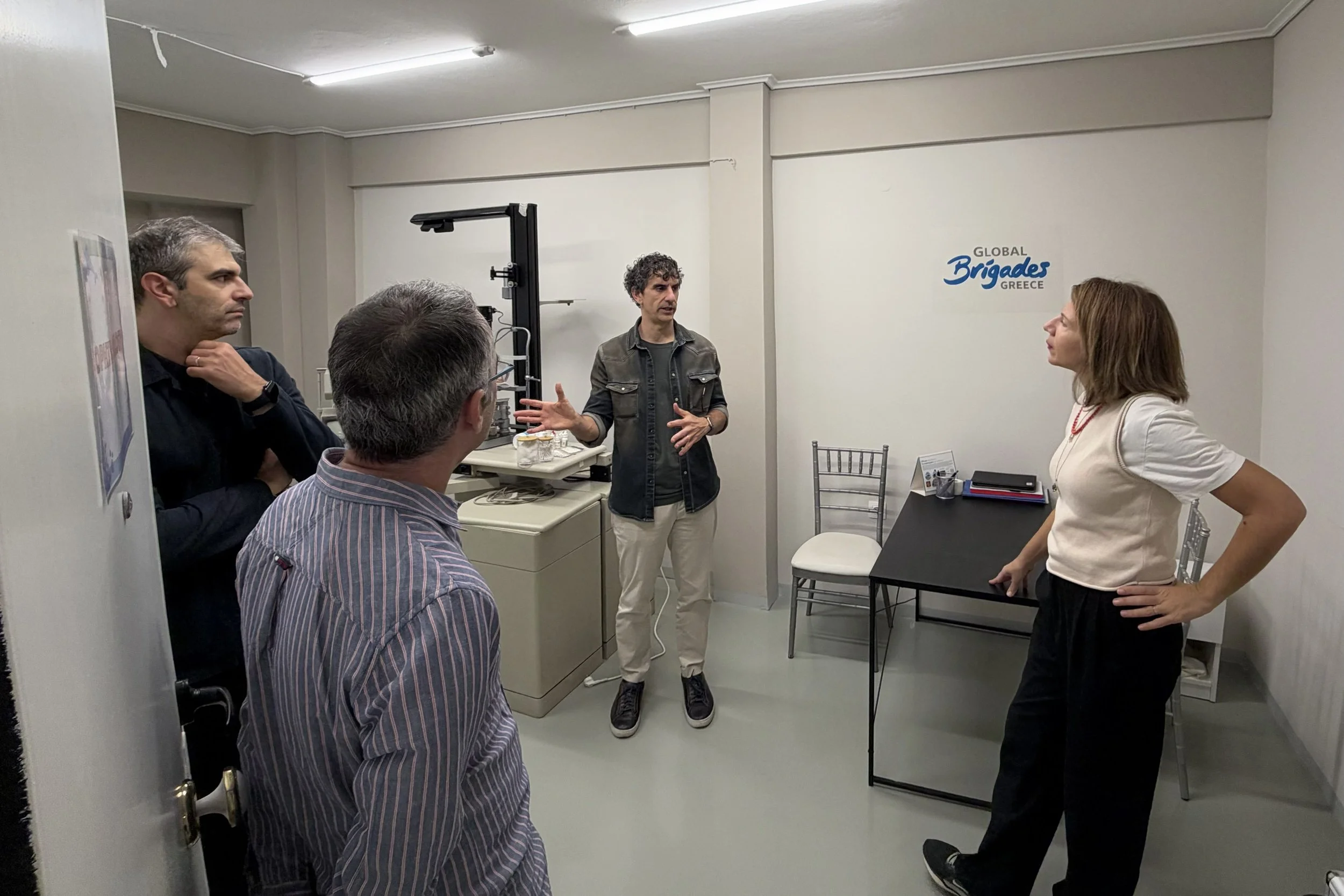
Dr. Shemmassian visits the Global Brigades clinic in Athens.
----
The Athens urban polyclinic: Healthcare on the frontlines
Since the 2015 European migrant crisis, Greece has been a primary gateway to Europe for individuals fleeing war, political persecution, and severe economic collapse. Many refugees and asylum seekers remain in transit or reside in urban centers where access to public healthcare is limited by legal status, system backlogs, and language barriers.
To address this gap, Global Brigades established a permanent Polyclinic in central Athens, one of the few fully licensed clinics dedicated to serving refugees, asylum seekers, and migrants.
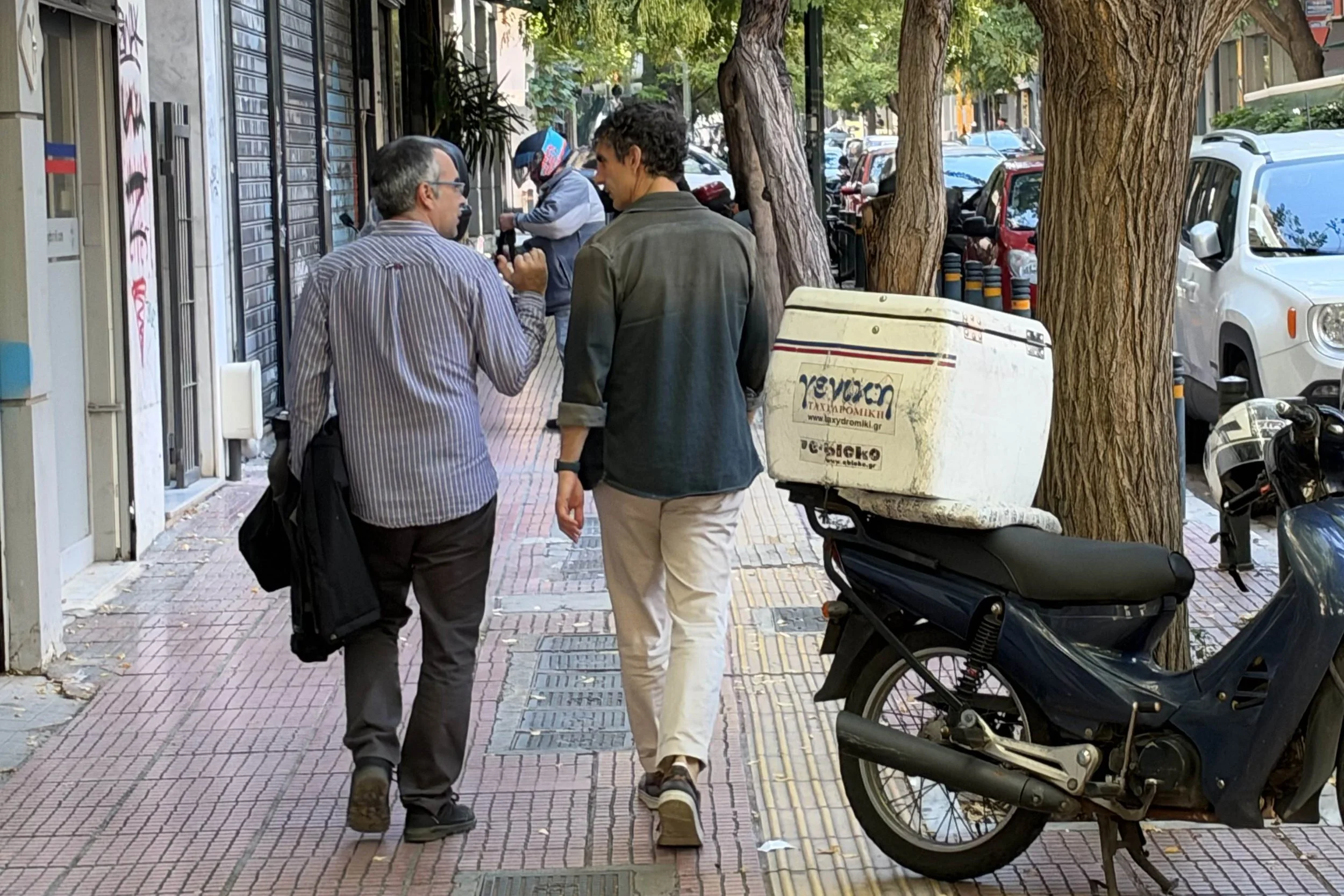
Dr. Shemmassian tours the central Athens neighborhood surrounding the clinic.
Key features of the Athens clinic
Multicultural and multilingual patient base: Patients arrive from across Africa, the Middle East, and Eastern Europe. Because language is often a primary barrier to accessing healthcare, the clinic provides translation services in nine languages.
Comprehensive specialty care: The facility isn't a basic first-aid station. It operates appointment-based specialty services, including pediatrics, gynecology, optometry, and general primary care.
Integrated dental care via Seeds of Humanity: Dental disease is widespread among displaced populations who've lacked access to routine hygiene and preventative care for years. GB partners with the Seeds of Humanity dental clinic in Athens, where patients receive cleanings, fillings, extractions, and fluoride treatments.
Integration with legal and business initiatives: GB's holistic model in Greece links healthcare delivery with legal empowerment programs (helping migrants understand their rights and navigate asylum processes) and business initiatives (providing financial education and micro-enterprise support to build stable livelihoods).
----
What you'll do as a volunteer in Athens
During a brigade in Greece, you work directly under the supervision of local doctors, dentists, and clinic coordinators. GMB maintains strict ethical boundaries; you won't be performing procedures or diagnosing conditions outside your scope of training. Instead, you support the operational and clinical workflow of a busy urban polyclinic.
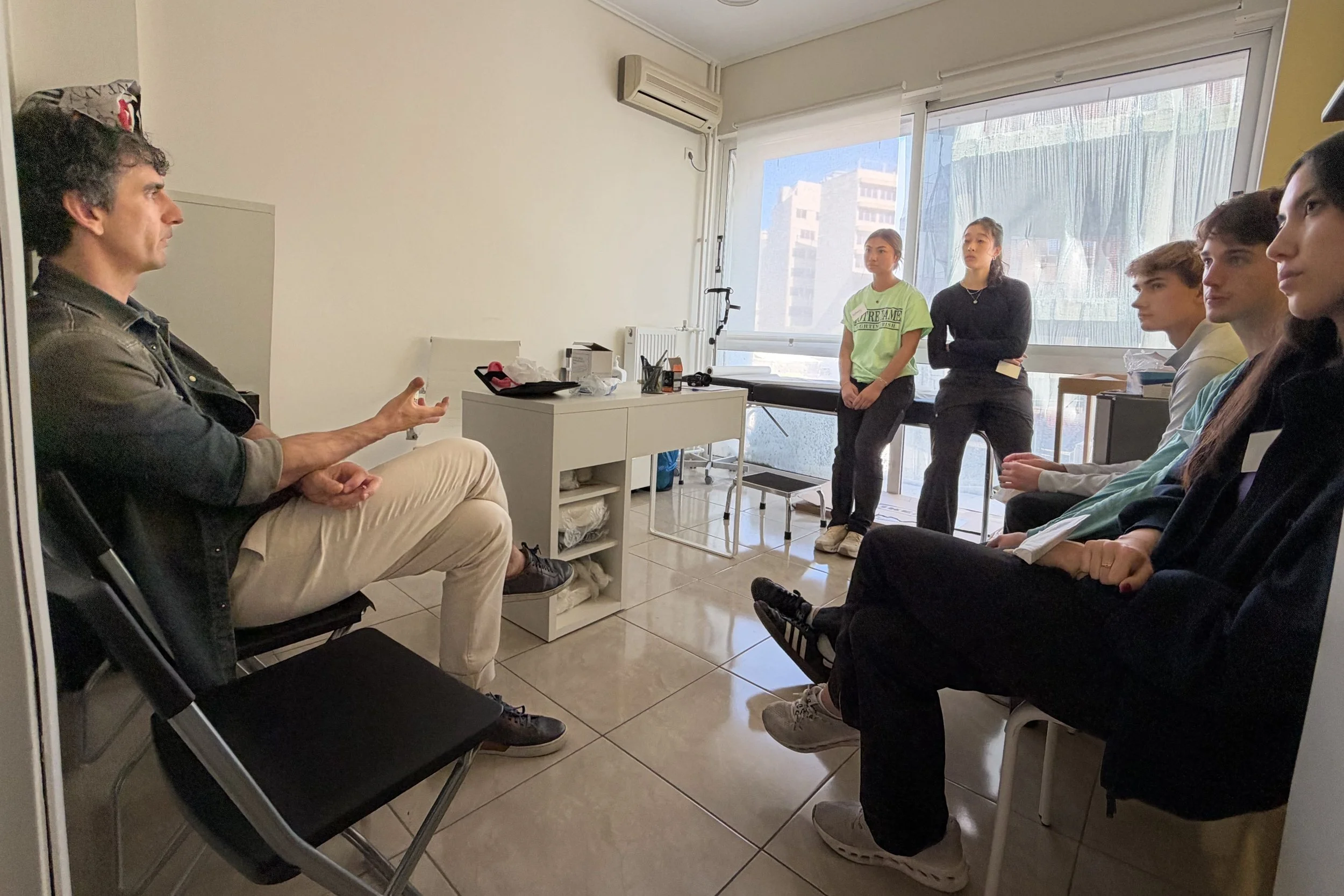
Dr. Shemmassian meets with student volunteers.
Your responsibilities typically include:
Intake and triage: You'll check patients in, record baseline vital signs (blood pressure, temperature, pulse), and document chief complaints alongside professional translators.
Electronic health records and longitudinal data tracking: You'll update patient files in the clinic's database to ensure that local clinicians have accurate medical histories for subsequent visits and referrals.
Clinical shadowing: You'll observe local pediatricians, gynecologists, ophthalmologists, and general practitioners as they conduct examinations, discuss differential diagnoses, and formulate treatment plans.
Dental clinic support (Seeds of Humanity): Predental volunteers observe extractions, restorations, and preventative care while learning about the oral-systemic health connection in populations with limited nutritional and hygiene access.
Patient education workshops: You'll help lead focused educational sessions on preventative health, dental hygiene, and chronic disease management tailored to the daily conditions faced by displaced individuals.
----
Lodging, logistics, and daily life
Safety and logistical stability are essential for any international clinical program. In Greece, volunteers stay in centrally located, vetted accommodations such as To Spiti—a dedicated facility operated by Global Brigades Greece located across from the Pedion Areos park—or partner accommodations like the Novus City Hotel. These locations are within walking distance from the clinic.
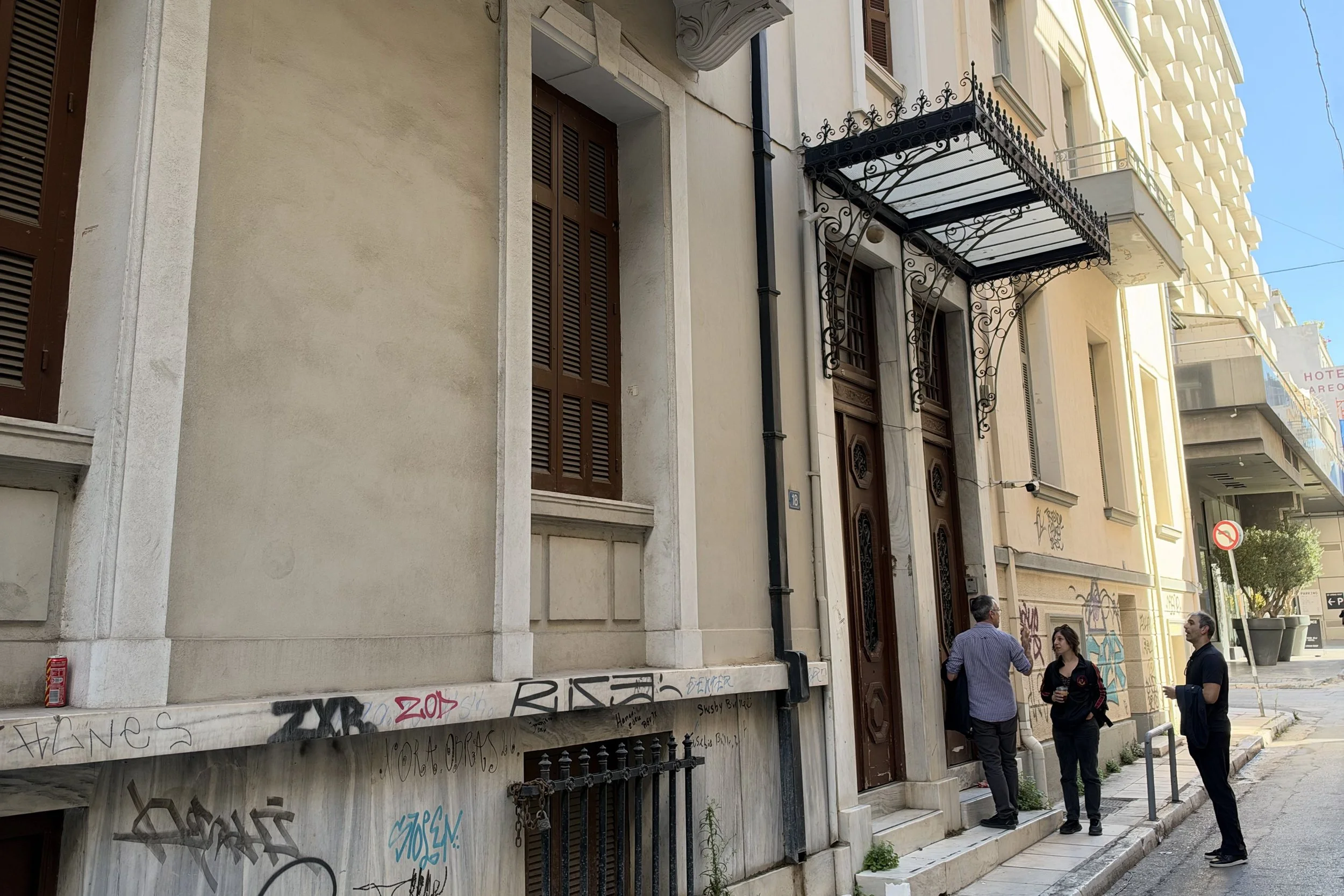
Global Medical Brigades volunteer lodging facilities in Athens
A typical seven-day brigade itinerary balances clinic shifts with education and cultural immersion:
Orientation and systems training: Lectures on the European asylum process, refugee health challenges, and clinic protocols.
Clinic operations: Rotations through triage, specialty shadowing, data input, and the pharmacy station.
Community and cultural engagement: Guided neighborhood walks (such as through Athens' multicultural Kypseli neighborhood) to observe immigrant integration and community life outside the clinical setting.
Life outside the clinic: Exploring Athens
Clinic days are demanding, but a brigade in Greece also puts you in one of the world’s oldest cities. Itineraries include time to explore Athens with your cohort, often guided by local Global Brigades staff who know the city well.
Volunteers typically visit landmarks like the Acropolis and the Parthenon, the Acropolis Museum, and the historic Plaka and Monastiraki neighborhoods, where you can browse markets and try Greek staples like souvlaki, spanakopita, and loukoumades. Closer to home base, Pedion Areos park, right across from the To Spiti lodging, offers green space to decompress after a long shift. On a free evening, the walk up Lycabettus Hill rewards you with sweeping views of the city at sunset.
These experiences complement your clinical work rather than distracting from it. Athens has been a crossroads of cultures for millennia, and exploring the city alongside neighborhoods like Kypseli gives you a fuller picture of the community your patients are trying to build a life in.
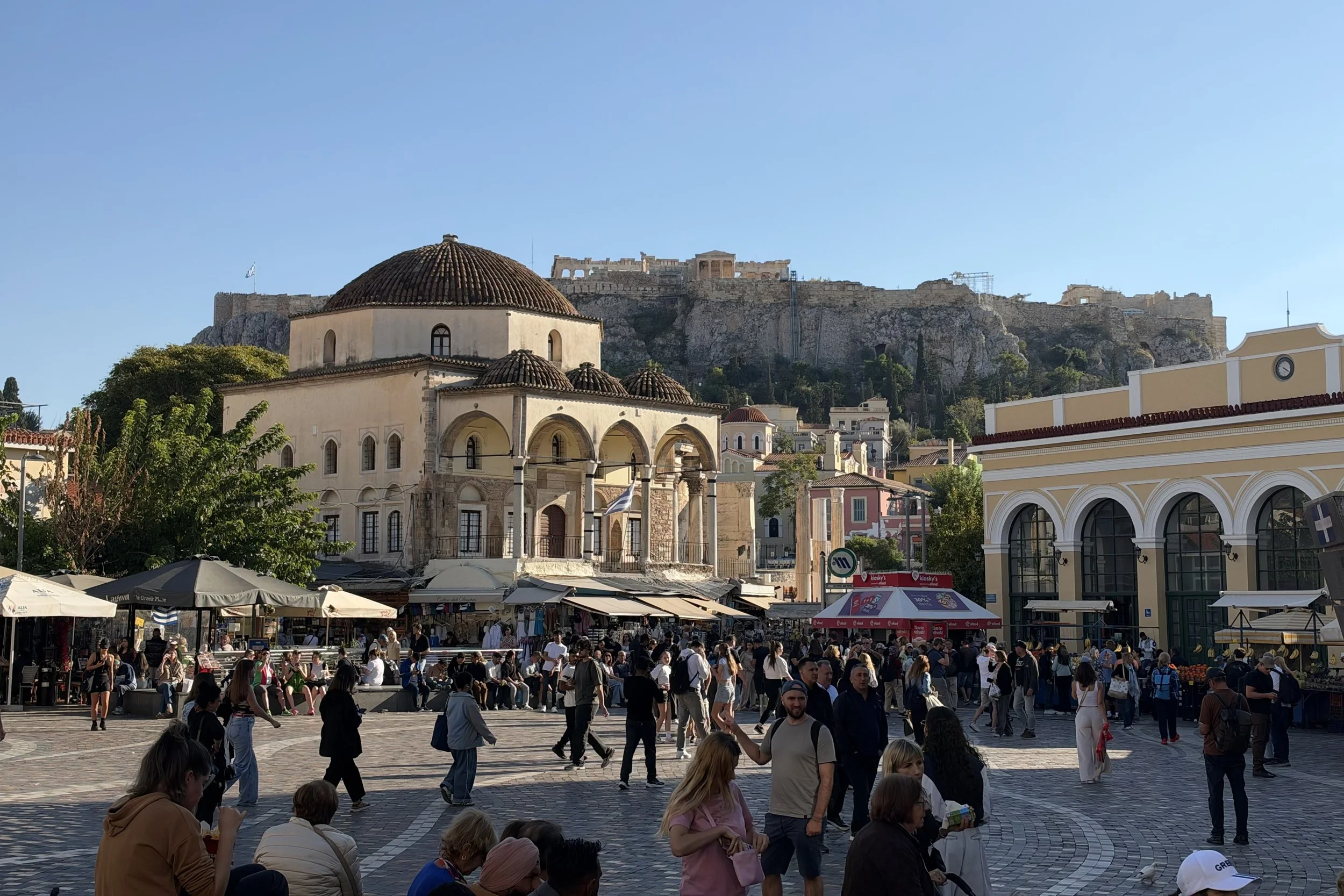
Monastiraki Square in Central Athens
----
How to leverage the GMB Greece experience on medical and dental applications
Admissions committees review thousands of applications with generic shadowing hours. GMB Greece gives you concrete experiences that address the core competencies medical and dental schools evaluate: cultural humility, communication, and systems-based awareness.
Here's how to translate your time in Athens across your application components:
1. The personal statement: Emphasize cultural humility over saviorism
Avoid the trap of writing a "savior narrative." Admissions committees don't want to hear about how you went abroad to "fix" a community or "save" vulnerable patients.
Instead, frame your story in your personal statement around what the experience taught you about patient connection:
Describe the nuance of working with an interpreter across nine different languages. How did it change how you read nonverbal cues, posture, and facial expressions?
Discuss how observing displaced patients forced you to understand the stress, trauma, and resilience individuals carry into a clinical encounter.
Reflect on how this environment reinforced your commitment to serving marginalized and immigrant populations in your future domestic practice.
2. AMCAS, AACOMAS, and AADSAS Work & Activities descriptions
When logging your hours in your Work & Activities entries, be precise about your role and its limits:
Specify your contributions: Clearly outline your duties—taking vitals at intake, managing database records, organizing preventative workshops, and shadowing licensed clinicians.
Emphasize local leadership: Explicitly state that you operated under the direct supervision of licensed Greek physicians and dentists within a permanent, licensed clinic.
Highlight systems-level impact: Note how the data you entered fed into ongoing treatment plans managed by the permanent local medical team.
Want a step-by-step guide on how to write your AMCAS Work & Activities entry on your Global Medical Brigades experience?
Enter your name and email for a downloadable resource to help you craft the perfect W&A entry: How to Write Your AMCAS Work & Activities Entry Using Your Global Medical Brigades Experience
3. Secondary essays: Answering diversity and adversity prompts
Secondary essay prompts frequently ask: "Describe a time you navigated a diverse environment" or "How will your background contribute to the diversity of our medical school class?"
The Athens clinic provides direct material for these questions:
Multicultural navigation: You can write about collaborating with healthcare staff and patients from backgrounds entirely different from your own, navigating differing health beliefs, cultural norms, and systemic obstacles.
Social determinants of health: Discuss how observing the intersection of legal status, housing instability, and healthcare access in Athens gave you a practical framework for analyzing healthcare disparities back home.
4. Admissions interviews: Demonstrating ethical global health awareness
Interviewers often probe international experiences to test whether you understand medical ethics. If an interviewer asks, "Why did you go abroad for clinical experience instead of staying local?", your response should highlight the structural nature of the program:
"I specifically looked for an ethical program integrated into permanent healthcare infrastructure. Through GMB's partnership with Global Brigades, I worked within an ongoing, licensed urban health center that serves displaced refugee populations year-round. My role was strictly supportive—triage, intake, and longitudinal data entry under local physician supervision. It taught me how an established clinical team navigates deep language barriers and structural displacement, which directly informs how I want to work with underserved immigrant communities as a future physician."

Temple of Athena Nike and the Athens skyline
----
Next steps: Joining a brigade and getting application support
To participate in a brigade, volunteers fundraise toward a donation goal set by their chapter. These funds cover on-the-ground lodging, ground transport, meals, and emergency insurance, and a portion directly finances GB's Sustainable Health Fund, which pays for local staff salaries, continuous medical supplies, translation services, and patient referrals throughout the year.
If you're ready to get involved:
Join an existing chapter: Check whether your university currently hosts an active Global Medical Brigades or Global Dental Brigades chapter.
Start a chapter on your campus: If your school doesn't have an established group, you can register through GMB to build a chapter and lead a cohort to Athens.
Get application support: Once your brigade concludes, connect with Shemmassian Academic Consulting to ensure your clinical takeaways, patient encounters, and ethical reflections are articulated effectively across your medical or dental school applications.
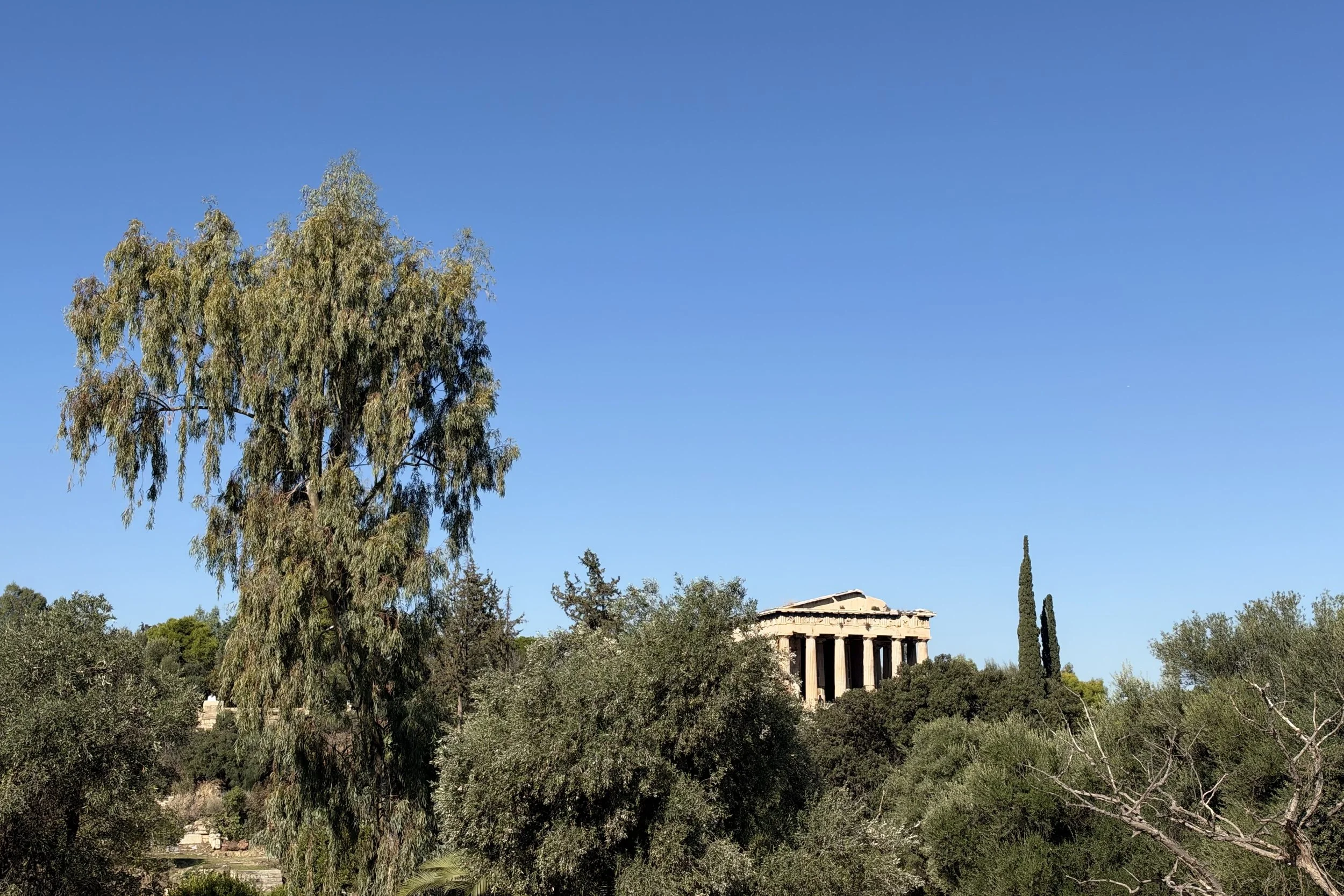
Temple of Hephaestus in the ancient Agora in Athens
----
Frequently asked questions about GMB Greece
Is Global Medical Brigades worth it for medical school?
Global Medical Brigades can strengthen a medical school application, but only as a supplement to sustained clinical experience at home, not a replacement for it. Admissions committees want to see long-term, hands-on patient exposure, and a one-week brigade can’t show that on its own. What GMB Greece adds is depth: direct contact with refugee and migrant patients, experience working through interpreters, and a firsthand look at how legal status and displacement shape health outcomes. If you reflect on those experiences thoughtfully in your personal statement, Work & Activities entries, secondaries, and interviews, the brigade becomes a distinctive part of your story rather than a line item.
Do admissions committees view GMB as voluntourism?
Admissions committees are skeptical of short-term trips where untrained students provide care with no follow-up, and some brigade models have drawn that criticism. GMB Greece is structured differently. Volunteers support a licensed, permanent clinic in Athens that runs year-round with local physicians, dentists, and staff, so patients keep receiving care after each cohort leaves. Volunteers stay within their training, handling intake, vitals, records, education, and shadowing under local supervision. How committees see your trip will depend largely on how you describe it. Emphasize the clinic’s permanence, your supportive role, and what you learned, not what you “fixed.”
Do brigade hours count as clinical or shadowing hours?
Brigade hours can count as either, depending on what you were doing. Time spent with patients, such as taking vital signs at intake, documenting chief complaints, or leading health education sessions, generally counts as clinical volunteering. Time spent watching physicians or dentists examine and treat patients counts as shadowing. On AMCAS, AACOMAS, and AADSAS, log each type of activity accurately and describe your role precisely. Admissions committees notice inflated hours, so record only what you actually did.
Is Global Dental Brigades available in Greece?
Yes, predental volunteers can take part in the Greece program, where Global Brigades partners with the Seeds of Humanity dental clinic in Athens. Volunteers observe cleanings, fillings, extractions, and fluoride treatments for refugee and migrant patients, many of whom have gone years without routine dental care. Predental students also support patient education on oral hygiene and learn how nutrition and living conditions affect oral health.
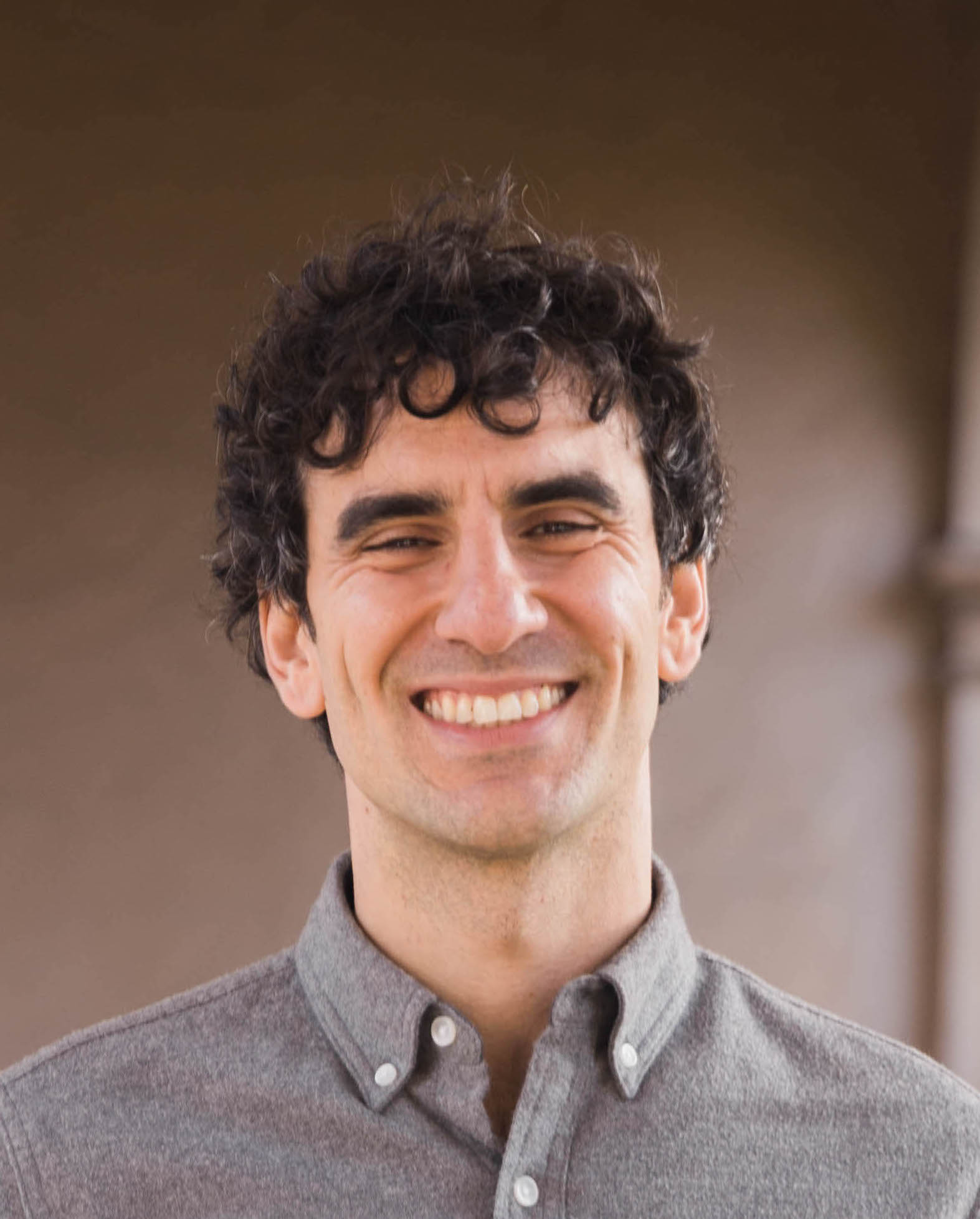
About the Author
Dr. Shirag Shemmassian is the Founder of Shemmassian Academic Consulting and one of the world's foremost experts on medical school admissions. For over 20 years, he and his team have helped thousands of students get into medical school using his exclusive approach.
Over 90% of our students get into med school—the first time.
Get our free 102-page guide to help you with every step: Get Into Medical School: 6 Practical Lessons to Stand Out and Earn Your White Coat
THERE'S NO REASON TO STRUGGLE THROUGH THE MED SCHOOL ADMISSIONS PROCESS ALONE, ESPECIALLY WITH SO MUCH ON THE LINE. CLICK BELOW TO SCHEDULE YOUR COMPLIMENTARY CONSULTATION TO ENSURE YOU LEAVE NOTHING TO CHANCE.