Learn the Johns Hopkins Medical School acceptance rate, admissions strategies, and read sample Johns Hopkins secondary essays
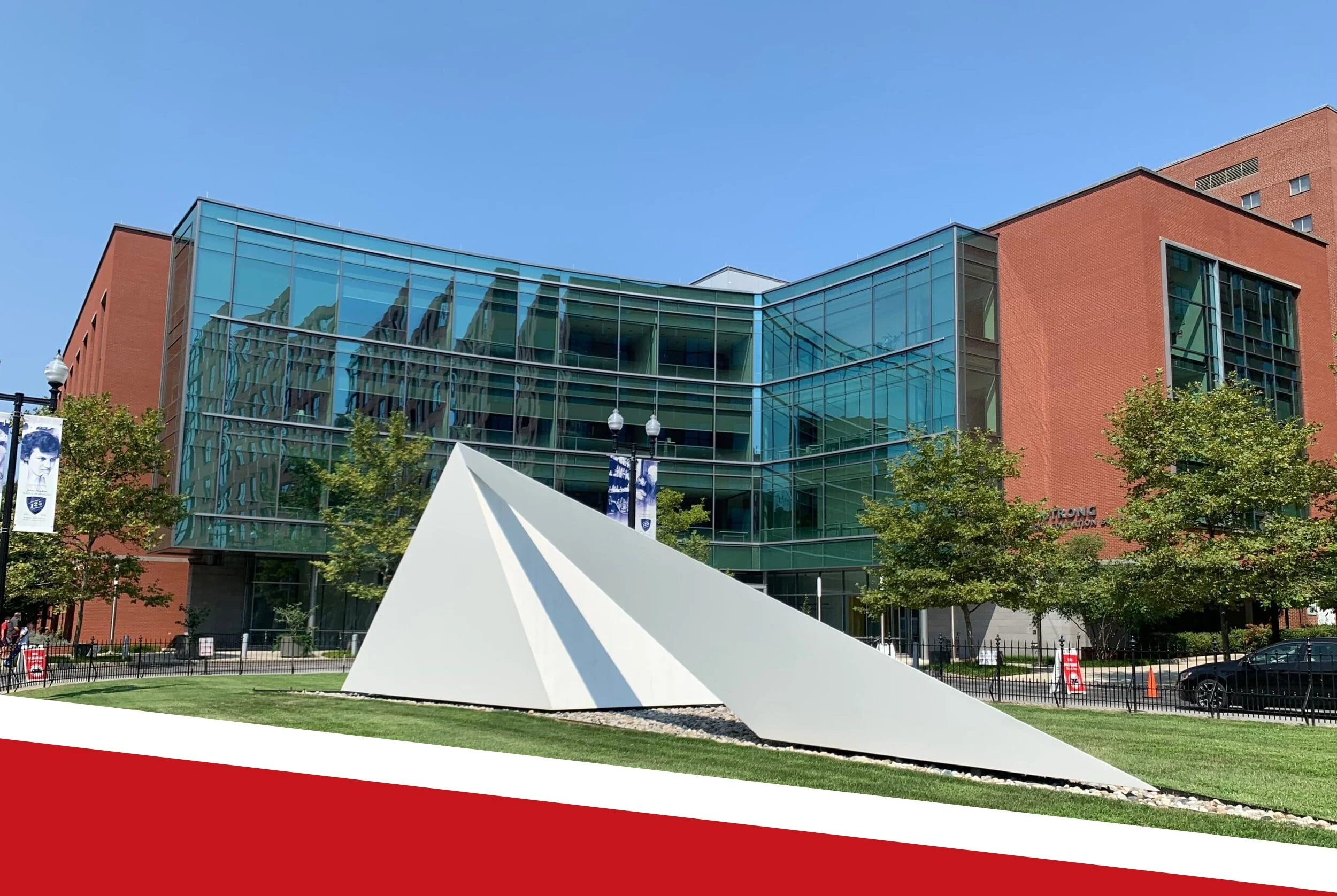
Learn everything you need to know to get into Johns Hopkins Medical School

What You'll Learn
Genes to Society Curriculum
How Johns Hopkins structures its curriculum to integrate medical science with social determinants of health, systems-based practice, and longitudinal clinical experiences.
Academic Standards & Profiles
General expectations regarding applicant academic preparation, competitive candidate credentials, and overall admissions selectivity.
Prerequisites & Requirements
Essential coursework guidelines across the sciences and humanities, laboratory experience expectations, citizenship guidelines, and MCAT score validity rules.
Application Timeline & Milestones
Key deadlines across the admissions process, from initial AMCAS primary submission and secondary application processing through interview invitation cycles and final notifications.
Secondary Essay Strategies
Tactical frameworks for responding to Johns Hopkins' supplemental essay prompts by highlighting leadership, resilience, research engagement, and alignment with school values.
Scholarly & Research Opportunities
Overview of options for student research projects, dual degree paths, and specialized scholarly concentration tracks.
Interview Format & Evaluation Criteria
Critical details on the Johns Hopkins interview structure and what evaluators look for during candidate assessments.
The basics of getting into Johns Hopkins Medical School
Johns Hopkins Medical School MD programs
How hard is it to get into Johns Hopkins Medical School?
Building a strong research profile
Johns Hopkins secondary application essays (examples included)
Johns Hopkins Medical School interview
Frequently asked questions
----
The basics of getting into Johns Hopkins Medical School
When you think of top medical schools, Johns Hopkins Medical School is likely one of the first institutions to come to mind. As a bastion of unparalleled research and world-renowned physicians, the Johns Hopkins University School of Medicine (JHU SOM) has always had a sterling reputation. It’s currently ranked #2 for research by U.S. News and World Report. Further, Johns Hopkins Hospital was ranked #1 by U.S. News and World Report for 22 straight years and, while U.S. News and World Report no longer ranks hospitals in this way, it is currently recognized as one of the top hospitals in the nation.
Graduates from Johns Hopkins Medical School go on to serve as leaders in medicine. They develop cutting-edge treatments, conduct life-changing research, and win Nobel Prizes. It should come as no surprise then that JHU’s admissions process has high standards. If you’re a talented premed with excellent test scores and grades, Johns Hopkins might be a real possibility, but you’ll need something more than an impressive MCAT and GPA. You’ll also need a qualitative strategy for conveying who you are in order to stand out from the pack—something that can be accomplished in strong answers to the Johns Hopkins secondary essays.
Here, we’ll discuss how to get into Johns Hopkins Medical School, from writing strong essays to acing the Johns Hopkins Medical School interview.
----
A number of our students get into Johns Hopkins Medical School each year. Want to learn how?
Get our free 102-page guide to help you with every step: Get Into Medical School: 6 Practical Lessons to Stand Out and Earn Your White Coat
----
How much does Johns Hopkins Medical School cost?
For the 2026–2027 academic year, first-yeartuition and fees at Johns Hopkins are $75,283, and the estimated total first-year cost of attendance — including room and board, books, travel, and other indirect costs — is $111,386.
Financial aid is substantial:
85% of students receive some form of financial aid
$40 million in aid administered to medical students each year
----
How hard is it to get into Johns Hopkins Medical School?
Johns Hopkins Medical School admissions statistics
The Johns Hopkins Medical School acceptance rate is just 6.3 percent, making admissions highly competitive. Let’s take a closer look at admissions statistics for the class of 2028:
Applications: 4,409 (Class of 2028)
Interviews: 591 (Class of 2027)
Accepted: 266 (Class of 2027)
Matriculants: 120 (Class of 2027) 129 (Class of 2028)
Average GPA: 3.94 (Class of 2028)
Average MCAT score: 520 (Class of 2028)
(Suggested reading: Average GPA and MCAT Score for Every Medical School)
Johns Hopkins Medical School admissions requirements
To apply to Johns Hopkins University School of Medicine, you will need to have completed the following coursework:
Biology: One year (8 semester hours) with lab; a course in genetics is recommended
Chemistry: One year (8 semester hours) of general chemistry with lab; one semester (4 semester hours) of organic chemistry with lab; 3 semester hours of biochemistry
Regarding this chemistry requirement, they write: “The student should have knowledge of chemical equilibrium and thermodynamics, acid/base chemistry, the nature of ions in solution and redox reactions, the structure of molecules with special emphasis on bio-organic compounds, reaction rates, binding coefficients, reaction mechanisms involved in enzyme kinetics and other applications to the understanding of living systems. Also important is a basic understanding of the structure of nucleic acids, including how they store and transfer information.”
Humanities, social science, and behavioral science: 24 semester hours including two writing-intensive courses
Math: 6 semester hours in calculus and/or statistics
At least one semester of statistics or epidemiology is strongly recommended.
Physics: One year (8 semester hours) with lab
In addition, applicants must have taken the MCAT within four years of expected matriculation and no later than September of the application year. So, if you are applying in the 2024–2025 application cycle, you must have taken the MCAT between 2021 and September 2024.
Applicants with degrees from foreign language institutions must pass a TOEFL examination.
Johns Hopkins Medical School application timeline
You’ll use the AMCAS application to apply to Johns Hopkins School of Medicine. Below is a timeline of relevant dates and deadlines you’ll need during the application process:
May 5, 2026: AMCAS 2026–2027 application opens
May 28, 2026: First day to submit AMCAS to AAMC
June 26, 2026: Earliest date JHUSOM can receive your AMCAS application
July 10, 2026: JHUSOM secondary application opens
July 2026–January 2027: Application review
September 2026–January 2027: Interviews conducted (by invitation only, virtual)
October 15, 2026: AMCAS application closes
October 22, 2026: JHUSOM MD secondary application closes (11:59 PM EST); MD/PhD secondary deadline is November 1, 2026
Early March 2027: Final admissions decisions released
April 8–10, 2027: Second Look Weekend
April 15, 2027: Admitted applicants must narrow acceptances to three schools (Plan to Enroll in AMCAS)
April 30, 2027: Commit to Enroll opens in AMCAS (you must then withdraw all other acceptances/waitlist offers yourself)
May–June 15, 2027: Waitlist movement
June 15, 2027: Matriculation deadline
August 2027: M1 orientation
While you can submit your AMCAS and secondary applications as late as October and November, submitting these materials as early as possible can only be to your advantage due to Johns Hopkins’ rolling admissions policy. If possible, you should have your medical school personal statement and supplemental essays ready by June or July.
The role of AI in Johns Hopkins Medical School admissions
Per its official prerequisites and requirements page, JHUSOM uses a holistic, human review to select applicants for interview, weighing:
Rigor of coursework, grades, and MCAT scores
Clinical and research exposure
Letters of recommendation and the personal statement
The applicant's understanding of medicine and the path that led them to it
Each application is personally reviewed by the admissions committee. If you see a claim that Hopkins "uses AI to filter applications," treat it as unverified.
Does Johns Hopkins prohibit applicants from using AI?
Because you apply to JHUSOM through AMCAS, the rule that actually governs your medical school application is the AMCAS certification.
What AMCAS permits: using AI tools for brainstorming, proofreading, or editing your essays
The hard line: your final submission must genuinely be your own work and reflect your own experiences
What crosses the line: having AI draft, outline, write, or rewrite your personal statement, Work and Activities entries, or secondary essays
How should you use AI on your Hopkins application?
Do:
Brainstorm essay angles and secondary-essay themes
Check grammar, spelling, and clarity on a draft you wrote
Pressure-test whether a paragraph actually answers the prompt
Rehearse interview questions out loud
Don't:
Have AI generate or rewrite any part of your essays or activity descriptions
Submit AI-produced text as your own, even lightly edited
As always, the AMCAS certification is a sworn attestation. Admissions readers review thousands of essays and spot AI-generated prose by its generic, voice-less quality, and that signed statement becomes the basis for an integrity concern.
Consider it this way: Johns Hopkins weighs reflection and authenticity. An essay that reads like a machine wrote it hurts you in front of a human reviewer even if no detection tool is used. Write it yourself and reserve AI for light polishing at most.
----
----
Building a strong research profile
Research is core to Johns Hopkins' identity, so aligning your experience with its strengths is one of the best ways to stand out.
What Hopkins looks for:
Depth over breadth — one or two sustained experiences where you grew, rather than many shallow ones
Alignment with Hopkins' focus areas — translational medicine, neuroscience, global and public health, and cancer research
Evidence of contribution — bonus points if you led projects, presented, or published
If Hopkins-aligned opportunities are hard to find:
Take any solid research role over none — fit is conveyed through your essays, not just your experience list
Apply to national programs like the NSF Research Experiences for Undergraduates or the NIH Summer Internship Program
Check university job boards, department websites, and work-study listings for research assistant roles
Use cold outreach — email a professor whose work you admire with a personalized note and specific ways you'd contribute (busy professors won't build a role from scratch)
----
Johns Hopkins Medical School secondary essays (examples included)
After AMCAS, you'll complete the Johns Hopkins secondary essays — often where candidates are truly differentiated. Top schools want to see a cohesive story, leadership potential, resilience, compassionate service, and the communication skills essential to being a physician.
Below are the current secondary essay prompts with guidance and an example.
Question 1: Briefly describe a situation where you had to overcome adversity, the lessons learned, and how it will affect your career as a future physician. (300 words)
Question 2: Describe an interaction or experience that required you to understand or engage with a perspective different from your own. How did you respond, and what was the outcome? (300 words)
Question 3: Review the Johns Hopkins Medicine website. Is there an area of medicine or a particular specialty at Johns Hopkins that interests you, and why? (400 words)
Question 4: Every future physician has a story. What's yours? Share the experience, insight, or connection that first made you see yourself in medicine — and how it continues to shape your path. (300 words)
Question 5: What draws you to Johns Hopkins School of Medicine? Reflect on how the mission, culture, and academic community align with your values, and highlight specific aspects of both the Hopkins community and the Baltimore community you'd engage with. (300 words)
Question 6 (Optional): Any additional information the Admissions Committee should know, including extenuating circumstances. (300 words)
If applicable:
Describe what you've been doing since graduation and your plans for the upcoming year. (300 words)
Briefly explain any withdrawals (W), incompletes (I), or grades below a B on your transcript. (300 words)
Sample response to Question 3 ("Why this specialty at Hopkins?")
Question 3 is a "Why us / why medicine" prompt. The key is to connect what genuinely fascinates you about medicine to specific Hopkins offerings — not to say what you think the committee wants to hear. Here's an example:
I initially pursued a PNP (Philosophy-Neuroscience-Psychology) degree at Washington University because I'm interested in the Mind-Body Problem and the ways in which human consciousness eludes our understanding. My little brother is autistic, so aside from my fascination with consciousness, I've always had a personal investment in what makes his brain operate differently. It's for this reason that I hope to specialize in neurology. I also hope to achieve a Master's of Science in Public Health.
Most of my studies and thesis work have been on the relationship between language and consciousness. This concept is particularly important since my little brother never learned to speak. There's not nearly enough research on the differences between children with autism who learn to speak and those who don't. I hope that in my career, I can address this gap, looking specifically at environmental factors contributing to one outcome or the other. At Johns Hopkins, I would contribute to research at the Wendy Klag Center for Autism and Developmental Disabilities, especially the SEED program (Study to Explore Early Development).
Why it works:
It presents the applicant's medical interest through the lens of personal motivation and prior coursework
It names specific Hopkins programs (the Wendy Klag Center, the SEED program), proving genuine research and fit

----
Johns Hopkins Medical School interview
Let’s say you submit all your materials and Johns Hopkins invites you to come in for an interview. How should you prepare?
First of all, know that If you’ve been invited to interview, it means that the admissions committee liked what they saw in your application. You’ve made it through a significant hurdle in the process. Out of applicants to the class of 2027 only 14% were invited for an interview.
Johns Hopkins uses a traditional medical school interview format so they can see if they like you as much one-on-one as they do on paper. All invited applicants will have two interviews, one with a faculty member and one with a fourth-year medical student. In the 2024–2025 application cycle, interviews will be held in-person, but a Skype interview can be requested if an applicant is out of the country.
Above all, remember to do your research and prepare responses that are consistent with what you discussed in your primary application and secondary essays. We find this approach works best in tandem with reviewing the commonly asked questions at Johns Hopkins. According to our research, the following questions have been asked recently:
What was a mistake you made?
Tell me about a time where you worked as a team, and what you learned from it.
What can you bring to the table at Johns Hopkins?
What are the ethical concerns when prescribing a medication for a homeless man?
Why medicine?
How would you treat an end-of-life patient?
Is the situation of Baltimore (crime reported in media) a detractor?
Describe your life in three acts.
How could you reconcile different views with another person?
How would you answer one of these less common questions such as “Describe your life in three acts” or “How would you treat an end-of-life patient?” Make sure you have clear, reasoned responses to these types of questions. And while you may, of course, receive an unexpected question, make sure to prepare a few anecdotes highlighting positive personal qualities that you can adapt to various questions.
More tips and guidelines to follow:
Carry that essay enthusiasm into the interview. If you wrote about a specific program or area of research, be ready to discuss it at length in person. When drafting your essays, only mention fields you could genuinely talk about in depth — pick things that actually interest you so your answers come across as authentic.
Use the interview to expand on any personal connection to Hopkins. The tight word limits on JHU's secondary prompts leave little room for depth, so if you referenced a personal connection you couldn't fully explain, the interview — including the downtime and small talk around it — is your chance to elaborate.
Don't worry about nerves. Interviewers expect some nervousnessIt signals that you're invested in the process.
----
Frequently asked questions
Does Johns Hopkins Medical School require research experience?
Effectively, yes. Research is central to Hopkins' identity, and competitive applicants typically show sustained, in-depth research — ideally with a presentation or publication — rather than a one-off program.
Does Johns Hopkins use rolling admissions?
Yes. Applications are reviewed as they're completed, and decisions are released in three rounds (mid-December, late January, and late March/early April), so submitting your AMCAS and secondary early is a meaningful advantage.
Does Johns Hopkins Medical School have an Early Decision program?
No. JHUSOM does not participate in the AAMC Early Decision Program.
Does Johns Hopkins Medical School accept transfer students?
No. Because of the intensity and integration of its four-year curriculum, Hopkins does not accept transfer students.
Can I defer my matriculation to Johns Hopkins?
Yes. Admitted students may request a deferral by April 15. The Deferral Committee reviews requests individually and typically grants them for research, graduate study, scholarships, or service programs, usually for one to two years.
Final thoughts
Applying to medical school can be daunting, and applying to the Johns Hopkins Schools of Medicine, one of the top medical institutions in the world, can seem even more so. Though their expectations are high, earning your white coat from Johns Hopkins can be a life-changing experience, one that opens doors and pays lifelong dividends. More importantly, it can give you the opportunity to further the field of medicine, as it has for many other renowned alumni. By emphasizing the qualities that will make you a compassionate leader and innovator, you can stand out from the pool of applicants and improve your odds of receiving an acceptance to Johns Hopkins Medical School.
About the Author
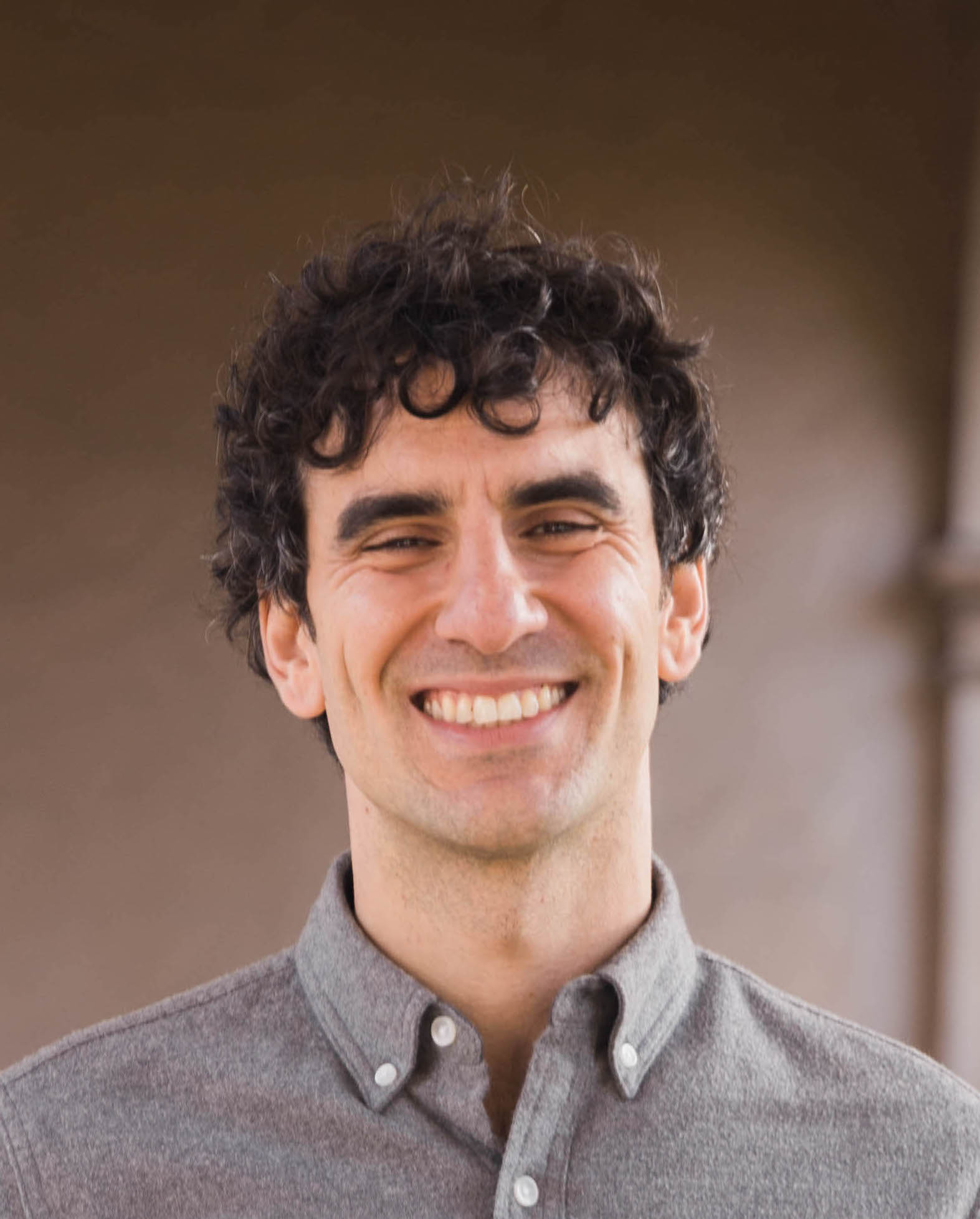
Dr. Shirag Shemmassian is the Founder of Shemmassian Academic Consulting and one of the world's foremost experts on medical school admissions. For over 20 years, he and his team have helped thousands of students get into medical school using his exclusive approach.
THERE'S NO REASON TO STRUGGLE THROUGH THE MED SCHOOL ADMISSIONS PROCESS ALONE, ESPECIALLY WITH SO MUCH ON THE LINE. CLICK BELOW TO SCHEDULE YOUR COMPLIMENTARY CONSULTATION TO ENSURE YOU LEAVE NOTHING TO CHANCE.