Learn the Yale Medical School acceptance rate, admissions requirements, and strategies, plus YSM secondary essay examples

The Yale School of Medicine is an Ivy League medical school in the United States

What You'll Learn
The Yale System Philosophy
How Yale's distinct educational philosophy—featuring optional exams, non-graded pre-clinical evaluations, and student self-direction—promotes collaborative learning.
Academic Metrics & Class Profile Benchmarks
General expectations for candidate academic preparation, competitive GPA and MCAT score ranges, and overall holistic admissions selectivity.
Prerequisite Coursework & Standards
Mandatory foundational science courses, humanities recommendations, laboratory experience expectations, and MCAT score recency rules.
Application Timeline & Key Milestones
Crucial cycle deadlines covering AMCAS primary submission, secondary application processing, interview invitation windows, and decision release timing.
Secondary Essay Writing Strategies
Tactical guidance for answering Yale's supplemental prompts by highlighting personal resilience, intellectual curiosity, and fit with the Yale System.
Mandatory Thesis & Research Tracks
Overview of Yale's required MD thesis requirement, dedicated research time, joint-degree opportunities, and specialized academic programs.
Interview Format & Candidate Evaluation
Key details regarding Yale's interview process and what evaluators look for when assessing scholarly passion, maturity, and interpersonal communication.
Introduction to the Yale School of Medicine
Yale School of Medicine programs and curriculum
How hard is it to get into the Yale School of Medicine?
How to get into the Yale School of Medicine
Yale Medical School secondary application essays (examples included)
Yale Medical School interviews
Frequently asked questions about the Yale School of Medicine
----
Introduction to the Yale School of Medicine
Established in 1810, the Yale School of Medicine (YSM) is one of the oldest and most selective medical schools in the United States. Located at Yale University in New Haven, CT, Yale offers the rare combination of Ivy League resources, a deeply independent learning environment, and access to a major academic medical center through Yale New Haven Health.
If you’re applying to Yale, you’re probably drawn to more than its name recognition. You may be excited by the Yale System, which gives students unusual freedom to shape their education, pursue independent research, and develop into self-directed physician-leaders. Or you may be interested in YSM’s strength in areas such as translational research, public health, cancer biology, neuroscience, psychology, or health equity.
But that same freedom is also what makes Yale such an admissions challenge. Strong grades and MCAT scores are important, but they won’t be enough on their own. Your application will need to show that you’re intellectually curious, comfortable taking initiative, and ready to use Yale’s resources to make a meaningful contribution to medicine.
In this guide, we’ll walk you through Yale School of Medicine’s admissions statistics, requirements, tuition and financial aid, secondary essays, interview process, and strategies you can use to stand out.
A number of our students get into the Yale School of Medicine each year. Want to learn how?
Get our free 102-page guide: Get Into Medical School: 6 Practical Lessons to Stand Out and Earn Your White Coat
----
Yale School of Medicine programs and curriculum
Yale School of Medicine offers a traditional four-year MD program as well as several joint degree options for students who want to combine clinical training with research, public health, law, management, engineering, or theology.
The traditional MD program is a strong fit if you want a flexible medical education grounded in the Yale System, which emphasizes student responsibility, independent scholarship, and a required research thesis. Rather than treating medical school as a rigid sequence of lectures and exams, Yale gives you significant room to shape your intellectual path, which is an approach that works best if you’re self-directed, curious, and ready to take ownership of your learning.
Yale also offers the following joint MD programs:
MD/MPH (MD/Master of Public Health)
MD/MHS (MD/Master of Health Science Program)
MD/MDiv (MD/Master of Divinity)
These programs reflect YSM’s view that medicine is not limited to patient care or biomedical science alone. Depending on your goals, you might use a joint degree to prepare for a career in translational research, epidemiology, health policy, hospital leadership, bioethics, or another field that connects medicine with broader systems of care.
If you’re interested in becoming a physician-scientist, Yale’s MD-PhD and MD/MHS programs are especially worth noting. The MD-PhD program provides integrated training in clinical medicine and research, while the MD/MHS program includes an intensive mentored research year with pathways in clinical research and laboratory/translational research.
Yale’s curriculum also gives its students the option to pursue an Extended Study year between the third and fourth years of the MD program. During this time, students may conduct research, complete clinical or global health experiences, or pursue a joint or dual degree. In recent years, about half of Yale medical students have taken advantage of this option.
YSM is not simply asking whether you want to become a doctor. It is asking what kind of doctor, scholar, researcher, advocate, or leader you hope to become and whether Yale’s flexible environment is the right place for you to grow into that role.
What makes Yale School of Medicine unique? The Yale System
One of the most distinctive features of Yale School of Medicine is the Yale System, an educational philosophy that gives students an unusual amount of freedom and responsibility over their medical education.
At many med schools, the preclinical years are defined by frequent exams, grades, and class rankings, but Yale takes a different approach. During the pre-clerkship period, students aren’t given course grades or class rankings, exams are limited, and learning is designed to emphasize curiosity, collaboration, and independent investigation.
That doesn’t mean YSM is unstructured or easy. Instead, the Yale System assumes that medical students are mature, self-directed learners who are capable of taking ownership of their education. You’d still be expected to meet rigorous academic and clinical standards, including passing the United States Medical Licensing Examination (USMLE), but the culture is intentionally less focused on competition and more focused on intellectual growth.
This philosophy also shapes Yale’s research expectations. Every YSM medical student completes a thesis based on original research, giving students the chance to pursue meaningful scholarship before graduation. This means that Yale is an especially strong fit if you have demonstrated intellectual curiosity through research, independent projects, public health work, or other forms of self-directed inquiry.
The key is not simply to say that you like Yale’s flexibility. In your application, you’ll want to show that you’ve already used freedom productively. Maybe you pursued an independent research question, helped build a community health initiative, explored epidemiology or health policy, or contributed to innovative research in an area such as cancer biology, stem cells, neuroscience, psychiatry, or translational research.
In other words, Yale is not just looking for students who can handle independence. It is looking for students who will do something meaningful with it.
Yale Medical School tuition and scholarships
Yale School of Medicine is a private institution, which means there’s no in-state tuition discount. For the 2026–2027 academic year, Yale lists MD tuition at $76,700. When fees, housing, food, books, supplies, transportation, health coverage, and other expenses are included, Yale estimates a first-year cost of attendance of $120,448.
That number is high, even by private medical school standards. However, YSM also offers substantial need-based financial aidto reduce the amount students are expected to borrow. Admitted MD students who qualify for need-based aid are expected to take out a $10,000 annual student loan, while Yale covers the remainder of their costs (including room, board, and other expenses) through scholarship aid that doesn’t need to be repaid. Over four years, this means you could graduate with $40,000 in loan debt from Yale if you’re eligible.
For comparison, the AAMC reported that among 2025 medical school graduates, the median debt was $215,000 and the mean debt was $223,130. In other words, while Yale’s sticker price is steep, its need-based aid can make the actual debt burden significantly lower if you qualify.
Also, plenty of YSM students take an Extended Study year, pursue a joint degree, or add research time, so YSM publishes budgets year by year rather than as a single four-year figure. (The 2026–2027 budget even breaks out a line item for USMLE Step 1 and Step 2 CK during third year.) If you pay full tuition across four consecutive years, you'll owe a registration fee in year five. If you split tuition across years four and five, you'll pay a smaller fee in each.
Don't let YSM's published cost of attendance talk you out of applying. Look at the financial aid policies first, and get a realistic picture of what you'd actually be expected to borrow.
Research at Yale Medical School
Historically, Yale researchers have pioneered advances in medical research at an astronomical rate, furthering global knowledge of medicine from diagnoses to treatments. Today, many of its research initiatives are being implemented in laboratories nationwide—and they all begin at Yale School of Medicine.
As a student, you may wonder what research opportunities exist for you to become involved in. At YSM, your level of involvement depends on where you are in your med school journey. For instance, those who have not yet matriculated can participate in START@Yale, an intensive in-person summer research program. It’s designed for students to attend the summer before matriculating and is open to all YSM students regardless of their research background.
After your first year at Yale, you can apply for First-Year Yale Medical Student Summer Research funding to support a summer research project. If awarded, this funding comes in the form of a weekly stipend, allowing you to spend the summer pursuing mentored research rather than treating it as something you have to fit around another job.
Students who receive an Office of Student Research summer stipend also take part in the Applied Principles of Research orientation, typically held in mid-June. During the summer, stipend recipients present their proposed research and serve as a facilitator for another student during one in-person APR session.
Later in your YSM education, you may be able to dedicate even more time to research through a Flex Year. As of January 1, 2026, Short-Term Research funding is available only to flex-year medical students who are conducting full-time mentored research, which Yale defines as 40 hours per week. This funding is competitive and awarded in four-week blocks, with students able to apply for at least four consecutive weeks and up to twelve consecutive weeks in a given period.
To encourage devoting time to research, Yale also offers to waive tuition and to provide a stipend (limited number available) to students who spend a fifth year in med school specifically to focus on research.
Yale also hosts Student Research Day each year, an event that allows students to showcase their research projects through poster sessions and presentations. This platform encourages open discourse between visitors/viewers and researchers.
But you don’t have to wait until you matriculate to medical school to become involved in research. While YSM does not teach undergraduate programs, the same professors who teach at YSM frequently supervise undergraduate research projects. Research topics range from biology to biochemistry, and engaging in research as an undergraduate is an excellent way to prepare for the rigor of graduate research.
Prospective YSM students interested in student research can contact the Student Research Team for more information and to further understand the integral role research plays in YSM education.
----
How hard is it to get into the Yale School of Medicine?
Yale Medical School admissions statistics
Yale School of Medicine is extremely selective, even among top medical schools. For the MD Program Class of 2028, Yale had a 4.9 percent acceptance rate.
Here are Yale’s most recently published MD admissions statistics:
Applications: 5,669
Matriculants: 104
Median cumulative GPA: 3.94
Median MCAT: 521
These numbers make clear that Yale applicants need to be academically exceptional. A median GPA of 3.94 and median MCAT score of 521 mean that successful applicants typically have near-perfect academic records and test scores in the top range of all MCAT takers.
That said, Yale is not simply admitting the applicants with the highest numbers. Because of the Yale System, the required research thesis, and the school’s emphasis on training future leaders in medicine and science, your application also needs to show intellectual independence, research potential, maturity, and a clear reason for wanting Yale specifically.
In other words, strong stats may help you get taken seriously at Yale, but they won’t be enough on their own. To stand out, you’ll need to demonstrate that you’re prepared to thrive in an environment that gives you significant freedom and expects you to use that freedom well.
(Suggested reading: Average GPA and MCAT Score for Every Medical School)
Yale Medical School admissions requirements
To apply to Yale School of Medicine, you’ll submit your primary application through AMCAS, complete Yale’s secondary application, submit three letters of recommendation, and take the MCAT.
YSM’s prerequisite courses don’t need to be completed before you apply, but they must be completed before matriculation. Yale also requires applicants to have completed at least three academic years, or the equivalent, at an accredited college, university, or institute of technology. Here are Yale’s current premed coursework requirements:
General biology or zoology: two semesters of coursework and two semesters of lab
General chemistry: two semesters of coursework and two semesters of lab
Organic chemistry: one semester of coursework and one semester of lab
Biochemistry: one semester of coursework (lab recommended but not required)
General physics: two semesters of coursework and two semesters of lab
Biostatistics: Recommended but not required for the 2026–2027 application year; required beginning the 2027–2028 application year
Yale gives applicants some flexibility in how they satisfy prerequisite coursework. Advanced coursework may be used in place of introductory-level requirements when appropriate, and AP or IB credits may count if your undergraduate institution awarded credit on your transcript. Community college coursework is also acceptable, provided that it includes the required lab work and is comparable in content to courses offered at four-year colleges or universities. Online lecture courses may be accepted as well, though prerequisite lab coursework must be completed in person.
For the MCAT, all MD and MD-PhD applicants must submit scores. If you’re applying in 2026 to begin medical school in August 2027, your MCAT must have been taken no earlier than January 2023 and no later than the final MCAT test date in 2026. Yale will not review your application until your MCAT scores have been received.
As you plan your coursework, remember that Yale’s requirements are a floor, not a formula for admission. Completing the prerequisites makes you eligible to apply; it doesn’t, on its own, make you competitive. Yale will want to see that you can excel in rigorous science courses, but the school also values intellectual breadth, independence, and curiosity—qualities that matter deeply in the Yale System. In other words, the strongest applicants won’t simply check off biology, chemistry, physics, and biochemistry. They’ll show that they’ve used their undergraduate education to build both the scientific foundation and the habits of inquiry needed to thrive at YSM.
(Suggested reading: Medical School Requirements: The Definitive Guide)
Yale Medical School application timeline
You’ll submit your Yale School of Medicine application via AMCAS. Here are the dates and deadlines to keep in mind during the application process:
May 5, 2026: AMCAS application opens
May 28, 2026: AMCAS application can be submitted
Early July 2026: Yale secondary applications are sent out
September 2026–January 2027: Interviews conducted
October 15, 2026: AMCAS application deadline
November 15, 2026: Yale secondary application deadline; letters of recommendation deadline
March 15, 2027: Applicants notified of admissions decision
June 15, 2027: “Commit to Enroll” deadline
After you submit your AMCAS application to Yale, all applicants are invited by email to submit a Yale Secondary Application. Yale states that this invitation should arrive within two weeks of submitting AMCAS to Yale, beginning in early July when the secondary application goes live.
A Premedical Committee letter is recommended for MD and MD-PhD applicants. If your school does not have a premedical committee, you may submit at least three individual letters instead. These letters can come from people who know your academic, research, clinical, service, professional, or personal qualifications well. Yale notes that it is helpful, though not mandatory, to include at least one letter from someone in the sciences.
Yale also publishes several important post-acceptance deadlines. If you receive an offer of admission and want to request a one-year deferral, you must submit that request before April 15 of the admissions cycle in which you were admitted. Yale considers deferrals only in limited circumstances, so you should not assume that a deferral will be granted automatically.
Accepted applicants should narrow their acceptances to three schools by April 15. Before April 30, applicants who “Plan to Enroll” or “Commit to Enroll” at Yale must withdraw acceptances from all other schools. Applicants who select “Commit to Enroll” must also withdraw from waitlists at all other schools.
If you’re accepted from the waitlist between April 30 and June 1, you must select “Plan to Enroll” or “Commit to Enroll” within five business days and withdraw acceptances from all other schools. If you’re accepted from the waitlist after June 1, you must do so within two business days. Finally, applicants who have selected “Plan to Enroll” must select “Commit to Enroll” by June 15 and withdraw from all other medical school waitlists.
As with any competitive medical school, you should aim to submit your AMCAS application as early as possible once it opens. That said, don’t rush a weaker application simply to be early. For Yale, the better goal is to submit early enough to avoid unnecessary delays while still giving yourself time to produce thoughtful secondary essays that show why you’re a strong fit for the Yale System, research thesis requirement, and broader mission.
(Suggested reading: The Ideal Medical School Application Timeline)
----
How to get into Yale School of Medicine
Because Yale School of Medicine is so selective, you should assume that most serious applicants will have strong grades, excellent MCAT scores, and impressive extracurriculars. To stand out in your primary application, AMCAS Work and Activities, and secondary application, you’ll need to do more than prove that you’re qualified for medical school. You’ll need to show that you’re specifically prepared to thrive at Yale.
Show that you can thrive within the Yale System
The Yale System gives medical students an unusual amount of freedom. That can sound appealing, but from an admissions standpoint, it also raises an important question: what have you already done with independence?
In your application, don’t simply say that you like Yale’s flexibility or lack of class rankings. Instead, show that you have already used freedom productively. Maybe you designed an independent research project, created a campus initiative, pursued an interdisciplinary academic interest, or took meaningful responsibility in a clinical or service setting.
The goal is to help Yale imagine you as someone who will make good use of its environment. A strong Yale applicant isn’t just someone who performs well when given structure. It’s someone who can identify meaningful questions, seek out mentorship, and keep moving forward even when there is no obvious next step.
Demonstrate serious research curiosity
Because every Yale medical student completes a research thesis, research is central to the MD experience. However, you don’t need to enter the application process with a publication in a major journal or a perfectly defined thesis topic. What matters more is that your application shows evidence of sustained curiosity.
Maybe you spent several years in a basic science lab studying innate immunity, cancer biology, or stem cells. Maybe you worked on clinical research, epidemiology, psychiatry, public health, or health policy. Maybe you became interested in translational research after seeing how discoveries move from the lab to the bedside.
Whatever your path, don’t present research as a résumé line. Show how it shaped the way you think. What question did you care about? What obstacles did you encounter? How did your understanding change? What kind of scholarly work do you hope to pursue next?
Yale is looking for future leaders in medicine and science, not students who completed research only because they thought it would look good on an application. Your job is to show that inquiry is part of how you approach medicine.
Build a service record that shows humility and sustained commitment
Yale’s mission extends beyond scientific discovery. The school also emphasizes patient care, community partnership, and improving the health of all people. That means your service experiences matter not because they allow you to check off a box, but because they reveal how you understand people, communities, and systems of care.
If you’ve participated in clinical volunteering, community health work, advocacy, public health initiatives, or global health programs, use those experiences to show maturity. What did you learn about listening? How did your assumptions change? What did you come to understand about barriers to care? How did the experience shape the kind of physician you hope to become?
For instance, a structured global health experience such as Global Medical Brigades can be meaningful if you reflect on it thoughtfully. The key is not to present service abroad as more impressive than service close to home. Instead, focus on what the experience taught you about ethical service, cultural humility, health systems, and your responsibility as a future physician.
This distinction is especially important for Yale. A one-week service trip, on its own, will not make you stand out. But a pattern of service that shows humility, reflection, and sustained commitment can help Yale see that you are prepared to contribute to patients and communities in New Haven and beyond.
Make a specific case for Yale, not just prestige
One common mistake applicants make is assuming that mentioning Yale’s reputation in their secondary app or interview is the same as demonstrating fit. It isn’t.
A stronger Yale application connects your experiences and goals to specific aspects of the school. If you’re drawn to the Yale System, explain how you’ve already demonstrated self-directed learning. If you’re excited by the required research thesis, show how your previous work has prepared you to pursue a meaningful scholarly question. If you’re interested in public health or community medicine, connect your experiences to Yale’s relationship with New Haven and Yale New Haven Health.
The key is to make every Yale-specific detail feel earned. Don’t simply list Yale Cancer Center, HAVEN Free Clinic, or a research department because they sound impressive. Instead, explain why a particular resource fits the direction you’ve already been moving in.
Yale should come away from your application with a clear sense that you know what makes the school distinctive and that you would use its freedom, mentorship, and research opportunities well.
Present a coherent applicant identity
Finally, remember that Yale will read your application as a whole. Your personal statement, Work and Activities section, letters of recommendation, secondary essays, and interview should not feel like disconnected pieces.
That doesn’t mean every part of your application should repeat the same theme. In fact, repetition can weaken an application. Instead, each component should add to a coherent picture of who you are: a self-directed learner, a curious thinker, a mature future physician, a thoughtful researcher, a committed service-oriented applicant, or some combination of these qualities.
Before submitting your application, ask yourself: “What will Yale remember about me?”
If the answer is simply that you had strong stats and participated in impressive activities, your application may not be distinctive enough. But if Yale can understand how you think, what you care about, how you’ve grown, and why its environment is the right fit for your next stage of development, you’ll be in a much stronger position.
Once you’ve clarified that overall argument, the next step is making sure it comes through clearly in your Yale secondary essays and interview. Below, we’ll walk through how to approach Yale’s secondary prompts and how to prepare for an interview that demonstrates not only why you want to become a physician, but why Yale is the right place for you to do so.
----
Yale Medical School secondary application essays (examples included)
Like any other medical school, Yale will first take into account your personal statement and AMCAS Work and Activities section, as well as your MCAT score, GPA, and recommendation letters. But when it comes to secondary applications, Yale also gives applicants a lot of space to communicate who they are narratively—more than most schools allow—giving you the opportunity, hopefully, to stand out from that crowded applicant pool.
Don’t be intimidated by the length of this secondary. Instead, see it as a chance to more fully communicate with the admissions committee. Below, we’ve shared each secondary essay prompt and provided an example of a strong response to Question 1, along with an explanation describing everything it does right:
Question 1: Yale School of Medicine is committed to improving the health of all people. How have your background and experiences prepared you to care for all people including those unlike yourself? (500 words)
Fortunately, this is your standard “diversity prompt.” The goal with this prompt, as with all diversity prompts, is to show what makes you unique (culturally, intellectually, geographically, skill-based, etc.) and how your unique background and perspective will allow you to add (in a way only you can!) to the future of medicine.
In addition to directly responding to the question in the prompt, remember to also leave some room for explaining how you’d bring your own unique personality, background, and experience to the Yale campus and to New Haven in particular. This is a great way to “demonstrate fit” with Yale, so adcoms can clearly tell you didn’t just copy and paste this essay into multiple different secondary applications.
Check out the following example of a great response to this prompt, followed by an analysis of what makes it so strong:
Having had the privilege of attending quality schools all my life, I’m almost embarrassed to admit how little I knew about the obstacles facing the youth of Dallas’s inner-city public school system. During the summer of my sophomore year, however, I worked as a tutor for StudyWell, a nonprofit focused on increasing educational opportunities for grade-school students in my hometown of Dallas. While teaching math and science to my young students, Irealized that the barriers to their education extended far beyond the classroom. Many of their parents were unable to afford transportation to get them to and from school in a timely manner, meaning some kids had to commute on buses for up to two hours each way. Seeing these bright young kids be forced to work twice as hard to overcome the obstacles in their education journey opened my eyes to other disparities in the quality of life all around me. I decided to make it my lifelong mission to mend these gaps through healthcare.
Texas is home to many immigrants, and because the lack of access to health insurance disproportionately affects these communities, many rely on free clinics to receive primary and urgent care services. To learn more about the specific trials these communities face and what I can do to address them, I took on a volunteering position at Care Clinic in downtown Dallas. There, I’ve worked as a Spanish-to-English translator for hundreds of patients, and through serving as an intermediary between these patients and their healthcare, I’ve learned that a large portion of Texas’s immigrant community lacks access to preventative care. This often means that they wait until their symptoms worsen before seeking medical help.
As the doctors at Care Clinic worked tirelessly to treat the patients’ ailments, I decided to utilize my past tutoring work to help educate our patient population on preventative care offerings provided for free by the clinic. Through consulting with the doctors, I designed Spanish-language pamphlets that detailed not only the services we could provide, like check-ups and screenings, but also common symptoms to watch out for (such as fevers or rashes) and when to seek a doctor’s opinion immediately. I’ve also begun negotiations with the city’s public transportation services to provide ride vouchers for patients who need to visit the clinic but cannot afford the transportation costs to do so.
In the long term, I aim to utilize my medical career to help bridge the systemic gaps in healthcare access affecting underprivileged communities. To gain the skills necessary to do so, I’ll take part in Yale’s initiatives such as HAVEN, the student-run free clinic, and supplement my medical education with elective courses through the School of Public Policy to learn how to tackle non-health-related obstacles that currently prevent disadvantaged populations from accessing care.
In this essay, the applicant has done a great job of thoroughly addressing the two core questions in the prompt: how will you use your prior experiences to contribute to Yale School of Medicine’s valuing of diversity in all its forms, and how will you carry this value into your future role as a physician? And although they themself don’t come from an underrepresented or disadvantaged background, their essay demonstrates a nuanced understanding of the challenges that individuals from such backgrounds often face, and it tells a compelling story about the actions they’ve already taken to address those challenges.
Rather than vaguely mentioning volunteer experience or a passion for helping others, they provided crystal-clear examples of the actions they took — such as creating Spanish-language pamphlets on services and preventative measures, and negotiating with local public transport to secure ride vouchers to and from the clinic. They also explain how these actions relate to their long term goal of bridging the systemic gaps in healthcare access that affect underprivileged communities. Then, they go a step further by specifying how they will pursue those goals at Yale. Rather than just giving a generic example that could apply to any medical school, they mention Yale’s Haven Initiative and elective courses they plan to take which will help them accomplish their goal of increasing access to healthcare for underprivileged communities.
This essay works because it goes above and beyond to thoroughly address the prompt, and it contains personalized, detailed information about the applicant and their journey toward a career in medicine that is unique to them alone. Plenty of other applicants will write about volunteer experience and helping patients from underprivileged backgrounds — but this essay is extremely specific in the detail it provides, ensuring that it will stand out as unique and memorable to the admissions committee.
Question 2: (please select one of the following): (500 words)
MD applicants: Please answer either one of the following questions.
MD/PhD applicants: Please answer question 2 as it pertains to your proposed PhD research.
While there is great emphasis on the physician-patient relationship, Yale School of Medicine also emphasizes the importance of training future physicians to care for communities and populations. Describe how your experiences would contribute to this aspect of the mission of the Yale School of Medicine. (500 words)
Research is essential to patient care, and all students at Yale School of Medicine complete a research thesis. Tell us how your research interests, skills and experiences would contribute to scholarship at Yale School of Medicine. (500 words)
Question 3: If you are not enrolled in college or graduate school classes for the duration of the current academic year, please tell us how you are spending your time. Include both your current and any planned activities prior to enrolling in medical school. (500 words)
Question 4: This section is optional. It should be used to bring to the attention of the Admissions Committee any important information (personal, academic, or professional) not discussed in other sections of your Yale Secondary Application. (500 words)
Question 5: Is there anything else about your background or identity you wish to share? (500 words)

----
Yale Medical School interviews
If you’re invited to interview at Yale School of Medicine, you’ve already cleared a major hurdle, so take pride in having made it to this stage of the application process.
Yale interviews applicants between September and January, and Yale states that all MD and MD-PhD interviews are conducted virtually. While Yale’s public MD admissions pages don’t currently provide a detailed MD-only interview-day schedule, applicants should expect the interview to assess the same qualities emphasized throughout the application: intellectual curiosity, maturity, service, research potential, and the self-direction needed to thrive within the Yale System.
To prepare, start by reviewing your primary application, Yale secondary essays, activities section, and letters of recommendation themes. Anything you included in your application is fair game, from your research experience to your clinical exposure to your reasons for pursuing medicine.
You should also be ready to answer “Why Yale?” in a way that goes beyond prestige. A strong answer might connect your goals to the Yale System, the required research thesis, opportunities for translational research, Yale New Haven Health, New Haven community engagement, or a specific academic interest such as public health, psychiatry, oncology, immunobiology, or health equity.
For instance, it’s not enough to say that you like Yale’s flexible curriculum. A stronger response would explain how you’ve already used independence productively and how Yale’s emphasis on student responsibility would help you pursue the next stage of your development as a physician, researcher, or leader.
If you’re an MD-PhD applicant, you should prepare to discuss your research experience in greater depth. Yale says its MD-PhD program looks for applicants with significant research experience, increasing independence and responsibility, strong research mentor letters, clear reasons for pursuing physician-scientist training, and qualities such as curiosity, compassion, maturity, leadership, and grit. MD-PhD interview invitations are sent from September to January, and interviews take place from November through February. During the virtual two-day interview process, you’ll meet with members of both the MD and MD-PhD interviewing subcommittees, participate in non-evaluative meetings with faculty and students, and attend informational sessions with the program director and current students.
As part of the MD-PhD interview invitation, Yale also allows applicants to request informal meetings with up to five Yale faculty members whose research interests them. These conversations are not part of the admissions evaluation, but they can help applicants better understand Yale’s research community and whether the program is the right fit.
Whether you’re an MD-PhD or traditional MD applicant, you should also prepare for standard medical school interview questions, including:
Why medicine?
Tell me about your research.
Tell me about a meaningful clinical or service experience.
How have you handled failure, uncertainty, or feedback?
What kind of physician do you hope to become?
How would you contribute to the Yale community?
As with your secondary essays, the best Yale interview answers will be specific. Rather than trying to impress your interviewer with everything you’ve accomplished, focus on showing how you think, what motivates you, and why Yale’s unusually self-directed environment is the right fit for the kind of medical student—and future physician—you hope to become.
----
Frequently asked questions about Yale School of Medicine
Is Yale School of Medicine hard to get into?
Yes. Yale School of Medicine is one of the most selective medical schools in the United States. For the MD Program Class of 2028, Yale received 5,669 applications for a class of 104 students, resulting in a 4.9 percent acceptance rate. To be competitive, you’ll need excellent grades and MCAT scores, but you’ll also need to show that you’re a strong fit for Yale’s self-directed, research-focused learning environment.
What GPA do you need for Yale School of Medicine?
Yale doesn’t publish a minimum GPA requirement for admission, but successful applicants tend to have extremely strong academics. The median cumulative GPA for Yale’s MD Program Class of 2028 was 3.94. That means you should aim to earn top grades, especially in rigorous science coursework, while also building a well-rounded application that demonstrates maturity, curiosity, service, and research potential.
What MCAT score do you need for Yale School of Medicine?
Yale doesn’t publish a minimum MCAT score, but the median MCAT for the MD Program Class of 2028 was 521. In other words, a competitive Yale applicant will typically have an MCAT score at the top of the national range. However, Yale reviews applications holistically, so your MCAT score should be understood as one part of a broader application that includes your coursework, experiences, essays, letters, and interview.
What makes Yale School of Medicine unique?
Yale School of Medicine is best known for the Yale System. During the pre-clerkship period, Yale students are not given course grades, and there is no class ranking throughout medical school. Instead, Yale emphasizes student responsibility, collaboration, curiosity, close faculty mentorship, and independent scholarship.This means Yale is a particularly strong fit if you’re self-directed, intellectually curious, and excited by the freedom to shape your own medical education.
Does Yale School of Medicine require research?
Yes. Yale medical students are required to complete an MD thesis based on original research, with limited exceptions for students who already hold a health sciences PhD or are enrolled in the MD-PhD program. This requirement is one reason research plays such a central role in Yale’s identity.
If you’re applying to Yale, you don’t necessarily need to have multiple publications or a perfectly defined research niche. However, your application should show that you’re comfortable with scholarly inquiry and prepared to pursue independent research during medical school.
What are Yale School of Medicine’s prerequisite courses?
Yale requires applicants to complete biology or zoology, general chemistry, organic chemistry, biochemistry, and general physics. Most of these requirements include associated lab work, though Yale recommends but doesn’t require a biochemistry lab. Biostatistics is recommended for the 2026–2027 application year and will be required beginning in the 2027–2028 application year.
Remember that these requirements make you eligible to apply, but they do not, on their own, make you competitive. Strong Yale applicants typically go beyond the minimum by excelling in rigorous coursework and pursuing academic interests that show breadth and curiosity.
Does Yale School of Medicine accept AP, IB, community college, or online coursework?
Yale may accept AP or IB credits toward premedical requirements if your undergraduate institution awarded credit on your transcript. Community college coursework is also acceptable if it includes the required lab work and is comparable to coursework offered at four-year colleges or universities. Online lecture courses may be accepted, but prerequisite lab coursework must be completed in person.
When should I submit my Yale School of Medicine application?
You should aim to submit your AMCAS application as early as you can without sacrificing quality. Yale’s AMCAS deadline is October 15, and the Yale secondary app and letters of recommendation are due November 15. However, because Yale is highly competitive, it’s wise to avoid waiting until the deadline if your application materials are ready earlier.
Are Yale School of Medicine interviews virtual?
Yes. Yale states that all MD and MD-PhD interviews are conducted virtually. Yale interviews applicants between September and January, and admissions decisions are released by March 15.
Do Yale medical students take the USMLE?
Yes. Yale medical students must take and pass Step 1 and Step 2 CK of the United States Medical Licensing Examination (USMLE) in order to graduate. While the Yale System deemphasizes grades and class rank, students are still expected to meet rigorous academic and clinical standards throughout med school.
Final thoughts
An acceptance from Yale School of Medicine will require more than just excellent grades, MCAT scores, and extracurricular achievements. By following the advice in this guide, you’ll be well equipped to write exemplary secondary essays that will get you one step closer to earning your white coat from Yale.
About the Author
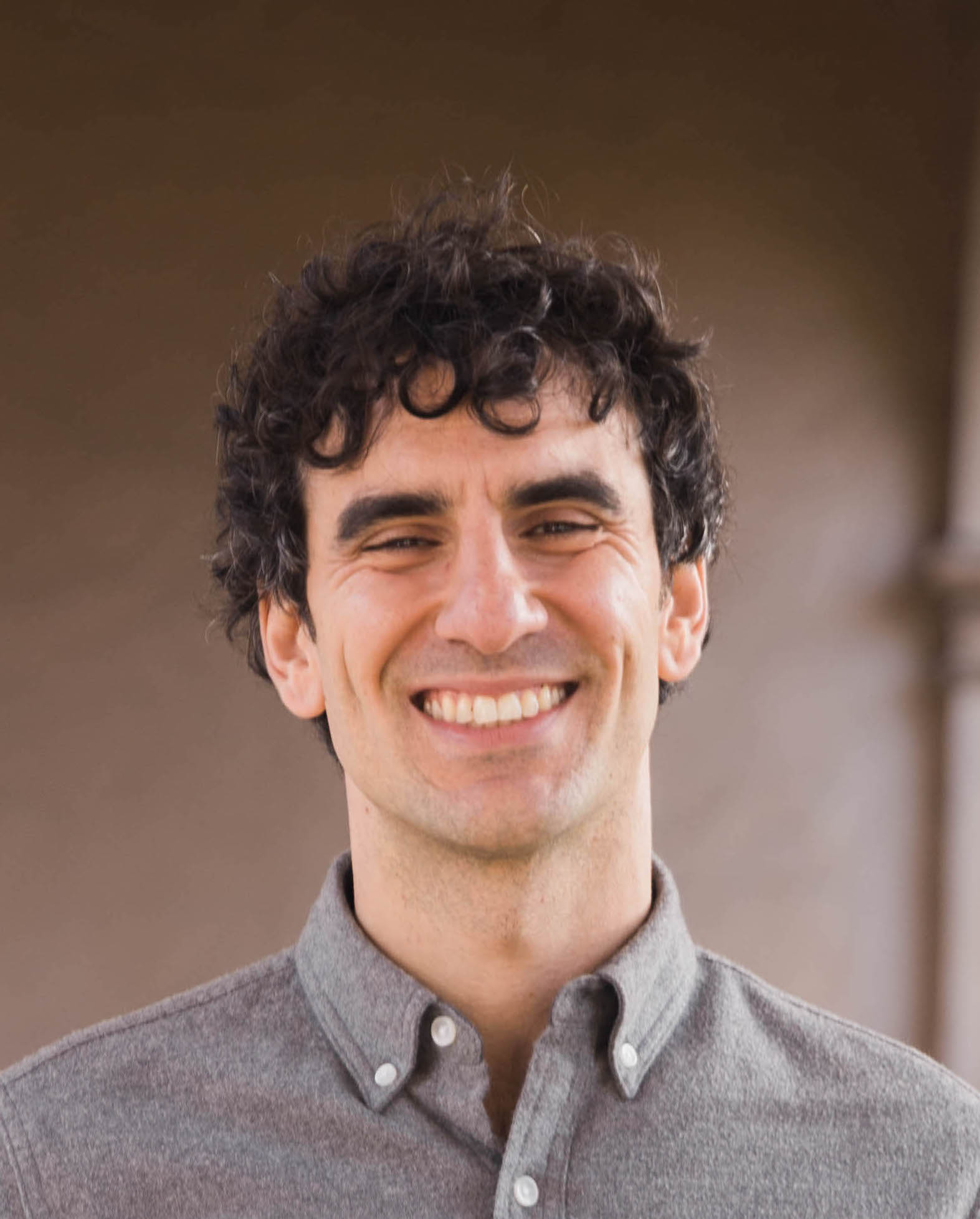
Dr. Shirag Shemmassian is the Founder of Shemmassian Academic Consulting and one of the world's foremost experts on medical school admissions. For over 20 years, he and his team have helped thousands of students get into medical school using his exclusive approach.



THERE'S NO REASON TO STRUGGLE THROUGH THE MED SCHOOL ADMISSIONS PROCESS ALONE, ESPECIALLY WITH SO MUCH ON THE LINE. CLICK BELOW TO SCHEDULE YOUR COMPLIMENTARY CONSULTATION TO ENSURE YOU LEAVE NOTHING TO CHANCE.