Discover the Icahn School of Medicine ranking and admissions strategies, plus secondary essay examples

The Icahn School of Medicine is highly ranked

What You'll Learn
Social Justice & Research Focus
How Icahn School of Medicine at Mount Sinai integrates cutting-edge scientific research, clinical innovation, and a strong commitment to health equity and social justice.
Academic Metrics & Admissions Selectivity
General expectations regarding candidate academic preparation, competitive GPA and MCAT score ranges, and overall acceptance trends.
Prerequisite Coursework & Early Pathways
Required foundational science and humanities coursework, laboratory expectations, MCAT validity windows, and institutional early assurance pathways.
Application Timeline & Key Milestones
Critical dates covering primary AMCAS filing, secondary submission windows, interview invitation cycles, and decision notification dates.
Secondary Essay Writing Strategies
Tactical frameworks for answering Mount Sinai’s supplemental prompts by showcasing personal background, advocacy, resilience, and fit with school culture.
Curricular Structure & Scholarly Hubs
Overview of Mount Sinai’s flexible MD curriculum, clinical skill integration, longitudinal scholarly projects, and specialized dual-degree offerings.
Interview Day Format & Preparation
Key insights into Mount Sinai’s interview format, evaluative criteria, and effective strategies for demonstrating authentic alignment during discussions.
Introduction to the Icahn School of Medicine at Mount Sinai
Who’s a good fit for Icahn School of Medicine?
Icahn Medical School MD programs
How hard is it to get into the Icahn School of Medicine at Mount Sinai?
Icahn School of Medicine secondary application essays (examples included)
Icahn School of Medicine interview
Frequently asked questions about the Icahn School of Medicine
----
Introduction to the Icahn School of Medicine at Mount Sinai
If you’re looking for a medical school focused on pushing the boundaries of medical innovation, the Icahn School of Medicine should be near the top of your list. Offering one of the best medical programs in New York, Icahn has a strong reputation for being a leader in medical training, research, and patient care.
The Icahn School of Medicine is located on the culturally vibrant island of Manhattan in New York City. Opened in 1968, it serves as the medical school for the Mount Sinai Health System, which is consistently ranked among the nation’s top hospitals, with 12 nationally ranked specialties—including five in the top 10—in the 2025–2026 U.S. News & World Report Best Hospital Rankings. With its core values of research, service, and global health, the Icahn School of Medicine attracts forward-thinking students who hope to change the frontiers of local and global healthcare.
If you’re eager to join a learning environment that will challenge you to think critically and disrupt the status quo, Icahn Medical School would be the perfect choice for you. But you’ll need more than impressive stats to get accepted into this competitive medical program. You’ll also need to demonstrate that your combined passions, experiences, and qualities make you the perfect match for Icahn Medical School.
In this guide, we’ll discuss how to get into the Icahn School of Medicine, from being the ideal candidate to writing powerful secondary essays and acing the Icahn Medical School interview.
----
Who’s a good fit for Icahn School of Medicine?
Every medical school values strong academics, meaningful clinical experience, and a commitment to service. What makes Icahn stand out is its emphasis on students who are excited by discovery and eager to improve the future of medicine.
As you read about Icahn, ask yourself a simple question: Can I see myself thriving in this environment? If the following characteristics resonate with you, there's a good chance you'll feel at home at Icahn, and you'll have compelling stories to tell throughout your application.
You enjoy tackling unaswered questions
If your favorite experiences involve asking questions, solving problems, or figuring out why something works the way it does, you'll likely appreciate Icahn's culture.
That curiosity might have led you into a research lab, but it doesn't have to. Maybe you've worked on an engineering project, analyzed public health data, developed a community initiative, or pursued an independent project simply because you wanted to learn more. Whatever form it takes, intellectual curiosity is a valuable quality in a future physician because medicine is constantly evolving.
As you prepare your application, think about moments when you've embraced uncertainty, learned from setbacks, or discovered something that changed how you think.
You like connecting ideas across disciplines
Medicine rarely exists in a vacuum. Today's physicians regularly collaborate with scientists, engineers, data analysts, public health experts, and policymakers to improve patient care.
Icahn embraces this interdisciplinary approach throughout its curriculum and research environment. If you've enjoyed combining interests from different fields—whether that's computer science and biology, engineering and medicine, or public health and advocacy—you'll find plenty of opportunities to continue making those connections.
You're motivated by caring for diverse communities
Training in New York City means caring for patients with a wide range of cultural, linguistic, and socioeconomic backgrounds. Those experiences can challenge you to become a more thoughtful communicator, a better advocate, and ultimately a better physician.
If your volunteer work, clinical experiences, or community involvement have helped you better understand the challenges different populations face when accessing healthcare, don't be afraid to reflect on those experiences in your application. Admissions committees are interested not only in what you did but also in what you learned and how those experiences shaped your perspective.
You value collaboration over competition
Icahn's pass/fail preclinical curriculum helps foster a collaborative learning environment where students support one another rather than compete for class rank.
If you're someone who enjoys mentoring classmates, sharing ideas, asking thoughtful questions, or working toward a common goal, you'll likely appreciate this culture. Medical school is demanding, and learning alongside people with different backgrounds and perspectives can make you both a stronger student and a better future physician.
A number of our students get into the Icahn School of Medicine each year. Want to learn how?
Get our free 102-page guide to help you with every step: Get Into Medical School: 6 Practical Lessons to Stand Out and Earn Your White Coat
----
Icahn Medical School MD programs
There are several paths for students to earn an MD from the Icahn School of Medicine at Mount Sinai:
The traditional, four-year MD program
The MD/PhD program
The DPM/MPH program (Doctor of Pediatric Medicine/Master of Public Health)
The MD/MPH program (MD/Master of Public Health)
The MD/MSCR (PORTAL) program
While only applicable to college freshmen or sophomores, it’s worth noting that the Icahn School of Medicine also offers an innovative approach to med school admissions through the FlexMed Program. This progressive admissions pathway invites sophomores from any college and any major to apply for early acceptance to Icahn Medical School.
If accepted, FlexMed students aren’t required to complete traditional med school science prerequisites or take the MCAT, freeing them up to pursue interests outside of the usual premed course of study. This is just one example of the Icahn School of Medicine questioning conventions and thinking outside the box in order to advance the field of medicine.
(Suggested reading: How to Get Into the FlexMed Program at Icahn School of Medicine)
Icahn School of Medicine tuition and scholarships
The 2026–2027 tuition for Icahn School of Medicine is $80,483. When fees, room, board, supplies, and personal expenses are added, the totalcost of attendance reaches $105,203 for the first year alone.
The Icahn School of Medicine has long offered need-based institutional scholarships and loans to help make medical education more affordable. In 2019, the school expanded that commitment by launching its Enhanced Scholarship Initiative (ESI), a financial aid program designed to substantially reduce educational debt for students with the greatest demonstrated financial need.
Through the ESI, students with no expected family contribution are eligible to graduate with no more than $75,000 in education debt over four years. After students contribute that amount through a combination of institutional and federal loans, Icahn School of Medicine covers their remaining demonstrated financial need with institutional scholarships. If you're eligible, the ESI can significantly reduce your educational debt, allowing you to spend less time worrying about loans and more time focusing on medical school.
----
How hard is it to get into the Icahn School of Medicine at Mount Sinai?
Icahn School of Medicine admissions statistics
Icahn School of Medicine doesn’t publish an acceptance rate, but let’s examine the admissions statistics for the 2025–26 application cycle:
Applications: 9,149
Interviews: 910
Matriculants: 118 MD students and 10 MD/PhD students
Average GPA: 3.81
Average MCAT score: 519
It’s worth noting that these figures encompass multiple admissions pathways, including the traditional MD program, FlexMed (early assurance), and MD/PhD program. As a result, you’re seeking entry to the traditional four-year MD program, you’re competing for only a subset of the available seats, meaning getting in is even more challenging than these stats suggest.
(Suggested reading: Average GPA and MCAT Score for Every Medical School)
Icahn School of Medicine admissions requirements
To apply to the Icahn School of Medicine, you’ll need to have completed coursework in a number of key areas. Here are Icahn’s requirements for incoming MD students:
General chemistry: One year
Organic chemistry: One year or one semester each of organic chemistry and biochemistry
Biology: One year (molecular biology content required)
Physics: One semester
Lab work: One year in biology and/or chemistry
Statistics: One semester (biostatistics preferred)
Intensive writing courses: One year
AP or IB credit generally doesn’t satisfy Icahn’s biology, chemistry, organic chemistry, biochemistry, or writing prerequisites, so if you’ve received AP credit in these subjects, you must still complete college-level coursework. However, if you’ve been accepted through the FlexMed program, AP or IB Physics may satisfy the one semester physics requirement with a qualifying score of five.
Additionally, applicants are encouraged to take coursework in the social sciences, such as political science, global health, sociology, and psychology. Icahn also values applicants with proficiency in another language. The current entering class collectively speaks more than 20 languages at the advanced or native level, reflecting the school’s commitment to caring for diverse patient populations. Plus, knowing multiple languages serves as an advantage to students who are completing their clinicals in a place as diverse as New York City.
Applicants must have taken the MCAT within five years of their application to Icahn Medical School, as well.
The Icahn School of Medicine also looks for students with a significant history of serving their communities, as service is one of Icahn’s core values. Nowhere is this more evident than in the East Harlem Health Outreach Partnership (EHHOP), Icahn Medical School’s student-run free clinic which offers primary care services to uninsured adults at no cost. If practicing medicine in an underserved community is your career goal, serving at EHHOP is one of the most valuable med school experiences you can find.
Your application should demonstrate that you exceed the Icahn School of Medicine requirements and possess the qualities to make you an ideal candidate for Icahn’s unique program. The secondary essays present the greatest opportunity for you to achieve this objective.
(Suggested reading: Medical School Requirements: The Definitive Guide)
Icahn School of Medicine application timeline
To apply to Icahn School of Medicine, plan to submit your AMCAS application according to the following timeline:
May 5, 2026: AMCAS application opens
May 28, 2026: AMCAS application can be submitted
July 2026–October 2026: Icahn secondary application invitations are sent out
August 2026: Interview invitations begin to be sent out
September 2026–February 2027: Interviews conducted
October 1, 2026: AMCAS application final deadline
November 1, 2026: Icahn secondary application final deadline
January 2027–July 2027: Admissions decisions are released
May 2027: Waitlist offers are considered
To increase your admissions odds, plan to submit your application and secondary materials as early as possible. Because Icahn Medical School follows rolling admissions, it’s in your best interest to be included in the early rounds of application review.
(Suggested reading: The Ideal Medical School Application Timeline)
Over 90% of our students get into med school—the first time.
Get our free 102-page guide to help you with every step: Get Into Medical School: 6 Practical Lessons to Stand Out and Earn Your White Coat
----
Icahn School of Medicine secondary application essays (examples included)
After submitting the AMCAS application, you can work on your secondary essays to the Icahn School of Medicine. Many applicants will have similar stats and extracurriculars as you do, so these essays are your best chance to impress the admissions committee and improve your odds of being accepted.
Below, you’ll find strategies for approaching each prompt, as well as examples to guide you in writing essays that make you stand out as a top applicant.
Question 1: What is the toughest feedback you ever received? How did you handle it and what did you learn from it? (250 words)
Question 2: Describe a situation that you have thought to be unfair or unjust, whether towards yourself or towards others. How did you address the situation, if at all? (250 words)
Question 3: If you are currently not a full-time student, please briefly describe the activities you are participating in this academic year. (100 words)
If you’re entering your final undergraduate year and are applying to start at the Icahn School of Medicine immediately after graduation, skip this question.
But if you’re entering a gap year as you submit your application, or if you’ve been out of school for some time already, this is your opportunity to explain why you didn’t apply to medical school directly out of undergrad. Don’t worry, you’re not at a disadvantage. After all, the average age of first-year med school students at Icahn is 23, so most applicants are in the same situation as you. But it’s important that your activities during your gap year demonstrate your passion for medicine and set you up as a competitive applicant.
You might take a gap year to strengthen a weak area of your application, such as low research or patient exposure hours. If this is the case, you want to write your essay in a way that focuses on your strengths rather than your weaknesses. Don’t dwell on the fact that you weren’t a competitive applicant straight out of undergrad. Instead, show how you’re becoming the ideal candidate for Icahn Medical School.
Even though you only have 100 words and the prompt is to “describe your activities,” you don’t want this essay to become a resume summary. And you definitely don’t want it to bore the admissions committee. You can prevent this by reflecting on how each activity impacts you.
When you start writing this gap year essay, keep several questions in mind. What were your goals for taking a gap year? Why were these goals important to you? How have you been successful in meeting your goals?
Here’s an example of an essay written by an applicant taking a gap year to gain additional patient exposure experience.
My goal for taking a gap year was to gain new medical skills and work with patients from an underserved community.
After graduating, I completed training and secured a position as a phlebotomist in a community health clinic. I work three days a week and see thirty to forty patients each day. Calming the patients who are anxious around needles has significantly strengthened my bedside manner.
I also volunteer as an intake assistant helping patients qualify for free medical services. Talking with people undergoing hardship has heightened my desire to serve and advocate for the struggling members of my community.
This essay works because it demonstrates how the applicant’s activities are shaping their medical goals and making them a stronger candidate for the Icahn School of Medicine.
But not everyone taking a gap year is doing so to address a weak area of their profile. Maybe your application is strong already, and you want a year to pursue one of your passions before starting your medical career. In that case, you still want to clarify what the specific goal for your gap year is and show how your experience will make you a better physician.
Question 4: If you are committed to a particular community or if there is an important aspect of your identity not addressed elsewhere in the application, we invite you to do so here. Briefly also explain how such factors may have influenced your motivation for a career in medicine. Completing this section is optional. (150 words)
MD-PhD applicants must also answer the following:
Please tell us why you have chosen to apply to the MD-PhD Program at the Icahn School of Medicine at Mount Sinai. (250 words)

----
Icahn School of Medicine interview
If invited to interview, know that you’re among only a fraction of applicants who make it to this point. Your stats, extracurriculars, and essays have already impressed the Icahn Medical School admissions committee. Now you just have to prepare to ace the medical school interview.
If selected for an interview at Icahn, you’ll have two 30-minute interviews with members of the Icahn School of Medicine admissions committee.
Be prepared to discuss your extracurriculars and the experiences included in your essays with enthusiasm. You should also identify a few programs or key features about Icahn that excite you. Be ready to share how you plan to engage in and contribute to the community. Remember to prepare questions for your interviewers, as well. It’s a polite practice, but it also shows you’re curious and like asking questions—desirable qualities in a student at the Icahn School of Medicine.
When it comes to the questions you’ll encounter on interview day, we’ve made a list of some that have been asked recently at Icahn.
Tell me about yourself.
Tell me about your research in X.
Tell me about your experience working as X.
What experience do you have with individuals from diverse backgrounds?
What is the biggest challenge in healthcare today?
Tell me about a time you thought that you were decided on something and then you changed your mind.
Why Icahn?
What do you think about women in medicine and science?
What do you like to do for fun?
From this list, we can see the admissions committee wants to get to know you as a person in addition to why you chose to apply to Icahn. However, questions such as, “What experience do you have with individuals from diverse backgrounds?” and “What is the biggest challenge in healthcare today?” contain golden opportunities for meaningful answers that incorporate your unique perspective with aspects of Icahn’s mission—always a plus with adcoms.
If you take the time to prepare your approach to these questions, you’ll attend your interview cool and collected, coming off as knowledgeable and capable to your interviewer. This is your best and last chance to favorably impress the admissions committee. Make it count.
How to communicate with Icahn after your interview
Once your interview ends, you may feel a wave of relief quickly followed by uncertainty. For months, perhaps even years, you've been focused on earning strong grades, building meaningful experiences, writing essays, and preparing for interview day. Now, with the biggest milestones behind you, there's very little left to do except wait.
That can be one of the hardest parts of the admissions process. You may find yourself replaying your interview, wondering whether you answered a question as well as you could have or wishing you had mentioned one more accomplishment. While it's important to give yourself permission to move forward, it's also worth considering whether there are any meaningful updates that could strengthen your application before the admissions committee reaches a final decision.
The Icahn School of Medicine welcomes meaningful post-interview communications. If you earn a new publication, receive a significant award, complete an important research project, improve your academic record, or take on a major leadership role, you may consider sending an update letter to the admissions committee. Focus on developments that meaningfully strengthen your candidacy rather than providing routine updates.
If Icahn has become your unequivocal first-choice medical school, you may also choose to send a letter of intent later in the admissions cycle. A letter of intent communicates that, if admitted, you intend to enroll. Because this is a significant commitment, you should send a letter of intent to only one medical school.
Applicants who remain enthusiastic about Icahn but aren't prepared to make that commitment may instead send a letter of interest. Unlike a letter of intent, a letter of interest expresses continued enthusiasm for the program without promising to matriculate if accepted.
Regardless of which type of communication you choose, keep it concise, professional, and focused on information that adds value to your application. Repeating material already included in your AMCAS application or secondary essays is unlikely to strengthen your candidacy.
Icahn requests that application-related correspondence be sent to the Office of Admissions with your AMCAS ID included so the committee can easily match updates to your application.
----
Frequently asked questions about the Icahn School of Medicine
Is the Icahn School of Medicine hard to get into?
Yes. Icahn is one of the most selective medical schools in the United States. Each year, thousands of applicants compete for a relatively small entering class. While strong academic metrics are important, successful applicants also demonstrate sustained research involvement, meaningful clinical and service experiences, leadership, and a clear alignment with Icahn's mission of advancing medicine through innovation and service.
What GPA and MCAT score are competitive for Icahn?
Recent entering classes have averaged a GPA around 3.8 and an MCAT score of 519. However, you should think of these numbers as benchmarks rather than minimums. If your scores are lower, you can still submit a strong application if you have an exceptional extracurricular profile that includes research accomplishments, shadowing experiences, or outstanding service and leadership.
Does the Icahn School of Medicine require Casper or PREview?
No, Icahn doesn’t require you to complete either the Casper or AAMC PREview situational judgment test as part of the admissions process.
Does Icahn accept update letters?
Yes, you may submit meaningful updates after submitting your secondary application, such as new publications, awards, grades, research accomplishments, or significant clinical or service experiences. Rather than sending frequent minor update letters, focus on communicating developments that strengthen your application.
Are Icahn interviews virtual?
Yes, interviews are currently conducted virtually and consist of two 30-minute, open-file interviews with members of the admissions committee. Because interviewers review your application beforehand, be prepared to discuss your research, extracurricular activities, essays, and motivation for pursuing medicine in depth.
Is Icahn a good medical school for research?
Absolutely. Research is one of Icahn's defining strengths. Students have opportunities to work with faculty across a wide range of disciplines, including cancer biology, neuroscience, immunology, genomics, computational medicine, and population health, and many students present their work at national conferences or contribute to peer-reviewed publications before graduation.
Final thoughts
The Icahn School of Medicine is leading the way in educational, research, and patient care innovation. If you want the opportunity to impact the way medicine is practiced in communities around the globe, Icahn Medical School is the premier place for you. But don’t forget, you’re competing for admission against thousands of other applicants, many of whom boast out-of-this-world stats and impressive extracurriculars. The best way to improve your admissions odds is to write strong essays that portray you as the type of forward-thinking change leader and advocate the Icahn School of Medicine desires.
About the Author
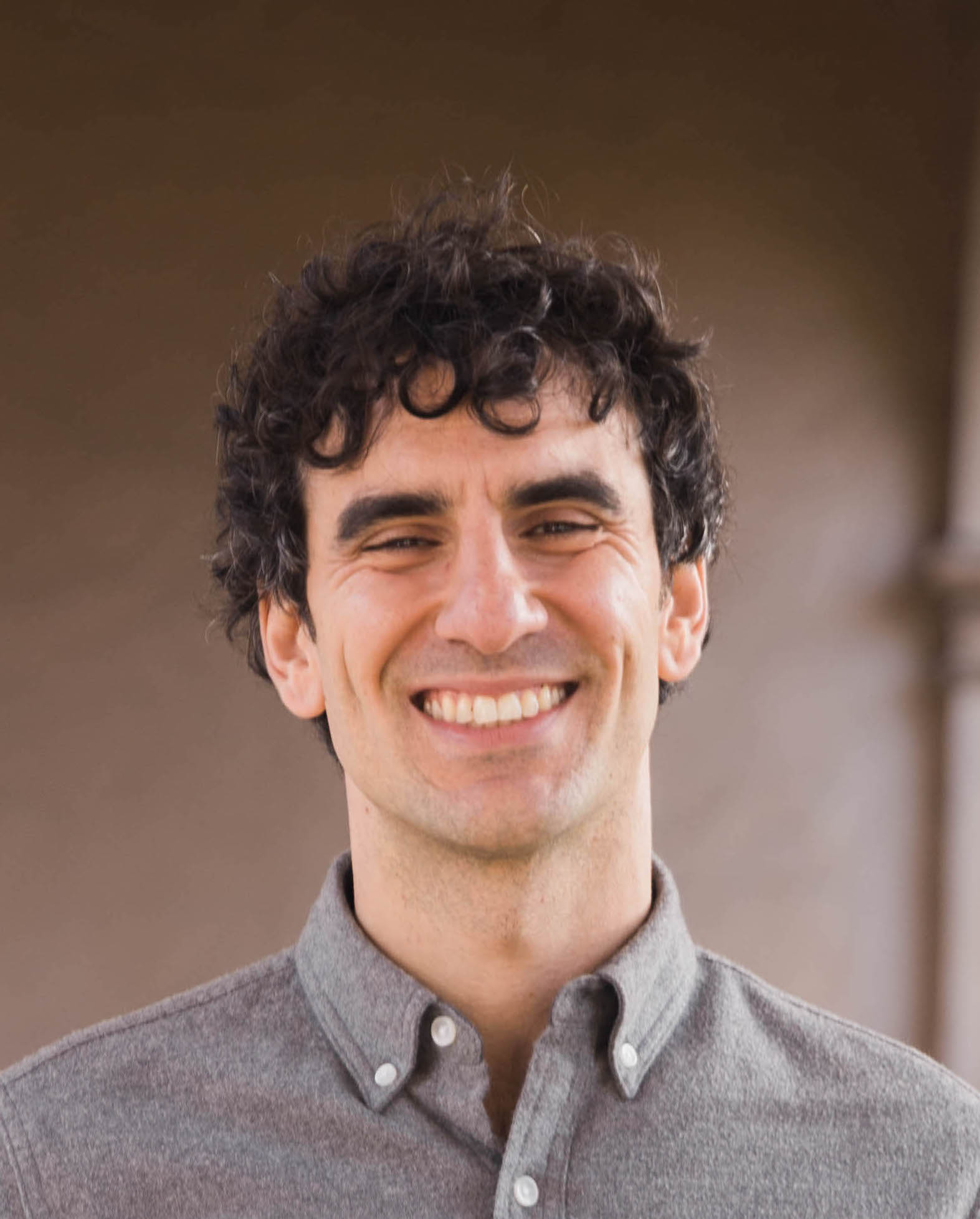
Dr. Shirag Shemmassian is the Founder of Shemmassian Academic Consulting and one of the world's foremost experts on medical school admissions. For over 20 years, he and his team have helped thousands of students get into medical school using his exclusive approach.
THERE'S NO REASON TO STRUGGLE THROUGH THE MED SCHOOL ADMISSIONS PROCESS ALONE, ESPECIALLY WITH SO MUCH ON THE LINE. CLICK BELOW TO SCHEDULE YOUR COMPLIMENTARY CONSULTATION TO ENSURE YOU LEAVE NOTHING TO CHANCE.