Considering a Special Master’s Program before med school? Learn how they differ from post-baccs, which programs have med school linkage, and whether an SMP is worth the time and cost.

Everything you need to know about enrolling in a Special Master’s Program

What You'll Learn
Understanding Special Master's Programs
What defines an SMP, how these graduate programs differ from standard post-baccalaureate coursework, and how taking medical school-level courses demonstrates academic readiness.
Determining Ideal Candidates
Who benefits most from an SMP, such as reapplicants or candidates needing academic enhancement, and who should avoid these high-risk programs.
Leveraging Linkage Agreements
How formal linkage agreements work, including how strong academic performance can secure guaranteed interviews or conditional admission into affiliated medical schools.
Evaluating Financial & Risk Factors
How to weigh significant tuition costs, heavy time commitments, and the academic risks of graduate-level grading against potential admissions benefits.
Selecting the Best SMP Strategy
Key criteria for choosing a program, including class integration alongside medical students, available research and clinical opportunities, location, and institutional track record.
Writing Standout Essays
How to craft tailored personal statements and secondary responses that explain past academic challenges constructively without sounding defensive.
Comparing Gap Year Alternatives
How to decide whether pursuing an SMP is superior to taking a gap year dedicated to retaking standardized tests, gaining research, or acquiring clinical hours.
Introduction
What is a Special Master's Program (SMP)?
SMP vs. Post-Bacc: what's the difference?
Who should (and should not) do a Special Master's Program?
Special Master's Programs with medical school linkage
How to choose a Special Master’s Program
Best Special Master's Programs for medical school
How much do Special Master's Programs cost?
How to get into a Special Master's Program
Special Master’s Program personal statement example
Special Master's Programs vs. gap year: which is right for you?
SMP frequently asked questions
----
Introduction
If you plan on applying to medical school, you surely know how many components go into a successful application. From excellent test scores to solid clinical experience, you have to be successful on many counts to be competitive in the med school admissions process. But, for some students, their undergraduate grades and experiences aren’t strong enough to be a competitive applicant. For these students, graduate credentials might be needed in order to improve their candidacy.
In this post, we’ll discuss Special Master’s Programs (SMPs), which offer premeds a chance to fill out their resumes and improve their chances of admissions. How do you know if you could benefit from an SMP? You might be a good candidate for an SMP if you:
Completed your premed requirements in undergrad and want to strengthen your academic profile before applying to med school
Are reapplying to medical school and want to improve your application for the next cycle
Are considering med school but are not ready and want to see how you’d manage this type of academic environment
Here, you’ll find tips and strategies to help you gain admission into SMPs. We’ve also compiled a list of notable SMPs and their application deadlines. Read below for information about how SMPs can support your journey toward becoming a physician.
Learn everything you need to know to get into medical school.
Get our free 102-page guide to help you with every step: Get Into Medical School: 6 Practical Lessons to Stand Out and Earn Your White Coat
----
What is a Special Master's Program (SMP)?
Special Master’s Programs refer to a class of graduate programs that prepare students for med school by enhancing their academic profiles in a variety of ways. SMPs might help you boost a low GPA, get more exposure to biomedical sciences (therefore demonstrating through grades and transcripts that you’re academically ready to earn your MD), conduct research, gain exposure to clinical opportunities, or pursue an area of study such as public health or global health that will influence your future specialization.
SMPs are generally affiliated with a specific medical school and focus on biomedical sciences. SMPs also often allow students to enroll in first-year med school courses; some programs directly enroll students in courses with MD students while other programs isolate SMP students or provide a mixture of both practices.
In addition to coursework, SMPs may simulate other aspects of medical school by facilitating clinical and research opportunities. Collectively, these aspects of SMPs give students—and med school admissions committees—the chance to compare their academic performance with MD students enrolled in medical school.
Although some students may attend SMPs en route to pharmaceutical or dental school, in this guide we’ll address applicants interested in ultimately attending MD programs.
Career benefits of attending an SMP
If you’re considering an SMP, you probably already understand just how hard it is to get into med school. In fact, the AAMC reports that 52,577 people applied to med schools during the 2023–2024 admissions cycle and only 22,981 eventually matriculated into a program (around 43.7%).
The playing field may even be more difficult for nontraditional applicants, including those who took time off after undergrad and are applying to med school years removed from academia.
Regardless of how you approach the med school starting block, one thing is for certain: grades and MCAT scores matter. Schools across the board are looking for students who can manage intense coursework and challenging exams. The average GPA and MCAT score for recent matriculants were 3.81 and 512.1, respectively—what happens if an applicant’s grades and test scores aren’t up to par?
This is where SMPs can factor into the equation. By providing students with the opportunity to generate an additional, better GPA, SMPs offer them a chance to enhance their med school applications. Many programs include one or more additional perks, such as MCAT test prep, committee letters for med school applications, and varying degrees of linkage with affiliated med schools.
Ultimately, SMP programs are committed to helping their current students and recent graduates gain admission into top MD programs across the country.
Potential downsides to attending an SMP
Because SMPs are both expensive and academically challenging, they’re commonly said to be “high-risk, high-reward.” In other words, students who work hard and earn strong grades in their SMP coursework can significantly improve their odds of gaining medical school acceptances. On the other hand, a lackluster performance in an SMP program can actually hurt your chances of getting into med school, plus waste tens of thousands of dollars along the way.
It should also be noted that if you have a strong GPA but a weak overall application due to a poor MCAT score, in most cases you’d be better off devoting a gap year to studying for the MCAT rather than enrolling in a costly SMP.
(Suggested reading: The Ideal MCAT Study Schedule)
Types of Special Master’s Programs
Because the term Special Master’s Programs serves as a catch-all, programs at different universities vary slightly with regard to size, curriculum, and the degree conferred. In most cases, SMP graduates receive a MS degree in biomedical or medical science. For instance, Duke refers to its program by the title “Master of Biomedical Science” while Georgetown refers to its program as the “Special Master’s Program in Physiology.” Nevertheless, both SMPs prepare students for med school by providing relevant coursework.
You may have difficulty tracking down a comprehensive list of SMPs—as demonstrated above, some schools don’t even use the term “Special Master’s Program” to refer to their program. This matter is made even more complicated due to the similarities between SMPs and post-baccalaureate programs. In lieu of a targeted database, you can check out AAMC’s Postbaccalaureate Premedical Database and set their search engine to account for “academic record-enhancing,” “graduate,” and “non-certificate” programs. This will lead you to many programs that fit under the SMP umbrella.
Additionally, some schools, such as Tufts University, offer dual-degree programs. These programs allow SMP students to simultaneously pursue an MBA, MPH, or related degree at the same institution or at a neighboring university.
Peer group
When considering SMPs, keep in mind that different programs will attract and foster different cohorts. For example, Eastern Virginia Medical School highlights its commitment to diversity and inclusion in its school community. The class sizes of these programs also vary, which can potentially affect the amount of individualized attention given to each student.
Some SMP students benefit from taking classes directly with first-year MD students, while others prefer to receive instruction among SMP students only. Other SMP programs may share resources with similar master’s programs on campus. Prospective students should consider what type of dynamic is best for them.
Coursework, research, and clinical experience
SMP curricula vary, depending on the ethos of the program and affiliated med school. Some, like Boston University, attempt to simulate or mirror a portion or more of a first-year med student’s academic experience.
Certain SMP programs, such as Drexel University, may offer video streaming courses or remote-learning opportunities. Another subset of programs, including Brown University, require students to complete a thesis or self-directed capstone project in order to graduate.
Some SMPs, including the University of Pittsburgh, encourage students to pursue biomedical shadowing and/or clinical experience in the field. These opportunities may be attractive to students who would like to boost their academic profiles and resumés for future med school applications.
Alternatively, some programs may be impartial toward students who want to pursue clinical or research opportunities. Their reasoning is that SMP students should focus on improving their academic records. Schools in this category may want students to have a significant amount of volunteer or clinical experience prior to enrollment.
Medical school application support
Specials Master’s Programs are well aware that your long term goal is to pursue med school. In addition to the linkage opportunities and med school affiliations mentioned above, SMPs include some type of med school application support, such as professional advising, MCAT test prep, or admissions interview prep.
Many SMPs also advertise robust student advising programming that encourages students to cultivate mentorships with faculty, career advisors, and other healthcare professionals. At Tufts University, students have access to premedical workshops to improve their med school applications and a team of advisors known as “academic partners.” Loyola University Chicago touts premedical advising from the start of the program through post-graduation.
Medical school acceptance rates
Given the unique makeup of Special Master’s Programs, it’s difficult to find hard numbers of how many graduates go on to be accepted into med schools. This situation is complicated by the fact that some graduates may opt to forgo applying to MD programs and pursue other career tracks related to biomedical sciences.
However, it is important to note that several schools such as Brown University and the University of Cincinnati, boast med school acceptance rates above 80 percent for recent graduates. That number is significantly higher than the national average of below 40 percent for med school applicants. Several programs, like Georgetown University and Boston University, make sure to highlight this data and information on their department websites.
----
SMP vs. Post-Bacc: what's the difference?
There are many similarities between post-baccalaureate (post-bacc) programs and Special Master’s Programs, so it’s important to know the differences between them. You may see SMPs listed as a subcategory of post-bacc programs, which can sometimes be misleading.
Like SMPs, post-baccs offer students with a bachelor's degree the chance to take coursework in preparation for med school, thereby becoming more competitive in the med school admissions process.
The major difference between the two types of programs is that students traditionally seek out post-bacc degrees when they did not take premed courses as undergraduates. Consequently, work completed in post-bacc programs can adjust a student’s undergraduate GPA. And, unlike SMPs, which confer master’s degrees, post-baccs tend to bestow either certificates of completion or no formal award at all.
On the flip side, SMPs provide an additional GPA (i.e., separate from a student’s undergrad GPA) and, of course, confer master’s degrees.
So, how do you know if you should seek out a post-bacc or an SMP?
If you’re looking to enroll in premed courses for the first time or increase your undergraduate GPA, a post-bacc would be a better option for you than an SMP.
If you didn’t complete or didn’t perform well in prerequisite med school courses and you’d like to enhance your academic profile, you may be interested in both SMPs and post-baccs.
If you successfully completed your med school prerequisites but need a boost to your GPA in order to be competitive for med school, you should consider SMPs.
----
Who should (and should not) do a Special Master's Program?
You're a strong candidate for an SMP if you've already completed your premed prerequisites but your undergraduate GPA isn't where it needs to be to compete for medical school admission. An SMP gives you the chance to generate a separate, graduate-level GPA that directly demonstrates your academic readiness in a way that simply retaking undergrad courses cannot. You might also be a good fit if you're reapplying to medical school after a rejection and need to show admissions committees meaningful academic improvement, or if you're genuinely unsure whether you can handle the rigor of a medical school curriculum and want to test yourself in that environment before committing fully.
On the flip side, if your undergraduate GPA is solid but your MCAT score is the weak point in your application, devoting a gap year to focused MCAT preparation is almost certainly a better use of your time and money than enrolling in a costly SMP that won't address your actual problem. And if your GPA falls below 3.0, the reality is you'll have difficulty gaining admission to most SMP programs—particularly the top ones—so consider where you stand before investing time in those applications.
----
Special Master's Programs with medical school linkage
One of the most compelling features of certain SMPs is their formal linkage with affiliated MD or DO programs, and if you're seriously considering an SMP, it's worth understanding exactly what linkage does and doesn't mean for you.
In a linkage arrangement, students who meet specific academic benchmarks during their SMP are given the opportunity to begin the medical school application process at the affiliated program under more favorable conditions, which can significantly reduce the chances of needing a "glide year" — the gap year between finishing your SMP and actually starting medical school — if your goal is to transition directly into an MD program. Georgetown's SMP, for example, directly enrolls students in first-year medical school courses at Georgetown University School of Medicine, and Rutgers University SMP students complete capstone projects with faculty at Robert Wood Johnson Medical School; both programs have linkage agreements that give qualifying students a meaningful advantage in the admissions process at those institutions.
That said, it's important to be clear-eyed about what linkage is not: acceptance into an SMP does not guarantee acceptance into a linked MD program, and affiliation with a medical school, while genuinely valuable for resources, networking, and mentorship, is not the same as a conditional offer of admission. Linkage gives you an opportunity: what you do with it during your time in the program is what determines the outcome.
----
How to choose a Special Master’s Program
So you’re interested in Special Master’s Programs—what’s next? When researching SMPs, keep in mind what type of program may be right for you. Consider the following key aspects of SMPs.
SMP admissions requirements
Admission into some Special Master’s Programs is extremely tough. Across the board, schools tend to require that students have taken premed school courses similar to those taken by MD program applicants. (That’s why you’ll need to do a post-bacc if you haven’t taken any premed coursework yet.)
Some SMPs will have minimum undergraduate GPA requirements. Others require students to take the MCAT or GRE and have score cutoffs. Programs also range in terms of the application deadline and materials required to apply. Unlike med school, there is no AMCAS or governing body that facilitates the application process, which means you may have to write multiple personal statements that vary in length and monitor applications as they move through each school’s unique admissions process.
So, what GPA and MCAT score do you need to gain acceptance to an SMP? A rough rule of thumb is that you should have at least a 3.0 undergraduate GPA and a 500 MCAT to be in the running. Nevertheless, programs vary in their levels of selectivity, with the most prestigious SMPs boasting average stats well above these.
For instance, the average matriculant into Tufts’ MS in Biomedical Sciences has a 3.7 GPA and an MCAT score of 510. Georgetown’s SMP reports similar average stats at 3.3 and 510.
What if your GPA is below 3.0? The reality is that you probably won’t find success applying to many SMPs, particularly top programs like the ones we list at the end of this guide. Nevertheless, there are students each year who gain admission to SMPs with sub-3.0 GPAs, particularly those whose MCAT scores and other admissions factors are relatively strong.
----
Best Special Master's Programs for medical school
We’ve compiled a list of notable SMPs across the country. It’s important to note that some schools may not refer to their program as a “Special Master’s Program” for reasons mentioned above. Additionally, some schools may have similar graduate programs that also prepare students for aspects of med school. These complementary programs usually operate adjacent to SMPs or are housed within the same medical school or academic department.
Boston University's MS in Medical Sciences Program
Application deadline: Rolling admissions, though prospective students are encouraged to apply before June 1st
Brown University's Master of Science in Medical Sciences Program
Application deadline: June 1st
Drexel University's Intensive Medical Sciences Program
Application deadline: May 15th
Duke University’s Master of Biomedical Sciences Program
Application deadline: See website for details
Case Western Reserve University Master of Science in Medical Physiology Program
Application deadline: See website for details
University of Cincinnati’s Special Master’s Program in Physiology
Application deadline: August 1st
Eastern Virginia Medical School’s Medical Masters, MS Program
Application deadline: Rolling admissions
Georgetown University Special Master’s Program in Physiology
Application deadline: See website for details
University of Kentucky’s Master of Science in Medical Sciences Program
Application deadline: See website for details
Loyola University Chicago Master of Arts in Medical Sciences Program
Application deadline: See website for details
University of Pittsburgh Biomedical Sciences Program
Application deadline: June 1st
Icahn School of Medicine at Mount Sinai Master of Science in Biomedical Science Program
Application deadline: June 1st
Rutgers University Robert Wood Johnson Medical School Master of Biomedical Science Program
Application deadline: See website for details
Tufts University’s Master of Science in Biomedical Sciences Program
Admissions deadline: June 29th
Tulane University's Masters Program in Pharmacology
Application deadline: August 1st
Length of program and enrollment options
The majority of SMPs are full-time, one-, or two-year programs. A limited number of schools, such as Case Western Reserve University, offer part-time or full-time enrollment opportunities. Given the length of MD programs, it’s important to consider how an SMP may factor into your extended academic plans and timeline. Taking a year to pursue a master’s degree might not be for everyone, particularly those who are ready to attend med school and have exemplary grades and MCAT scores.
It’s important to remember that taking a year to do an SMP doesn’t necessarily mean losing a year on your application timeline. You might get ahead on your timeline through the MCAT test prep, admissions interview prep, and other advising services offered by your program and therefore be one step ahead of med school applicants who may not have access to these resources or time to utilize them.
----
How much do Special Master's Programs cost?
Like other graduate school programs, SMPs are expensive. Students also have to consider med school tuition costs further down the line. Luckily, SMPs are aware of these high costs and have robust financial aid departments, and many SMPs housed at public universities offer in-state tuition to students. Several SMPs also offer scholarship and fellowship opportunities in addition to financial aid. When applying to different SMPs, make sure you read the tuition and financial aid information listed on program websites.
Over 90% of our students get into med school—the first time.
Get our free 102-page guide to help you with every step: Get Into Medical School: 6 Practical Lessons to Stand Out and Earn Your White Coat
----
How to get into a Special Master's Program
Applications for Special Master’s Programs resemble med school applications. SMPs also require personal statements and supplementary essays to ensure candidates are a good fit for a particular program.
Our comprehensive medical school personal statement guide provides proven strategies for writing effective personal statements with this target audience in mind—university admissions officers and healthcare professionals. Personal statements for these readers require a captivating introduction, the retelling of an applicant’s personal history pertaining to medicine, and a conclusion that synthesizes key aspects of the statement itself.
Here, we’ll tailor some of that advice a little more to the distinct conditions of an SMP personal statement. Here are some key differences: SMP admissions officers know their programs aren’t the holy grail for applicants. They know they’re a step on the way to your future goal. In most cases, SMP admissions panels are reading a personal statement of an applicant gearing up to apply to medical school, which can be a confusing and frustrating place to be in life. This is especially true if the applicant either knows their grades aren’t good enough to apply to med school directly or previously applied to med school and was rejected.
For these reasons, it’s important to follow these rules when writing your SMP personal statement and any supplementary essays:
Make sure your personal statements and secondary essays are school-specific. Make sure that you tailor each personal statement to meet the criteria for each individual SMP program on your list. Some schools may require longer personal statements than others. Other programs may require additional essays or short responses. For more information about how to answer these supplementary essays, which resemble the kind you’ll see on your med school applications, check out our guide to medical school secondary essays.
Avoid harping on the less than favorable parts of your resume and academic transcript(s). SMP admissions officers have access to your entire application and know your end goal is acceptance into med school. This means they’re aware of your academic shortcomings and want to hear more about your personal story in the written parts of your application. It’s fine to mention the reasons why you may have struggled academically or during past attempts to get into med school, but make sure your reader knows you have a plan for the future, and weave those struggles into your narrative rather than sounding defensive about them.
Be clear about your aims and objectives. There’s no reason to shy away from your long-term goals. Feel free to summarize how you want your medical career to play out following your enrollment in an SMP. This is especially the case if the program you’re applying to has formal linkage with an MD program on your list. In other words, you don’t need to hide it if your eventual plan is to head to med school.
With these SMP-specific strategies in mind, always make sure you properly contextualize how your past experiences have prepared you to succeed in graduate school.
----
Special Master’s Program personal statement example
Let’s read this sample SMP personal statement:
Three years ago, my life changed on an average afternoon when my managing director looked at me and said, “I feel a pain in my chest, a really tight pain.” Then he fell forward in his seat, his arms splayed across a long table. We were in a conference room, ten floors above the streets of central Boston, and my first thought was about how long the paramedics would take to arrive and transport him to a hospital. While one of our colleagues called 911, I went to work, relying upon the skills I’d learned through my EMT training in college, to make my boss as comfortable as possible. Our consulting project didn’t matter anymore. In a split second I went from caring about financial deliverables to only caring about a person in pain. What did he need next? What would he need in the future? How could I better provide aid to him? I kept him calm and reassured him that help was coming. In the weeks and months that followed that moment, I realized I wanted to do more. It was time for me to get back on track and pursue med school.
Up until then as an adult, I’d run away from my dream of being a doctor by simply trying to balance it out with other desires in my life. This started in undergrad. As a small-town kid who’d attended a public high school, I arrived on my fancy New England campus wanting to prove myself among my rich peers. I needed a spot in their world. Sadly, this meant biting off more than I could chew academically, trying to focus on my pre-med coursework in addition to taking economics classes, rushing for a popular fraternity, and wanting to be a big man on campus.
As a result, I spread myself too thin when my cockiness got the best of me. Even though I spent one college summer shadowing a surgeon at my regional hospital and another summer doing clinical research, I let my grades slip out of my control. I made a lot of mistakes, including not entirely committing myself to what had always been my career goal of practicing sports medicine.
Suffice to say, I soon became a twenty-two year old reject from all the medical schools I’d applied to. But I thought to myself, hey, I don’t need to be a doctor right now. I was still immersed in a social scene wherein making money was the easy way to gain status. I also told myself that my career moves would benefit my family because I could be a breadwinner sooner rather than later. I told myself that healthcare consulting would quench my thirst to work in the medical world. All the while, I was still reading medical journals in my spare time and secretly using my work laptop to research med school programs. I also began to volunteer at a new health clinic in my neighborhood. This allowed me to dip into the medical world. Then the incident with my managing director happened, and I knew my life needed to change.
I’m interested in your Master in Biomedical Sciences program because I want to reacclimate myself to medicine as I continue my journey towards becoming a physician. Fortunately, I’m able to see how my experiences away from medicine have prepared me, in non-traditional ways, to be a doctor. For instance, my time spent working on healthcare consulting projects has given me an in-depth perspective on how doctors can support the creation of equitable healthcare systems. Additionally, my work in consulting has improved my interpersonal and communication skills.
I’m not that arrogant twenty-two year old anymore. Instead, I’m a young adult who wants to prove where I belong for the right reasons. On my road to medical school, I want to gain more clinical experience so I can better understand how the things I learn in classrooms relate to real life situations. I also know that my eventual calling is to work in a small town or rural area to serve the specific needs of specific communities. I’m eager to keep my head down, remain humble, and do the necessary work to get back on the career track that’s right for me.
Why does this personal statement work? Let’s dissect it to examine how the applicant presents himself to SMP admissions officers.
First and foremost, it’s important to mention that he’s aware of the bigger picture: he failed to get into med school on his first attempt and wants to try again. Honesty is the core principle for this personal statement, which allows the reader to empathize with the applicant.
Here are some additional highlights:
He knows what he needs from an SMP. The applicant wants to enhance his academic profile. Although this isn’t said outright, readers infer that his undergraduate GPA isn’t strong enough for the med schools on his list. And, on a deeper level, the personal statement implies that he needs institutional support to continue his journey toward med school. An entire paragraph discusses how he was a busy-body as an undergraduate and that his grades suffered because of this decision. Still, he takes responsibility for the past. He’s pursuing SMPs to refresh his knowledge base and improve his study habits.
He’s aware of his strengths for future med school applications. The applicant quickly references his research and volunteer experience with relative ease in a paragraph that discusses his academic shortcomings. This suggests to the reader that these aspects of his resume aren’t the problem when med school applications are concerned.
He embraces his time away from medicine. The applicant clearly states how his non-medical professional experiences will make him a better physician. Instead of seeing these experiences as a liability, he embraces the skills they provided him.
He exemplifies qualities physicians need to be successful. Starting in paragraph one, the applicant exemplifies compassion, composure and empathy. These are character traits that will make him a good physician. He follows up the opening story by mentioning his volunteer work later on. Furthermore, a major thread throughout the entire piece is the applicant’s grit and determination to not give up on his dream. Taken into consideration together, the aspects of his personality show why he’ll be a successful physician.
Although writing a SMP personal statement can feel daunting, remember that programs want you to be honest about your strengths and weaknesses. This way, they’ll be able to better assist you on your journey toward medical school.
----
Special Master's Programs vs. gap year: which is right for you?
Choosing between an SMP and a gap year comes down to one honest question: what is actually holding your application back? If your GPA is the primary obstacle—if admissions committees are looking at your undergraduate transcript and seeing a record that doesn't reflect what you're capable of—then an SMP gives you the chance to generate a separate, graduate-level GPA that directly addresses that gap in a way a gap year simply cannot.
On the other hand, if your GPA is already solid but your MCAT score is the weak point in your application, devoting a gap year to focused, full-time MCAT preparation is almost certainly a better investment than spending tens of thousands of dollars on an SMP that won't move the needle on your actual problem. And it's worth remembering that a gap year spent wisely (building clinical hours, conducting research, or strengthening other parts of your application) can add meaningful value to your candidacy without the financial cost or the academic risk that comes with SMP enrollment. SMPs are high-risk, high-reward by nature: a strong performance can meaningfully improve your odds, but a poor one can hurt you. So before committing, be honest with yourself about what your application actually needs, and choose the path that directly addresses it.
----
SMP frequently asked questions
What is a Special Master's Program?
A Special Master's Program is a graduate program designed to help premeds strengthen their academic profiles before applying to medical school, typically by providing graduate-level biomedical science coursework, an additional GPA separate from your undergraduate record, and in many cases, research and clinical opportunities. Most SMPs are affiliated with a specific medical school and confer a Master of Science degree in biomedical or medical science upon completion.
Who should do a Special Master's Program?
An SMP is a strong fit if you've already completed your premed prerequisites but your GPA isn't competitive enough for medical school, if you're reapplying after a rejection and need to strengthen your academic profile, or if you want to test whether you can handle graduate-level science rigor before fully committing to the medical school path. It's worth noting that if your GPA is strong but your MCAT score is the weak point in your application, you'd likely be better served by devoting time to MCAT preparation rather than enrolling in a costly SMP.
How is an SMP different from a post-bacc program?
The key distinction is what each program is designed to fix: post-baccs are typically for students who never took premed prerequisites as undergraduates, and that coursework can actually adjust your undergraduate GPA. SMPs, on the other hand, are for students who already completed their prerequisites but need a graduate-level GPA boost.
Do Special Master's Programs guarantee medical school acceptance?
No—acceptance into an SMP does not guarantee acceptance into a medical school, even if the programs are affiliated. That said, some SMPs offer formal linkage agreements with specific MD or DO programs, which can give students the opportunity to begin the application process at that school under more favorable conditions. Programs like Brown University and the University of Cincinnati have reported medical school acceptance rates above 80% for recent graduates, significantly higher than the national average of below 47%, but strong performance in the program is what drives those outcomes, not enrollment alone.
How much do Special Master's Programs cost?
SMPs are expensive graduate programs, and you'll need to factor that cost on top of future medical school tuition when thinking through your financial plan. Many SMPs housed at public universities offer in-state tuition rates, and several programs offer scholarship and fellowship opportunities in addition to traditional financial aid, so always read the financial aid information on each program's website carefully rather than assuming the sticker price is what you'll actually pay.
What GPA do I need to get into a Special Master's Program?
As a rough baseline, most SMP programs look for at least a 3.0 undergraduate GPA and a 500 MCAT to be a competitive applicant, though the most prestigious programs have average matriculant stats well above these minimums. If your GPA falls below 3.0, you'll have a harder time gaining admission to top programs, though students with particularly strong MCAT scores and other compelling application factors do occasionally gain admission each year.
Should I apply to medical school during or after my SMP?
Timing matters enormously here: applying to medical school during your first semester of an SMP means you won't have any SMP grades to show admissions committees yet, which significantly limits the benefit of being enrolled. For the greatest impact on your application, plan to apply after earning a full year of strong SMP grades, which gives admissions committees the graduate-level academic evidence they need to reconsider your candidacy. Many SMP programs include MCAT prep, interview prep, and professional advising specifically to help you build the strongest possible medical school application when that timing is right.
Are Special Master's Programs worth it?
SMPs are widely described as "high-risk, high-reward." Students who work hard and earn strong grades can significantly improve their odds of medical school acceptance, but a poor performance can actually hurt your chances on top of the significant financial investment. The students who benefit most are those who are genuinely committed to outperforming and taking full advantage of their program's advising, MCAT prep, and networking resources. If you go in with that mindset and the academic foundation to back it up, an SMP can be a genuinely transformative step on your path to medicine.
What is the Georgetown Special Master's Program?
Georgetown's Special Master's Program in Physiology is one of the most well-known programs of its kind, and it directly enrolls SMP students in first-year medical school courses at Georgetown University School of Medicine, giving admissions committees a direct comparison of your performance alongside current MD students. The average matriculant enters with around a 3.3 GPA and a 510 MCAT, and Georgetown and Boston University are among the programs that make their medical school acceptance rate data publicly available on their websites.
What is an SMP with linkage to medical school?
Some SMPs offer formal linkage arrangements with affiliated MD or DO programs, which give students the opportunity to begin the medical school application process at that school under more favorable conditions than a standard applicant would face. These linkage programs can also reduce your chances of needing a "glide year"—the gap between finishing your SMP and starting medical school—if your goal is to transition directly into an MD program the fall after you complete your master's. It's important to remember, however, that linkage is not the same as a guarantee of acceptance; you still need to meet the program's academic benchmarks and complete the application process.
Final thoughts
For prospective medical students with less than ideal GPAs, Special Master’s Programs can offer the opportunity to strengthen their application profiles in advance of the competitive medical school admissions process. Though many SMPs are themselves difficult to get into, you can give yourself the best odds of admission by tailoring your personal statements and other essays to reflect how each program you apply to will help you towards your ultimate goal of practicing medicine. Then, plan to work hard and take advantage of your program’s resources and academic opportunities in order to prove that you’re cut out for your dream medical school.
About the Author
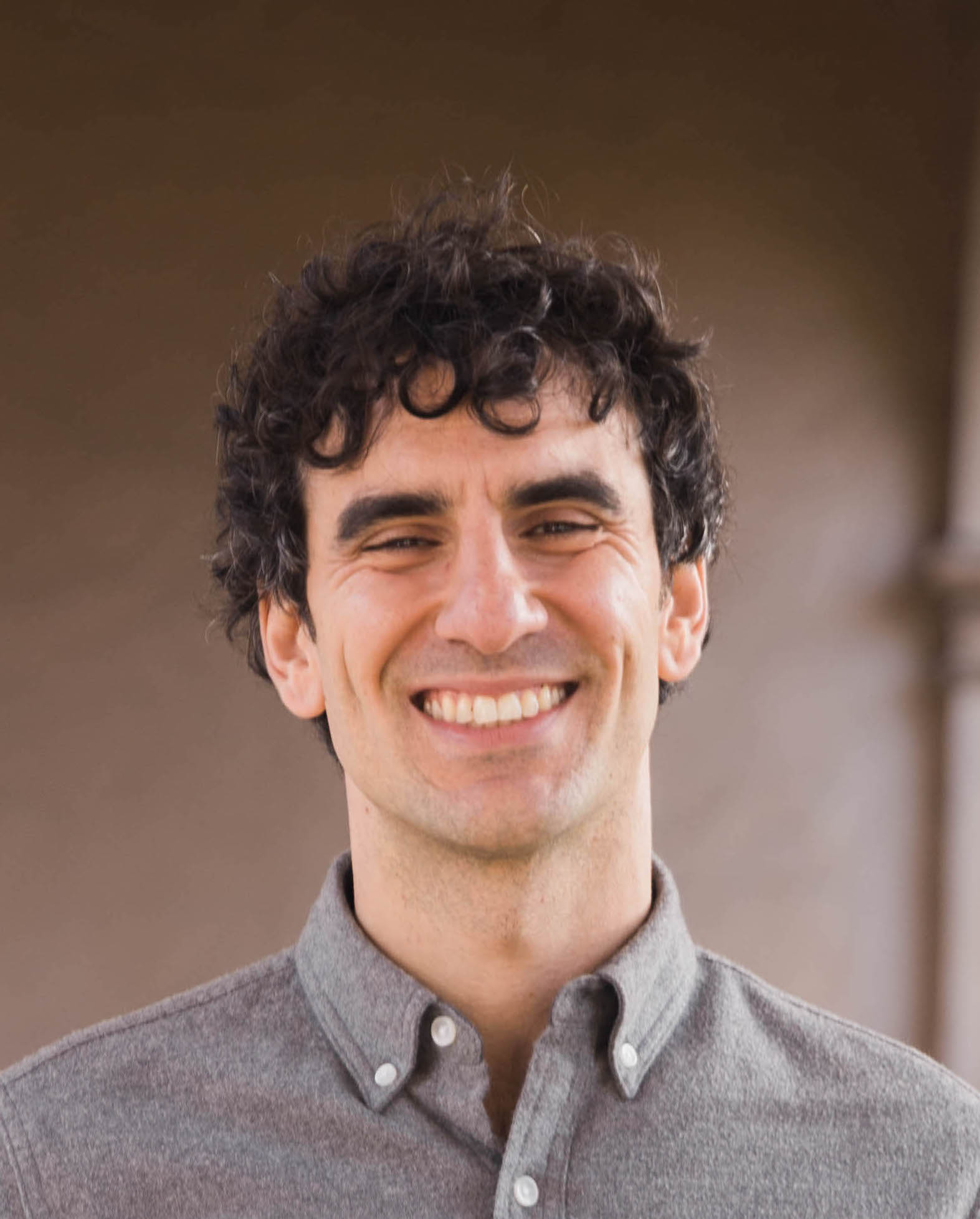
Dr. Shirag Shemmassian is the Founder of Shemmassian Academic Consulting and one of the world's foremost experts on college admissions. For over 20 years, he and his team have helped thousands of students get into top programs like Harvard, Stanford, and MIT using his exclusive approach.
----
Appendix: Additional SMP programs
We’ve done the footwork and have compiled a list of other SMP programs linked to medical schools. Remember that the following list is not necessarily exhaustive since med school requirements and affiliations can change from cycle to cycle. As of December 2023, the following SMPs have linkage to medical schools:
CONSIDERING SMP PROGRAMS? THERE'S NO REASON TO STRUGGLE THROUGH THE MED SCHOOL ADMISSIONS PROCESS ALONE, ESPECIALLY WITH SO MUCH ON THE LINE. SCHEDULE YOUR COMPLIMENTARY CONSULTATION TO ENSURE YOU LEAVE NOTHING TO CHANCE.