The True Cost Of Reapplying To Medical School: Why Getting In The First Time Is A Million-Dollar Decision
A complete financial analysis of out-of-pocket fees, lost attending physician salary, and missed 30-year compound growth, plus how to protect your career timeline.

The true cost of reapplying to medical school is more than you might think.

What You'll Learn
The Complete Price Tag of Delay
Why a single forced gap year costs between $653,613 and $1,153,226 in combined out-of-pocket expenses, lost attending earnings, and missed investment returns.
Direct Reapplication Expenses
An itemized breakdown of retaking the MCAT, primary and secondary application fees, post-bacc tuition, and gap year living deficits.
The Lost Attending Salary Misconception
Why delaying medical school matriculation forfeits your peak-earning year at age 60 rather than a low-wage entry-level gap year job.
The 30-Year Compounding Math
How missing out on your first year of attending savings costs up to $761,000+ in long-term market growth.
How to Avoid Reapplication
Strategic steps to optimize your application timing, school selection, and written narrative so you get accepted on your first attempt.
The hidden cost paradigm in medical school admissions
The direct out-of-pocket costs of reapplying to medical school
The true opportunity cost: why you lose your peak earning year
The math of missed compound growth: a million-dollar realization
The personal and family cost of a delayed medical career
Why working with an admissions advisor is a high-ROI financial decision
Frequently asked questions about medical school reapplication costs
The hidden cost paradigm in medical school admissions
A one-year delay in medical school matriculation costs you between $653,613 and $1,153,226 in combined out-of-pocket reapplication fees, lost attending physician salary, and missed 30-year compound investment growth.
If you're a premed student, or a parent walking alongside one, opening a medical school rejection letter feels like a punch in the gut.
In that emotional moment, it's easy to view an unsuccessful application cycle simply as a temporary setback. You might tell yourself that you'll just take a gap year, work a clinical support job, polish your application, and try again next cycle.
What most families don't realize is that medical school admissions isn't just an academic milestone. It's a high-stakes financial investment where time directly dictates your lifetime net worth.
The traditional medical training pathway in the United States is strictly linear. You complete four years of college, four years of medical school, and three to seven years of residency and fellowship training.
Because this timeline is locked in sequence, missing out on an acceptance doesn't mean you're losing a low-wage entry-level gap year income. It means shifting your entire career timeline forward by 12 months.
When you shift that timeline, you permanently eliminate your highest-earning year as an attending physician at the very end of your career.
When you evaluate this process through a financial lens, an unsuccessful application cycle represents a massive drain. You incur immediate out-of-pocket expenses for test retakes, application fees, and remedial coursework.
More importantly, you surrender hundreds of thousands of dollars in net physician earnings and forfeit decades of compound market returns on your early career savings and investments.
Reframing the admissions process around these financial realities clarifies why getting accepted on your very first attempt is an incredibly valuable professional outcome.
Over 90% of our students get into med school—the first time.
Get our free 102-page guide to help you with every step: Get Into Medical School: 6 Practical Lessons to Stand Out and Earn Your White Coat
----
The direct out-of-pocket costs of reapplying to medical school
Reapplying to medical school typically costs you between $17,000 and $82,500 in direct out-of-pocket expenses, including MCAT retakes, primary and secondary application fees, interview travel, post-baccalaureate coursework, and gap year living expenses.
Before we even touch on lost future income, let's look at the immediate cash you'll need to mount a second application campaign.
Applying to medical school is expensive, and repeating the process requires additional money at a time when most premed students have minimal savings.
Here's how those out-of-pocket reapplication expenses break down across four major categories:
| Expense Category | Estimated Cost Range | Primary Financial Drivers |
|---|---|---|
| MCAT retake and preparation | New study materials, question banks, tutoring, and exam registration fees | |
| Application processing fees | Primary fees across AMCAS, AACOMAS, or TMDSAS plus secondary fees for 25 to 30 schools | |
| Academic remediation programs | Tuition per credit hour for graduate science courses or specialized master's programs | |
| Gap year living wage deficit | The gap between low entry-level clinical wages and basic living expenses |
Your first major line item is test prep and registration. If your initial rejection stemmed from an uncompetitive MCAT score, retaking the exam isn't optional.
Beyond the base exam fee, reapplicants routinely sign up for updated question banks, full-length practice tests, prep courses, or private tutoring to guarantee a score bump.
Your second line item covers primary and secondary application processing fees. Primary application services charge a base fee for your first school and an incremental fee for every additional program you add.
When you combine those fees with secondary application charges, which range from $50 to $150 per school, submitting applications to a balanced list of 25 to 30 programs easily runs between $1,500 and $2,500.
The third and largest direct expense is academic remediation. If you need to boost a low undergraduate science GPA, you'll likely enroll in upper-division post-baccalaureate coursework or a one-year Special Master's Program (SMP).
Tuition for these programs ranges from several thousand dollars at state universities to over $30,000 or $40,000 at private institutions. This is cash that families often have to fund through additional student loans.
Finally, you have to survive the gap year itself. Most clinical gap year jobs, like scribing, medical assisting, or clinical research coordination, pay modest wages between $15 and $22 per hour.
In most metropolitan areas, those wages barely cover rent, food, and transportation. That leaves a living deficit you'll need to absorb through savings, family support, or debt.
For the calculations throughout the rest of this guide, we'll use a conservative, aggregated out-of-pocket reapplication cost of $15,000.
----
The true opportunity cost: why you lose your peak earning year
Delaying your medical school matriculation by one year doesn't mean losing a $40,000 gap year salary; it shifts your career timeline forward, forfeiting a full year of peak attending physician income at the end of your practice.
The most common mistake premeds and parents make is comparing a gap year salary directly to what they're earning right now.
You might think that earning $40,000 as a research coordinator during a gap year isn't a huge loss compared to being in school. But that framing completely misses how a medical career actually works.
Assuming you practice medicine for 30 years after residency, entering medical school at age 22 lets you work from age 30 to age 60.
If you delay entry by a year, that 30-year working window shifts to ages 31 through 61. Your gap year job covers the year at age 22, but the year you permanently lose from your lifetime earnings is year 30 of your attending practice.
Because attending physicians reach their highest earning potential in their final decade of practice—thanks to clinical efficiency, partnership equity, and senior rank—a one-year delay forfeits an attending salary, not an entry-level gap year wage.
Let's look at what that opportunity cost actually looks like across three common career pathways:
Primary care physician pathway
Primary care physicians, including family medicine, general internal medicine, and pediatrics, earn a national average attending salary of $298,000.
If you earn $40,000 during a gap year, your gross income deficit for that shifted year is: $298,000 - $40,000 = $258,000
After accounting for an estimated 30 percent effective tax rate across federal, state, and local taxes, you lose $180,600 in net post-tax income. If you live in a state with high taxes, like California or New York, your taxes could be much higher.
Specialist physician pathway
Specialists, such as orthopedic surgeons, cardiologists, gastroenterologists, and dermatologists, earn a national average attending salary of $417,000.
Subtracting that same $40,000 gap year baseline gives you a gross income deficit of: $417,000 - $40,000 = $377,000
At a conservative 30 percent effective tax rate, your net post-tax income loss comes out to $263,900.
Blended national physician average
Across all practicing U.S. physicians, the blended average annual attending salary sits at $386,000.
Subtracting your $40,000 gap year income results in a blended gross income deficit of: $386,000 - $40,000 = $346,000
At an effective tax rate of 30 percent, you're looking at a net post-tax loss of $242,200.
Want expert guidance on medical school admissions?
Enter your name and email for weekly advice plus our free 102-page guide to help you with every step: Get Into Medical School: 6 Practical Lessons to Stand Out and Earn Your White Coat
----
The math of missed compound growth: a million-dollar realization
Missing out on early attending income reduces your ability to fund retirement accounts during key compounding years, forfeiting between $380,613 and $761,226 in 30-year market growth per $50,000 to $100,000 of lost investment capital.
Losing hundreds of thousands of dollars in salary is painful enough, but the real financial damage happens when you calculate lost compound interest.
When it comes to building long-term wealth, time in the market beats almost everything else. The money you save and invest during your very first year as an attending physician has the longest timeline to grow over your entire career.
When your matriculation gets pushed back by a year, you lose the ability to invest that first attending paycheck at age 30 or 31. Even if you save aggressively later in life, you can never regain that lost decade of compounding on your initial capital.
A is the final accumulated wealth at retirement.
P is your initial investment from your first-year attending savings.
r is the annual real rate of return, set at a conservative 7 percent to account for inflation in an index fund portfolio.
t is your investment time horizon, set at 30 years from attending status to retirement.
At a 7 percent annual real return over 30 years, your investment multiplier is approximately 7.61.
This means every single dollar you invest during year one of your attending practice grows more than seven and a half times over a 30-year career.
Primary care pathway calculation
As a primary care physician earning $298,000, you can realistically invest $50,000 of your post-tax salary into retirement accounts or index funds during your first year in practice.
If you delay matriculation by a year, that $50,000 investment gets pushed back, forfeiting 30 years of growth on that principal block:
When you add your $15,000 in reapplication costs, your $258,000 gross lost earnings deficit, and your $380,613 in lost compound growth, your total lifetime financial loss reaches $653,613.
Specialist pathway calculation
As a specialist earning $417,000, you can comfortably set aside $100,000 in investment capital during your first year as an attending.
Delaying that $100,000 investment by just one year costs you three decades of compounding growth:
Combining your $15,000 in out-of-pocket fees, your $377,000 gross lost earnings deficit, and your $761,226 in lost market returns brings your total lifetime financial loss to $1,153,226.
Blended national average calculation
Using the national average attending salary of $386,000, we model an initial first-year investment of $75,000.
Delaying that $75,000 investment forfeits 30 years of compound expansion:
Combining your $15,000 in reapplication fees, your $346,000 gross lost earnings deficit, and your $570,919 in lost market returns yields a total lifetime financial loss of $931,919.
Here is how these three financial scenarios compare side by side:
| Financial Metric | |||
|---|---|---|---|
| Attending annual salary | |||
| Reapplication out-of-pocket cost | |||
| One-year gross lost earnings | |||
| Invested first-year savings | |||
| Lost 30-year compound growth | |||
| Total 30-year financial cost |
----
The personal and family cost of a delayed medical career
A delayed medical school entry causes compounding life delays, including extra student loan interest, postponed homeownership, compressed family planning timelines, and severe applicant burnout.
While hard numbers reveal the financial toll, the personal costs of a forced gap year spill over into your health, family planning, and peace of mind.
Capitalized student loan interest
Most medical students fund their education using federal loans that accrue interest while they're in school. When you enter the workforce a year late, your loan repayment schedule gets pushed back, too.
Spending an extra year in a low-paying gap year job means your loans stay in deferment or income-driven repayment longer. That unpaid interest capitalizes onto your principal balance, adding thousands of dollars in total debt over your repayment career.
Postponed life milestones
Building wealth isn't just about retirement accounts; it's about building a life. Delaying attending-level income by 12 months forces you to delay buying a home, which stops you from building equity during your early 30s.
It also pushes back family planning decisions, squeezing major life events into tighter timelines and often adding financial stress around childcare or fertility treatments later on.
The psychological toll of reapplication
Reapplying to medical school means putting yourself through an exhausting, multi-month process all over again. You have to rewrite essays, request new recommendation letters, and endure another round of high-stakes interviews.
Operating under that level of uncertainty for an extra 12 to 24 months takes a real toll. Pre-meds who go through multiple cycles often enter medical school already feeling burned out before their actual training even begins.
----
Why working with an admissions advisor is a high-ROI financial decision
Investing in expert admissions consulting isn't an expense; it's a high-return financial strategy designed to protect your lifetime earning timeline and guarantee you get accepted on your first attempt.
Once you realize that a forced gap year carries a price tag between $653,613 and $1,153,226, your entire view on application preparation changes.
Spending money on expert MCAT tutoring or comprehensive admissions consulting isn't a luxury expense. It's a protective financial hedge.
If hiring a top-tier consultant increases your odds of getting accepted on your first try, that investment delivers an extraordinary return by preserving your peak attending year and securing your 30-year compounding timeline.
At Shemmassian Academic Consulting, we help you systematically eliminate the weaknesses that lead to reapplication:
Perfecting your application timing
Submitting your AMCAS, AACOMAS, or TMDSAS primary application on the very first day submissions open is non-negotiable.
Because medical schools use rolling admissions, early applicants interview for the maximum number of open seats. Submitting late, even with great stats, slashes your interview yield and dramatically increases your risk of rejection.
Building a data-driven school list
Applying to the wrong mix of medical schools is one of the biggest reasons high-achieving applicants end up empty-handed.
We analyze your cumulative GPA, science GPA, MCAT section scores, state residency, and clinical hours to build a custom list of reach, target, and safety programs where you have a proven statistical advantage.
Crafting a standout application narrative
Admissions committees read thousands of applications with high GPAs and strong test scores. To stand out, your personal statement, secondary essays, and activity descriptions need to tell a cohesive, memorable story.
We work with you one-on-one to craft compelling essays that highlight your clinical experiences, showcase your personal growth, and convince admissions committees that you belong in their incoming class.
----
Frequently asked questions about medical school reapplication costs
Is taking an unplanned gap year ever financially beneficial for a med school applicant?
An unplanned gap year caused by rejection is almost never financially beneficial because of the massive opportunity cost of losing an attending salary and compounding returns. However, taking a planned gap year to build an unbeatable profile, score higher on the MCAT, and guarantee a first-time acceptance is better than applying early, getting rejected, and paying double reapplication costs.
How much does the average med school reapplicant spend on primary and secondary application fees?
The average reapplicant applying to 25 to 30 medical schools spends between $1,500 and $2,500 on primary and secondary fees alone. When you add in MCAT retakes, prep materials, and travel costs, total out-of-pocket expenses routinely exceed $15,000 and can reach much higher.
Does completing a special master's program offset the cost of a delayed matriculation into medical school?
A Special Master's Program (SMP) only offsets the cost of delay if it secures an acceptance you couldn't have gotten otherwise. However, because SMP tuition costs between $15,000 and $40,000, it adds extra loan debt on top of your lost attending salary. That makes it critical to get accepted immediately after finishing the program.
How does federal loan interest compound the cost of delaying medical school entry?
Delaying entry pushes back your timeline for paying off student loans, allowing unsubsidized loan interest to accrue for an extra year. That unpaid interest capitalizes by getting added directly to your principal balance, which means you'll pay interest on a higher number for the rest of your repayment term.
What is the single most effective way to avoid a med school reapplication cycle?
The most effective way to avoid reapplying is to hold off on submitting your med school application until every single piece—your MCAT, GPA, clinical experiences, recommendation letters, and essays—is optimized. Applying with a rushed application in hopes of getting lucky usually leads to rejection, forcing an expensive reapplication cycle that delays your entire career.
About the Author
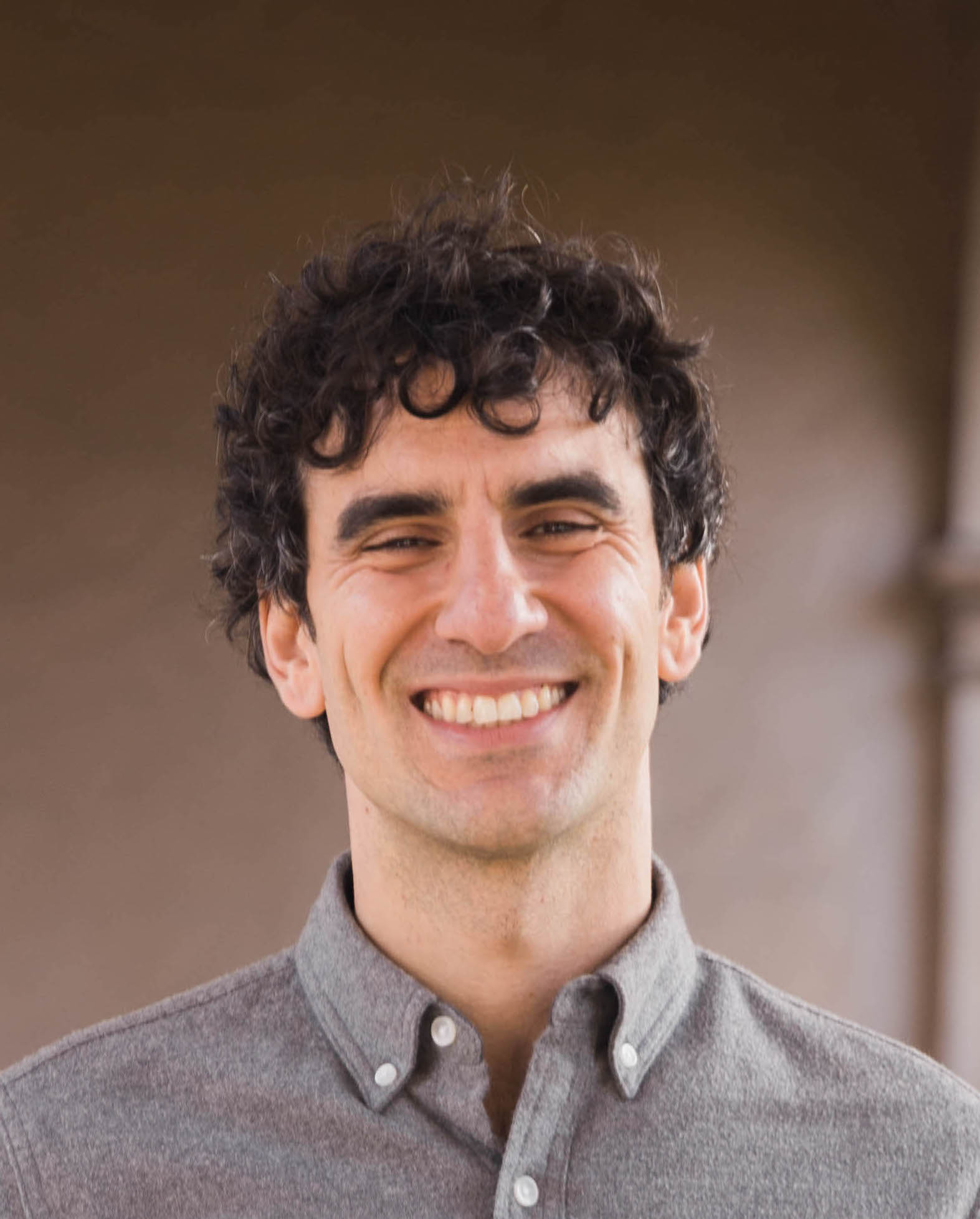
Dr. Shirag Shemmassian is the Founder of Shemmassian Academic Consulting and one of the world's foremost experts on medical school admissions. For over 20 years, he and his team have helped thousands of students get into medical school using his exclusive approach.
Learn everything you need to know to get into medical school.
Get our free 102-page guide: Get Into Medical School: 6 Practical Lessons to Stand Out and Earn Your White Coat


THERE'S NO REASON TO STRUGGLE THROUGH THE MED SCHOOL ADMISSIONS PROCESS ALONE, ESPECIALLY WITH SO MUCH ON THE LINE. CLICK BELOW TO SCHEDULE YOUR COMPLIMENTARY CONSULTATION TO ENSURE YOU LEAVE NOTHING TO CHANCE.