Learn the Eastern Virginia Medical School ranking and admissions strategies, plus a sample EVMS secondary essay
Our comprehensive guide to everything you’ll need to know about applying to Eastern Virginia Medical School.

What You'll Learn
EVMS Community-Focused Mission
How Eastern Virginia Medical School integrates community service, healthcare equity, and regional clinical training throughout its medical education programs.
Academic Standards & Profile Benchmarks
General expectations regarding applicant academic preparation, competitive GPA/MCAT profile benchmarks, and selectivity trends for in-state and out-of-state applicants.
Prerequisite Coursework & Competencies
Core science and humanities course requirements, laboratory expectations, citizenship guidelines, and policies regarding MCAT score validity.
Application Timeline & Key Deadlines
Critical milestones covering AMCAS primary submission, secondary application processing, interview invitation windows, and decision notifications.
Secondary Essay Strategies
Tactical guidance for answering EVMS's supplemental essay prompts by highlighting personal background, community orientation, resilience, and alignment with school values.
Casper Assessment Requirements
Understanding EVMS's requirement for situational judgment testing via Casper and how non-cognitive evaluations factor into admissions.
Interview Format & Candidate Evaluation
Insights into EVMS's interview format, including what evaluators look for during candidate interviews and assessment days.
----
The Basics of Eastern Virginia Medical School
Eastern Virginia Medical School (EVMS) has a clear, defining mission: to be the most community-oriented medical school in the nation. That mission shapes everything about the institution — from where students train to who gets admitted. If you're a premed looking for an MD program with deep roots in a specific community and a genuine commitment to regional healthcare, EVMS is worth your serious attention.
EVMS draws students from across the country to Hampton Roads, where they train at multiple medical centers and hospitals serving a dynamic and diverse regional population. An important update as you begin your application: EVMS is now part of Old Dominion University, operating under the Macon & Joan Brock Virginia Health Sciences at ODU. The school continues to operate under the EVMS name and upholds the same community-oriented mission, but official program information — including admissions, tuition, and financial aid — is now housed on ODU's website.
Here's a quick snapshot of what you need to know:
Location: Norfolk, Virginia Institutional home: Now part of Old Dominion University under Macon & Joan Brock Virginia Health Sciences
Mission: Community-oriented medical education with a focus on improving healthcare in Southeastern Virginia
Acceptance rate: 1.98%
Class size: 151 matriculants per year
Average GPA: 3.70
Average MCAT: 513
Tuition (2025–2026): $40,302 for Virginia residents; $62,628 for out-of-state students
This guide covers everything you need to know to put together a competitive application — from admissions requirements and key deadlines to secondary essay strategy and interview preparation.
----
Eastern Virginia Medical School MD programs
You can pursue a few different tracks to receive an MD degree from Eastern Virginia Medical School:
The traditional four-year MD program
A dual degree MD/MPH program with Old Dominion University
A dual degree MD/MBA program with the College of William and Mary
This post will focus on how to get into the four-year MD program.
(Suggested reading: Medical Schools in Virginia: How to Get In)
Eastern Virginia Medical School Tuition
As a public institution, EVMS differentiates in-state and out-of-state tuition. The following figures reflect the 2026–2027 academic year:
In-state tuition: $38,016
Out-of-state tuition: $61,012
Including fees, books, housing, board, transportation, and other expenses, the total first-year cost of attendance (including loan fees) is approximately $69,907 for in-state students and $92,903 for out-of-state students. Full tuition and fee details are available on ODU's tuition and fees page.
To qualify for in-state tuition, accepted students must have been permanent residents of Virginia for at least one year before submitting their initial application for the MD program. If this sounds like you, view the guidelines for in-state residency determined by the State Council of Higher Education for Virginia for more information.
(Suggested reading: Picking Your State of Residency for Medical School)
A number of our students get into Eastern Virginia Medical School each year. Want to learn how?
Get our free 102-page guide to help you with every step: Get Into Medical School: 6 Practical Lessons to Stand Out and Earn Your White Coat
----
How hard is it to get into Eastern Virginia Medical School?
Eastern Virginia Medical School admissions statistics
EVMS is highly competitive. The school receives more than 6,000 applications each year to fill roughly 151 spots, an acceptance rate of just 1.98%. Don't let its regional focus mislead you; the academic benchmarks for recent matriculants are strong:
Average GPA: 3.70
Average MCAT score: 513
(Suggested reading: Average GPA and MCAT Score for Every Medical School)
Eastern Virginia Medical School Admissions Requirements
EVMS requires applicants to have taken the MCAT and completed a minimum of 90 semester hours before submitting a primary application. For the 2026–2027 admissions cycle, EVMS will accept MCAT scores taken between January 2024 and September 2026. Required prerequisite coursework includes:
General biology — one year with labs
General chemistry — one year with labs
Organic chemistry — one year with labs
Physics — one year with labs
Biochemistry, psychology, and sociology are strongly recommended. A bachelor's degree from an accredited U.S. or Canadian institution must be completed no later than matriculation. The school only considers U.S. citizens and permanent residents for its MD program.
(Suggested reading: Medical School Requirements: The Definitive Guide)
Eastern Virginia Medical School Application Timeline
Applicants must apply using the AMCAS application. Below are the key dates and deadlines for the 2026–2027 cycle:
June 1, 2026: AMCAS application opens and filing window begins
August 1, 2026: AMCAS application deadline for Early Decision
October 1, 2026: Early Decision applicants notified
October 15, 2026: Regular Decision applicants begin to be notified on a rolling basis
November 1, 2026: AMCAS application deadline
EVMS uses rolling admissions, so submitting early is strongly encouraged — earlier applications receive earlier review and earlier interview invitations.
(Suggested reading: The Ideal Medical School Application Timeline)
How AI Fits Into the EVMS Admissions Picture
EVMS has not publicly announced the use of AI tools in its admissions screening process, and ODU's admissions pages make no reference to automated review. You should consider, though, that the broader trend across medical school admissions — particularly at high-volume programs receiving upward of 6,000 applications per cycle — is moving toward AI-assisted tools for initial organization and screening, and EVMS certainly could fit into this category.
What this means practically for you as you begin your application is the same regardless of whether EVMS uses AI today or adopts it in the future:
Authentic, specific writing is always your strongest asset — generic personal statements and secondary essays that could apply to any medical school are the easiest to filter out, automated or not
EVMS's mission-driven prompts reward real engagement — admissions readers at community-focused schools are particularly attuned to applicants who are performing alignment versus those who genuinely demonstrate it
Clear, well-structured writing works at every level of review — human or automated, purposeful prose with a coherent narrative reads better than dense, unfocused essays
(Suggested reading: The Ideal Medical School Application Timeline)
----
Eastern Virginia Medical School secondary application essays (examples included)
After submitting your AMCAS application, EVMS may invite you via email to complete a secondary application. These essays go beyond your medical school personal statement. This is where EVMS finds out whether you actually understand what you're signing up for.
Every secondary prompt ties back to EVMS's core mission: community-oriented medicine and improving healthcare in the Hampton Roads region. Being specific and sincere is the name of the game here. EVMS wants applicants who know the community, understand the mission, and can articulate precisely why they belong in it. Each response has a 2,000-character limit — which lands at roughly 300 words — so make every one count.
Question 1: Briefly describe your exposure to medicine. (2000 characters)
Prior to responding to this prompt, make sure the personal statement you send to EVMS in your AMCAS application doesn’t mention every exposure you’ve had to medicine. Save at least one personal anecdote or perspective on medicine for this essay.
Here’s an example:
Growing up in Philadelphia, I was never far away from a hospital. Some of my earliest childhood memories were visiting my aunt at her job as a nurse at Temple University Hospital, where she worked for thirty years. There was also the time when I had to visit Wills Eye Hospital for prescription glasses. Like many elementary school kids, I was both anxious and shy, but the fact that I’d been to the hospital before—with my mother and grandmother—made the space feel familiar and practically homelike, especially since my grandmother had been received with open arms by the hospital during her bout with glaucoma. The sheer number of medical centers in my hometown let me take the presence of healthcare for granted. It’s my belief that all hospitals and local communities should be this integrated.
This mindset influenced my decision to be a high school intern at a suburban hospital for two consecutive summers before I enrolled at the University of Virginia as a premed student. Since then, I’ve completed additional internships at medical centers in my hometown and I’ve worked abroad as a patient representative at a public health clinic in Mexico City. In addition to shadowing physicians, I’ve learned about the patient side of medical care. I want to keep exposing myself to dynamic medical environments and enroll in an MD program that doesn’t draw a line between where the real world ends and specific medical centers begin.
Why it works:
Contextualizes without repeating — the essay draws on experiences likely mentioned elsewhere in the application, but reframes them specifically around exposure to medicine rather than simply restating them
Threads personal and professional experience together — early childhood memories of hospitals, high school internships, university premed work, and international clinical experience are woven into a single coherent narrative rather than listed as separate accomplishments
Connects personal history to EVMS's mission — the closing line — "an MD program that doesn't draw a line between where the real world ends and specific medical centers begin" — speaks directly to EVMS's community-integrated model without naming it explicitly
Shows a clear through-line — the essay traces a genuine arc from a child made comfortable in hospitals by family to a student who has actively sought out diverse medical environments, making the motivation feel earned rather than stated
Question 2: What do you think you will like best about being a physician? (2000 characters)
Question 3: What do you think you will like least about being a physician? (2000 characters)
Question 4: Describe yourself and your medical career as you see it ten years from now. (2000 characters)
Question 5: Please indicate your reasons for applying to VHS-EVMS at ODU. (2000 characters)
Question 6: (Optional) VHS-EVMS at ODU is dedicated to inclusivity and supporting patients and students from diverse backgrounds. Feel free to share your personal experience or ties to communities from diverse backgrounds. If you wish to respond, please explain in detail. Some examples include but are not limited to race/ethnicity, culture, LGBTQ+, differently-abled/disabled, etc. (2000 characters)
Question 7: (Optional) If you would like to discuss how your individual background, perspective, or experience, including any societal or other barriers, have affected your life, through discrimination, inspiration or otherwise, feel free to share your experiences, obstacles overcome, and how this impacted your education and road to applying to medical school. (2000 characters)

----
Eastern Virginia Medical School interview
EVMS invites approximately 800 applicants to interview each cycle, roughly only 10% of total applicants. If you receive an invitation, it means the admissions committee sees genuine potential in your application. The interview is their opportunity to assess your compassion, motivation, cultural awareness, and interpersonal skills in person.
All interviews are held virtually via Zoom on Wednesdays and Fridays between September and March. Interviews run approximately 30 minutes and are scheduled at 2:00 PM, 2:45 PM, or 3:30 PM. A working camera is required — applicants without one will be asked to reschedule, with no guarantee of another slot in the same timeframe.
Each Wednesday during interview season, all candidates scheduled that week are invited to a separate community engagement session via Zoom. This includes a welcome from the Director of Admissions, presentations from the Assistant Vice Dean of Admissions, Director of Student Affairs, Director of Financial Aid, and the Simulation Department, and a candid Q&A with currently enrolled MD students.
From our experience helping students prepare for EVMS interviews, these are the questions that come up most often:
What would you do if a doctor won't prescribe a medicine for personal reasons?
What is one health topic that you would like to see state or federal support for?
Why do you want to pursue being a physician rather than another healthcare role?
What is your most meaningful patient interaction?
What about the curriculum most resonates with an activity you've done?
You have a couple as patients. One is HIV+ and does not want you to tell their partner. How would you handle this?
Statistics show that some physicians prescribe less pain medication to patients of specific ethnic backgrounds. Why do you think this is?
Do you share our school values?
Tell me about when a physician you shadowed had a difficult patient.
What is one positive and one negative trait your friends have used to describe you?
Keep in mind: EVMS leans heavily on ethical scenarios in its interviews. Questions like the HIV confidentiality scenario or the prescribing disparity question aren't designed to have a single right answer, but instead to reveal how you think. Preparing a thoughtful framework for navigating difficult clinical situations will serve you far better than memorizing stock answers to "Why EVMS?" The committee wants to see that you've grappled seriously with what it means to be a physician in a community-oriented program.
(Suggested reading: How to Ace Your Med School Interviews)
----
Frequently asked questions
Does EVMS accept international students?
No. Only U.S. citizens and permanent residents are considered for admission into the MD program. If you are a permanent resident, you will need to submit a copy of your valid green card as part of the application process.
Does EVMS accept reapplicants?
Yes. EVMS welcomes reapplicants and does not penalize candidates for previous unsuccessful cycles. If you are reapplying, use your secondary application to address what has changed since your last application — new clinical experiences, an improved MCAT score, additional coursework, or meaningful personal growth. A reapplication that simply repeats the previous cycle's materials is unlikely to produce a different result.
What is the minimum GPA or MCAT to apply?
EVMS does not publish a hard minimum for either metric. That said, recent matriculants have averaged a 3.70 GPA and a 513 MCAT — applicants who fall meaningfully below those benchmarks will need to compensate with an especially strong application in other areas. EVMS takes a holistic approach, so clinical experience, community service, and demonstrated alignment with the school's mission all factor into the review.
Does EVMS accept pass/fail prerequisite courses?
Yes. EVMS accepts pass/fail grades for required prerequisite courses, including those taken during the COVID-19 pandemic. Credits earned through advanced placement programs or CLEP are also acceptable toward prerequisite requirements.
Should I apply Early Decision to EVMS?
The Early Decision Program (EDP) is worth considering if EVMS is genuinely your first-choice school and you have a strong application. EDP applicants must commit to attending EVMS if accepted and cannot apply to other medical schools during the EDP process. The application deadline is August 1, with decisions released by October 1. Keep in mind that EDP is best suited for applicants who are highly confident in both their candidacy and their fit with EVMS's community-oriented mission.
What dual degree programs does EVMS offer?
EVMS offers two dual degree options alongside the traditional four-year MD program — an MD/MPH in conjunction with Old Dominion University and an MD/MBA with the College of William and Mary. Both programs are designed for students who want to complement their clinical training with expertise in public health or business, respectively.
How strong is EVMS for research opportunities?
EVMS offers research opportunities through its Medical Student Research program, including the EVMS Research Society and dedicated student research programs. That said, EVMS's identity is more strongly defined by its community-oriented clinical mission than by research output — it is not a research-intensive institution in the way that NIH-funded programs like Duke or Johns Hopkins are. Applicants with serious research ambitions may want to weigh this carefully, while those drawn to community medicine and clinical training will find EVMS well suited to their goals.
Does EVMS offer scholarships or merit aid?
EVMS offers need-based financial aid and some scholarship opportunities, but it is not widely known for large merit-based awards. Prospective students should review the financial aid resources available through ODU's Brock Virginia Health Sciences financial aid office and contact the admissions office directly for the most current information on available funding.
How does in-state tuition eligibility work at EVMS?
To qualify for Virginia in-state tuition, applicants must have been legally domiciled in the Commonwealth of Virginia for at least one year before matriculation and must meet additional residency requirements as determined by the State Council of Higher Education for Virginia. In-state tuition for 2026–2027 is $38,016 — significantly lower than the out-of-state rate of $61,012 — making Virginia residency a meaningful financial consideration for eligible applicants.
Does EVMS have a strong alumni network?
EVMS has been training physicians in the Hampton Roads region since 1973, and its graduates are well represented across the Southeastern Virginia healthcare community. The alumni network is particularly strong locally, with many graduates practicing at the same affiliated hospitals and medical centers where current students train. For applicants interested in building a career in Virginia or the broader Mid-Atlantic region, the EVMS alumni connection can be a genuine asset.
Final thoughts
Eastern Virginia Medical School has a clear philosophy. That’s why it’s important for applicants to tell a story of how they’ll thrive in Hampton Roads. Take the time to customize your application and learn about the particularities of this exciting program to maximize your chances of an EVMS acceptance.
About the Author
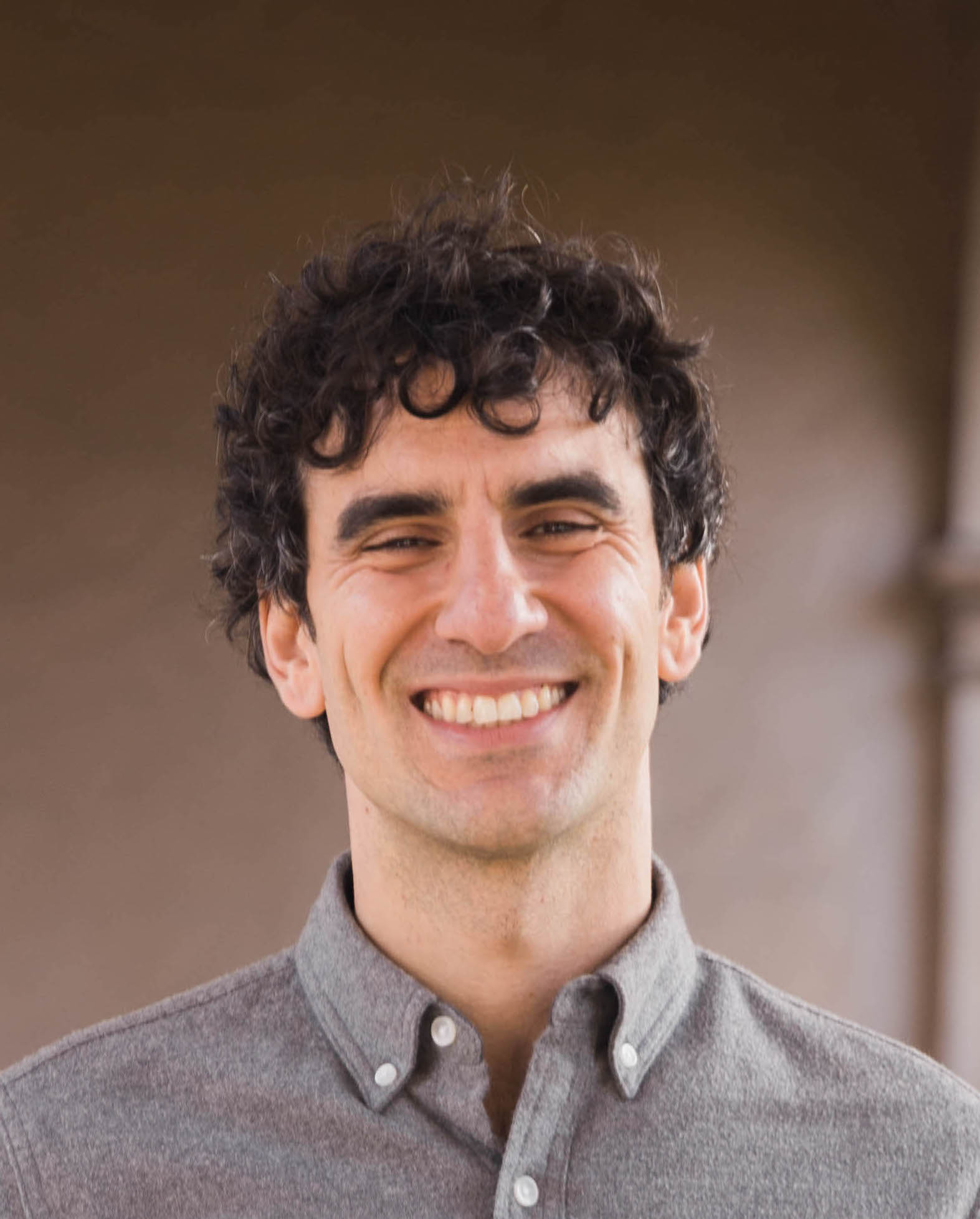
Dr. Shirag Shemmassian is the Founder of Shemmassian Academic Consulting and one of the world's foremost experts on medical school admissions. For over 20 years, he and his team have helped thousands of students get into medical school using his exclusive approach.
THERE'S NO REASON TO STRUGGLE THROUGH THE MED SCHOOL ADMISSIONS PROCESS ALONE, ESPECIALLY WITH SO MUCH ON THE LINE. CLICK BELOW TO SCHEDULE YOUR COMPLIMENTARY CONSULTATION TO ENSURE YOU LEAVE NOTHING TO CHANCE.