Learn the WashU Medical School acceptance rate and admissions strategies, plus read sample responses to the school’s secondary essays

Washington University School of Medicine is highly ranked for research

What You'll Learn
Gateway Curriculum Structure
How Washington University School of Medicine integrates foundational scientific training, early clinical exposure, and community engagement through its multi-phase Gateway Curriculum.
Academic Profile & Selectivity
General expectations regarding candidate academic preparation, competitive GPA and MCAT score benchmarks, and overall admissions selectivity trends.
Prerequisite Coursework & Standards
Required coursework in the core sciences and humanities, lab experience expectations, and policy rules governing valid MCAT score windows.
Specialized Pathways & Dual Degrees
Overview of research opportunities, dual-degree options such as MD/PhD and MD/MPH, and specialized scholarly concentration pathways.
Application Timeline & Key Dates
Critical dates across the admissions cycle, covering AMCAS primary submission, secondary turnaround timing, interview invitation periods, and final decisions.
Secondary Essay Response Strategies
Tactical approaches for addressing WashU Med's supplemental prompts by showcasing research depth, leadership, resilience, and fit with institutional values.
Interview Format & Candidate Evaluation
Key preparation insights into WashU Med's interview structure and what evaluators seek regarding communication skills, ethical judgment, and passion for medicine.
----
WashU School of Medicine introduction & rankings
Washington University School of Medicine in St. Louis, Missouri, often known as WashU, is routinely ranked among the top medical schools in the country. Though WashU Medical School was not included in 2026 U.S. News rankings, they were previously ranked as the 5th best medical school for research. The school boasts stellar resources, exceptional faculty, vibrant student life, and a proven track record of placing graduates in prestigious residency programs nationwide.
These strengths also make for a highly competitive admissions process. Like other schools of its caliber, WashU only accepts the most qualified candidates. Applicants need to find a way to stand out, while also keeping the school’s unique identity in mind, if they want to be successful.
Here, we’ll provide you with an overview of the WashU medical school admissions process and share proven strategies so you can outperform other applicants.
----
A number of our students get into Washington University School of Medicine each year. Want to learn how?
Get our free 102-page guide to help you with every step: Get Into Medical School: 6 Practical Lessons to Stand Out and Earn Your White Coat
----
WashU School of Medicine quick facts
| WashU School of Medicine Quick Facts | |
|---|---|
| Matriculation Rate | |
| Applicants | |
| Interviews | |
| Matriculants | |
| Avg. GPA | |
| Avg. MCAT | |
| Tuition (2026–2027) | |
| First-Year Cost of Attendance |
WashU School of Medicine mission statement
WashU Medical School sets forth the following vision and mission: WashU Medicine will lead in advancing human health through the promotion of wellness and delivery of outstanding healthcare, innovative research and the education of tomorrow’s leaders in biomedicine within a culture that supports diversity, inclusion, critical thinking and creativity. In leading the advancement of human health, WashU Medicine will:
Cultivate excellence and collegiality within an equitable and inclusive community
Attract, develop, advance and support a diverse and talented current and future workforce
Innovate through discoveries and inventions in basic, clinical, translational and population sciences
Build and support an environment that fosters exceptionally creative research, healthcare, education and the well-being of our workforce
Use our academic excellence and scientific rigor to continually advance and enhance healthcare in a way that ensures access, compassion, high value, equity and evidence-based care for all people in our community, including those who are underserved and uninsured
Observe the highest standards of ethics, integrity and humanity across all missions
Apply advances in research, education and healthcare to the betterment of the human condition locally and globally
By providing anecdotes from your experiences in which you fulfill the above values, you can demonstrate your alignment with WashU’s mission in your response to the “Why us?” secondary essay prompt. For example, if you provide an account of a clinical experience in which you illustrate your commitment to improving patient care through creating access and showing compassion, you will showcase how you will be a great fit for WashU Medical School’s community of students.
WashU School of Medicine MD programs
There are several programs through which you can earn an MD at WashU:
The traditional, four-year MD program
We’ll cover the basic MD admissions process here.
WashU School of Medicine curriculum
WashU School of Medicine’s Gateway Curriculum integrates basic science, clinical skills, health systems science, social and behavioral science, and professional identity formation. The curriculum is structured through the following three phases:
Gateway to Foundations (16 months): begins with Gateway Orientation, continues with seven Foundational Science Modules, and concludes with a Capstone experience.
Gateway to Clinical Medicine (12 months): consists of six 8-week core clinical clerkships where you rotate through internal medicine, surgery, pediatrics, OB/GYN, neurology and psychiatry.
Gateway to Specialization: includes schedules and activities tailored to individual passions and career aspirations, including a 4-week Internal Medicine Advanced Clinical Rotation, two 4-week Advanced Clinical rotations that you select, and two 4-week Keystone Integrated Science Courses.
WashU School of Medicine residency outcomes
If you are interested in attending WashU Medical School, you may also be curious what the outcomes are for graduates entering residency. Let’s take a look at the residency outcomes for the 2025–2026 cycle:
98.5 percent of graduates matched into residency programs
42 of 134 graduates matched into residency programs in Missouri
24 percent of students matched into surgery programs
The top five specialties among graduates include:
Surgery and surgical subspecialties (32)
Internal medicine (26)
Psychiatry (13)
Pediatrics (12)
Emergency medicine (10)
----
WashU Medical School admissions stats & requirements
WashU Med School GPA and MCAT averages
The average GPA and MCAT score for matriculants at Washington University School of Medicine (WashU) are 3.88 and 520, respectively. While there are no minimum cutoffs, successful applicants typically present academic statistics well above national averages. Below we’ve detailed admissions statistics for the 2025–2026 cycle:
Applicants: 6,138
Interviews: 1,021
Matriculants: 123
Average GPA: 3.88
Average MCAT: 520
WashU Medical School prerequisites & letters of recommendation
The admissions office requires that applicants take the MCAT within three years of applying. This means no earlier than January 2023 and no later than September 2026 for the 2026-2027 admissions cycle.
Before enrollment, WashU requires applicants to complete at least 90 semester hours at an approved undergraduate institution. They also require that students complete one year of study in each of the following fields prior to enrollment:
Biological science
General or inorganic chemistry
Organic chemistry (one semester can be substituted for a semester of biochemistry; one course in biochemistry is encouraged, but not required)
Physics
Calculus (one semester can be substituted for a semester of statistics or biostatistics)
It is highly encouraged—though not required—that students take these required courses for a letter grade rather than a pass/fail grade at their primary undergraduate institution. As long as applicants have completed their med school requirements, they can major in whatever they wish; WashU matriculants have studied subjects ranging from engineering to the humanities, in addition to science.
WashU med school participates in the AMCAS Letter Service and the Interfolio Letter Service. Letters of recommendation should be on letterhead, signed, and dated, and they must be received by November 6, 2026. WashU requires three (but no more than four) letters of evaluation, which may be submitted individually or collected for submission by a prior or current educational institution (i.e., a “letter packet”). Applicants are also permitted to submit a letter prepared by a premedical advisor or committee (i.e., a “committee letter”), either in addition to individual letters, or as a substitute for them if this is the typical practice at their school. The submission of either a committee letter or letter packet fulfills the letter of evaluation requirement.
WashU Medical School tuition & cost of attendance
For the 2026–2027 academic year, WashU’s tuition for first-year students was $67,968 and will remain constant for all four years of the program. The school estimates that additional expenses, such as med school materials, housing, food, and travel, bring the total cost of attendance up to $103,047.
In 2019, the school pledged $100 million to support a new scholarship program for eligible MD students that offers financial aid packages which are need-based, merit-based, or both.
In 2023, the average WashU grad graduated with $106,536 in debt from the program. While still formidable, that’s less than half of the national average medical school debt in 2024 of $234,597.
----
WashU med admissions timeline & decision dates
Washington University School of Medicine application timeline
WashU provides a detailed timeline of important dates, from the beginning of the admissions process to the first day of classes for accepted students. Our application timeline below lists dates that are specific to the school’s admissions cycle:
May 1, 2026: AMCAS application opens
May 30, 2026: AMCAS application can be submitted
July 2026: Applicants begin to be invited to complete secondary applications
September 2026–February 2027: Interviews conducted
October 29, 2026: Deadline to submit your secondary application, recommendation letters, and MCAT scores
December 2026–March 2027: Admissions decisions released
We always recommend applying early so your application can be reviewed and processed as soon as possible, and so that you can take advantage of WashU’s policy of rolling admissions.
Does WashU require the AAMC PREview exam?
In addition to the MCAT, WashU Medical School requires that applicants take the AAMC Professional Readiness Exam (PREview). The PREview must be completed before an application is considered, and PREview results up to three years old at the time of application are accepted, meaning in the 2026-2027 application cycle, scores from January 2023 through September 2026 test dates will be accepted.
If you are wondering what the PREview is, it is a situational judgment examination (much like the Casper test) developed by the AAMC to evaluate whether applicants possess the necessary pre-professional knowledge and qualities to be successful medical students and doctors. Acing the PREview exam will help you stand out as a particularly desirable applicant with strong pre-professional competence.
----
Over 90% of our students get into med school—the first time.
Get our free 102-page guide to help you with every step: Get Into Medical School: 6 Practical Lessons to Stand Out and Earn Your White Coat
----
WashU secondary essays & strategies (with examples)
Following your medical school personal statement, which you’ll submit in your AMCAS application, you’ll be asked by WashU to write up to three secondary essays: one is required and two are optional. We recommend you complete all three essays (as long as the third essay applies to you) so as not to waste a chance to better introduce yourself to the admissions committee.
WashU secondary essay prompts & sample responses
Here is guidance on how to handle each of the WashU secondaries, plus sample responses.
Question 1: Have you already completed your undergraduate education, have you had your college or graduate education interrupted, or do you plan not to be a full-time student during your application year? If yes, describe in chronological order your activities during the time(s) when you were not enrolled as a full-time student. (2000 characters)
The first part of this question is a simple yes or no. If you are still a full-time student, then there is no need to answer this question.
If you are no longer a full-time student we strongly recommend that you respond to this question. The prompt asks for information that you most likely included in the AMCAS Work and Activities section. Still, you should take this essay just as seriously as any other part of your application.
WashU wants to know about your activities outside of the context of school, so extracurriculars you completed as a full-time student can’t be included. This may cause anxiety for recent graduates who are wondering, “Aside from summer internships, what other experiences do I have?”
Conversely, this question may prove difficult for older or nontraditional applicants who have lots of work experience in addition to the summer activities they completed as college students: “How can I accurately describe all my activities in less than 2000 characters?”
For these reasons, plan out your response and strategically prioritize your activities. For instance, the description of the mentorship program you did for ten hours one summer shouldn’t be as long as the description of your full-time, postgraduate research job at a top university. Here are some additional tips:
Focus on yourself. When describing different experiences, focus on your individual responsibilities and contributions. Don’t spend too much time discussing other people—participants, colleagues, mentors, etc.—who you worked with.
Refrain from deep dives into how the experience(s) changed you. Although you might want to discuss how an activity influenced your life choices, the question is asking you to describe these activities.
Be consistent. Keep in mind that your descriptions need to align with the information that appears in other parts of your application.
Below is a sample description, or entry, detailing a student’s summer internship:
Assistant Research Technician; University of Los Angeles, Los Angeles Medical Centers; June–Aug, 2019. I worked in a laboratory on synthetic cell culture activities and assisted lead researchers with the day-to-day functioning of their research projects. I was primarily responsible for monitoring synthetic cell culture development, analyzing and documenting data for my supervisors, and preparing research findings for publication in academic journals. Additionally, I took on the added responsibility of creating a new internal database to track newly approved laboratory procedures for my department.
This entry is approximately 605 characters, which is over 30 percent of the allotted space you have to answer this question. Once you’ve decided on the number of entries, make a clear decision about how long each needs to be. Remember, this is only one part of your application, and admissions committee members are aware of the space limitations. And be sure to avoid repeating anything from your W&A section word-for-word!
Question 2: Describe a time or situation where you have been unsuccessful or failed. (3000 character limit)
Question 3: Is there anything else you would like to share with the Committee on Admissions? Some applicants use this space to describe their unique backgrounds, lived experiences, obstacles and/or challenges they faced in their journey to medical school. (optional) (3000 characters)
Prompt for MSTP Applicants
Briefly describe the area of research you would like to explore in graduate school (1800 characters)

----
WashU Medical School interview questions
Only select applicants are asked to interview for a first-year spot in the MD program, so if you’re invited, be ready to leave your mark. An interview invitation means that the admissions committee has reviewed your application and they’re curious to learn more about you.
By this point in the application cycle, your knowledge of WashU’s curriculum and resources may have faded, so review the school’s culture and your application materials prior to your arrival on campus. In addition, prepare some questions that you’d like answered about WashU.
The WashU interview format & Why WashU Wednesday
WashU School of Medicine invites select applicants for interviews designed to assess fit and interpersonal skills. During the 2026–2026 application cycle all interviews will be held virtually. Applicants will have two separate, live interviews via Zoom with faculty members from the admissions committee on the same day. One of these interviews will be a standard open-file interview, lasting 40–60 minutes. The other will be shorter, 20–30 minutes, and closed-file, meaning that your interviewer will know nothing about you other than your name.
Prior to these interviews, you will also take part in a Kira asynchronous standardized video interview or Kira SVI, in which you complete video and written responses to questions. According to WashU, the Kira SVI should take you about 30 minutes to complete and will contain both situational and behavioral interview questions. To prepare for the SVI, review our guides on the Multiple Mini Interview (MMI) and Casper test.
For the more traditional interview, we’ve compiled a list of questions that typically come up in Washington University interviews.
Tell me about yourself. What would you like me to know about you?
Was there anything that made you hesitate about going into medicine?
Is there anything you want me to know?
Where do you see yourself in 10 years?
What do you think about healthcare reform?
What challenges do you think you will encounter at Washington University?
Tell me about X experience.
What is an aspect of the world or culture you would like to change?
What does patient autonomy mean to you?
What are three challenges facing healthcare today?
Setting aside time to prepare responses to common questions such as these will help you come across as confident and sure of your reasons for wanting to become a doctor—not to mention for wanting to attend WashU. Consider how you might respond to a question such as, “What does patient autonomy mean to you?” or “Was there anything that made you hesitate about going into medicine?” It is not enough to simply answer “No” to the latter. Even if you’ve known for a long time that you want to be a doctor, it is important to demonstrate some nuance in your thinking. And, remember, it’s a good idea to tie your answers back to WashU if you can do this in a meaningful way. This conveys to adcoms that you’re aware of what you’re getting into and committed to their university.
On top of these interviews, you’ll also participate in the following events during your interview day: a student-led virtual campus tour, a discussion with faculty admissions committee members, and a financial planning presentation. Beyond interview day, WashU also provides interviewees with the opportunity to participate in “Why WashU Wednesdays” and “Meet our Students” virtual sessions. We recommend taking advantage of these offerings to connect with students and faculty and learn more about the school.
After the interview at WashU
Once the Zoom screens close, the camera turns off, and your chosen interview attire returns to the closet, you’ve officially entered the post-interview limbo stage of the application process to Washington University School of Medicine.
Stretching from September to April’s final decisions, this phase offers a few opportunities for strategic engagement through update letters to ensure your application remains at the top of the list with the admissions committee.
Understanding WashU's communication philosophy
While many other schools limit what they will accept and/or add to your application outside of the traditional application materials, Washington University is remarkably open when it comes to post-interview updates, explicitly stating they "welcome updates on experiences/awards/honors/publications, etc., after the initial submission." Even more encouraging, they confirm that "applicants will send us updates even after their interview day, and the Admissions Committee will review these."
Updates can flow through two channels: uploads as a PDF via their applicant portal or direct emails to admissions.
Should I send a letter of intent or letter of interest to WashU?
You’ve got the freedom to send updates to WashU, but what kinds of updates should you send and how should you send them? Many students opt for one of two types of letters; a letter of intent or a letter of interest.
A letter of intent makes it clear that if you’re offered a place at WashU you’re certain you will take them up on it. On the other hand, a letter of interest is more open-ended. You’re writing to express your continued enthusiasm for attending WashU, but perhaps you’re waiting on a response from other schools to make a final decision.
Essentially, if WashU is your number one school choice, it makes sense to send a letter of intent. However, if there’s any doubt in your mind, it’s better to send a letter of interest since a letter of intent should be thought of as binding.
Crafting update letters that resonate with WashU
Whichever type of letter you ultimately decide on, it’s crucial to send updates that will make a difference to your application and not waste the admission committee’s time. WashU's explicit mention of "experiences/awards/honors/publications" provides a good roadmap for what they consider meaningful updates, but understanding their institutional values helps determine which developments deserve communication.
As a top research institution, WashU seeks students who will push the envelope, so any updates that demonstrate intellectual curiosity, research acumen or leadership should top your list of things to share.
If you've presented at conferences, or submitted research findings to a journal, these updates would align with WashU’s culture. However, instead of just listing updates, make sure you connect them to WashU. For example, think about how those experiences have prepared you for the research environment you’ll encounter on campus. Is there anything you’ve been investigating that WashU also researches?
If you’re not big on research, you may consider sharing updates around your leadership abilities. Perhaps you’ve recently taken on a leadership role in your community, at a clinic you volunteer at, your religious organization, or even at your job. Any of these situations align with WashU’s mission to educate "tomorrow's leaders in biomedicine."
----
Frequently asked questions
What is WashU med school’s matriculation rate?
WashU med school’s matriculation rate is currently 2 percent.
How many applicants applied in 2025?
6,138 applicants applied.
How many students were interviewed in 2025?
1,021 applicants were interviewed.
How many matriculants were there in 2025?
There were 123 matriculants.
What is the average GPA of matriculants?
The average GPA is 3.88.
What is the average MCAT of matriculants?
The average MCAT score is 520.
What is the tuition and cost of attendance for WashU med school?
For 2026–2027, the tuition is $67,968, and the total cost of attendance is $103,047.
When can I apply?
The AMCAS application for the 2026–2027 cycle is open for submission as of May 28, 2026.
When is the deadline to apply?
The deadline for the 2026–2027 cycle is October 15, 2026.
When is the supplemental application deadline?
The deadline for supplemental applications is October 29, 2026.
When are interviews held?
Interviews are held September 2026 through February 2027.
When are offers of acceptance made?
Offers of acceptance are made from December 2026 through March 2027.
----
Final thoughts
Washington University School of Medicine in St. Louis is looking for the best and brightest future doctors. Throughout your application materials demonstrate to the admissions committee that you have what it takes to study medicine in St. Louis. Make sure you tailor your application to WashU while highlighting the unique qualities, skills, and experiences that will make you an excellent physician. And good luck!
About the Author
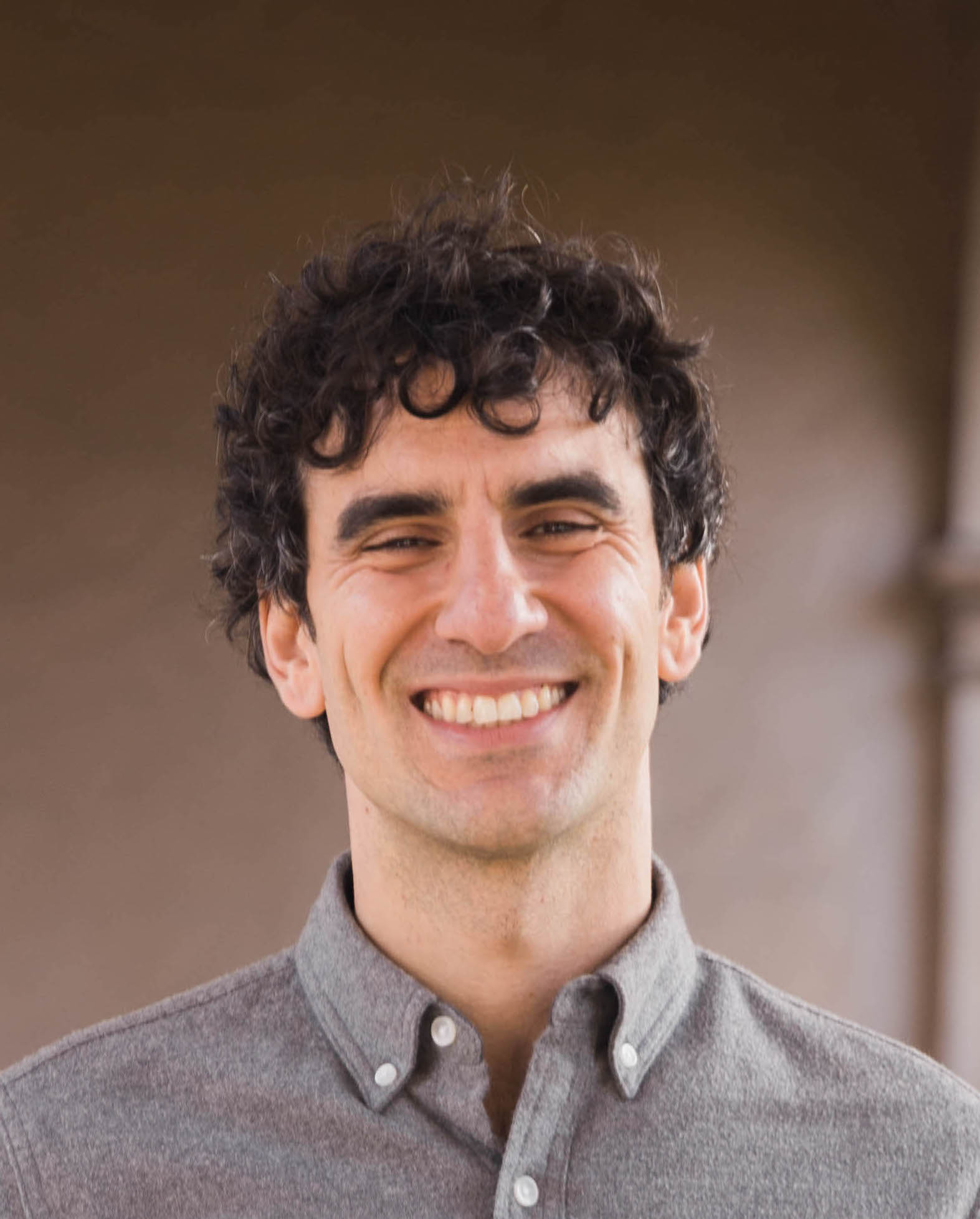
Dr. Shirag Shemmassian is the Founder of Shemmassian Academic Consulting and one of the world's foremost experts on medical school admissions. For over 20 years, he and his team have helped thousands of students get into medical school using his exclusive approach.
THERE'S NO REASON TO STRUGGLE THROUGH THE MED SCHOOL ADMISSIONS PROCESS ALONE, ESPECIALLY WITH SO MUCH ON THE LINE. CLICK BELOW TO SCHEDULE YOUR COMPLIMENTARY CONSULTATION TO ENSURE YOU LEAVE NOTHING TO CHANCE.